Why the indie author community is so special

The indie author community feels very special‌—‌even to someone like me, who is only on the fringes of it. Writers who are publishing themselves are spread across the globe, and their numbers are growing all the time, but still the community feels‌…‌like a community.

It’s supportive, for one thing. As it’s now November, we’re in NANoWriMo‌—‌National Novel Writing Month. The challenge (to write 50,000 words over the month) is really there to help new writers grow a writing habit, but many seasoned authors still take part. And those who don’t still offer encouragement to those who might be struggling. There’s an overall sense that, even if you don’t reach that 50,000 word goal, any words you do get down take you closer to the end of that novel, and are to be celebrated. There are many writers who cite NaNoWriMo as formative in their writing careers, and much of that comes down to the support from the indie author community.

It’s also incredibly generous. People are generally very willing to share both their successes and failures. There’s no sense of hard competition between writers, but rather a feeling that encouraging reading will help everyone (I’ve often heard this spoken of as ‘a rising tide floats all boats’). It’s why writers are willing to recommend books by others in their genres, and also why they provide so much help to newer writers. Yes, some of this costs (in the form of books and courses), but so much is put out there for free. There are blogs, webinars and podcasts. Personally, I’ve learnt so much through listening to the advice, interviews and discussions available from the likes of Joanna Penn, Kevin Tumlinson, Mark Dawson, Mark Leslie Lefebvre, and so many others.

Of course, no community is perfect, and there are those who are not so generous and helpful. There are those who try to cheat the system, or take short-cuts that make things harder for others. There was the whole ‘cockygate’ thing a few months ago (this post provides a pretty good summary for anyone who’s interested to read more). But generally, indie authors see fellow writers not as competition, but as travellers on the same journey‌—‌and, often, this grows into genuine friendship.

One incident recently brought home to me just how caring this community is.

You might have heard of Brandon Barr, but if that name is unfamiliar to you, he writes fantasy and science fiction. Like many writers, he juggles his writing with a day-job and family commitments, but he’s been building up a readership over the years, and has forged bonds with fellow writers. Slowly, he’s becoming ‘successful’, especially with his Song Of The Worlds series.

But his journey hasn’t been plain sailing. A couple of years ago, Brandon was diagnosed with leukaemia, and although the treatment he received appeared to have been successful, the leukaemia has recently returned. This time, doctors can’t offer a good prognosis.

There’s been a surge of support and help from other writers, and although those closer to Brandon have been at the forefront of this, many others have done what they can to help. They’ve set up a GoFundMe page to raise money to support his family. They’ve stepped in to help with the recent re-release of his series, and to take over the running of his newsletter when he’s unable to do this himself. And a couple of authors are currently working on Brandon on the remaining two books in his series.

BrandonBarr_RiseOfTheSeerBut the indie author community is a part of a far larger community‌—‌that of readers. Many writers who have not been in a position to directly help Brandon have done the best they can by asking readers to help. How? There’s also one very simple way for readers to support an author‌—‌buy books. The best place to start with Brandon is Rise of the Seer, the first book in his Songs of the World series. So if you would like to help support Brandon and his family, please consider either buying a book or donating (or both).

And if you want to learn a bit more about Brandon, his recent interview on Kevin Tumlinson’s Wordslinger podcast is a great place to start (click here).

Forever improving (Reworking a novel part 6)

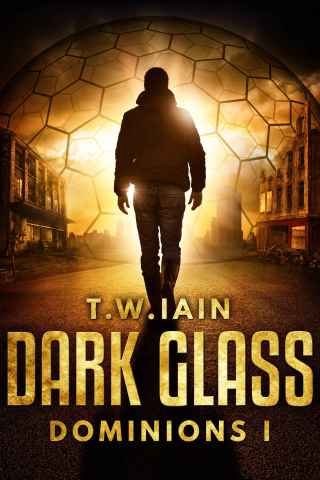
I’ve finished my first editing pass through Dark Glass, and after a number of tweaks I’m really pleased with the structure. Of course, there’s still work to do. The writing’s clunky in places, and I’m sure there are repetitions and other issues to deal with. And then I need to go granular, examining the actual words I’ve used.

But I also need to ensure I haven’t added anything to this version that contradicts following books, so I’ve started re-reading the rest of the series. I wrote the original three books a couple of years ago, and even though I can go back over my notes, there’s much I’ve forgotten.

I have fond memories of the second book, Dead Flesh. It’s the darkest book so far, but it also has a very emotional arc for Rodin, as he develops (or maybe uncovers) a stronger conscience. So I was looking forward to re-reading this book.

It starts well, throwing the reader straight into Rodin’s latest contract, and I’m pleased with how I balance the (pretty sickening) violence with Rodin’s growing unease at the acts he’s being called on to perform.

But the book’s not perfect, and as I read on I came across passages that weren’t as good as my writing is now. As I approached the middle section of Dead Flesh, a nagging voice started asking if this book, like the first, needed a re-write.

Now, that voice was nowhere near as forceful as it had been with Dark Glass (and that book definitely needed reworking), but it started a worrying train of thought‌—‌if the second book could be improved, then so could the third, and so on. I’m improving as a writer all the time (partly because I’m paying more attention to the way I use words and structure stories, partly through actively learning through craft books and podcasts, and partly because I try to write every day), and so everything I’ve already written has the potential to be improved. I always aim for my next book to be my best yet.

But if I constantly returned to older books, pulling them up to my current writing standard, I wouldn’t be producing any new books. This clearly isn’t sensible‌—‌I enjoy creating new stories, and readers who have already started on my books deserve to have those series completed at some point. Just think of the way readers have moaned about the long wait for George RR Martin’s next book. Also, if I want to improve as a writer, that means working on all stages of producing a finished story‌—‌planning, writing and editing. I won’t get that all-round constant learning if I’m only editing.

Besides, it’s not as if Dead Flesh is a bad book. As I read on, I became increasingly immersed in the story (one advantage of reading books that have faded in memory). When I reached the climax, I was pleased with how this part of the series reads. I still love how the final scene plays out after all the action and violence, and it sets Rodin up for what he faces in Dominions III (and beyond). Yes, there are things that could be improved in this book, but I’m fine with how it stands.

So I’m not going to re-write Dead Flesh (and, when I get on to reading Deep Water, I doubt I’ll feel the need to re-write that either). Instead, I’m going to continue working on Dark Glass, and then I’ll concentrate on new books With everything I’m learning through this re-working process, I’m sure that new book (Dominions V) will be my best yet‌—‌until the one after that.


Previous ‘Reworking a novel’ posts:

A successful first draft (part 5)

Editing or rewriting? (part 4)

The first draft is always a mess (part 3)

Broken Promises (part 2)

Reworking a novel (part 1)

New short story

It starts with a man on a plane…

This story was one of a number that I first-drafted while on holiday over the summer. I can’t recall if I wrote this story on the plane, but it’s genesis was definitely the flight out.

So, you’re on a plane, with a hundred or so other passengers. Maybe you know a few, but most are strangers. Some look like they’re going on holiday (pale and excited), or just returning (tanned and tired). But others are more of a mystery‌—‌the lone passengers, the ones who might be on a business trip, or who might be doing‌…‌something else.

For this story, I let my imagination run wherever it wanted. What if one of these mysterious passengers were on a mission to save the world? What if the world was being invaded, and only this passenger and a handful of others knew?

And what if the invaders were winning?

The result was Hold Back The Waves, which you can read here. As always, I’d love to hear your thoughts.

A small change to my reading habits

Habits build up over time, often without conscious thought. I like to read before I go to sleep, but I also read at other times. Most recently, this has included a decent length of time when I get in from work (grab a bite to eat and a drink, and sit down with a book for a good half-hour or more), as well as ten minutes while eating breakfast. I sometimes get more time in during the day, but that depends on what else is happening, and the three times mentioned above (breakfast, after work, before sleep) are pretty regular.

kindle-2616647_1280A few weeks back, I started reading Joe Abercrombie’s First Law series, but straight away I ran into a problem‌—‌the chapters were too long.

This needs an explanation.

I’ve never felt comfortable stopping reading just anywhere. I always aim to finish a chapter, or at least to reach a section break. Stopping mid-flow feels wrong. In a well-written book, the chapters and sections are part of the structure of the story‌—‌the writer chose to change scene, or to provide a break, for a particular reason. I can recall hearing Brandon Sanderson (I think it was on his Writing Excuses podcast) talking about wanting the reader to take a break at the end of each chapter‌—‌each chapter is it’s own mini-story, and needs to be assimilated before continuing to the next mini-story.

In the same way, I don’t enjoy watching films in sections either, or listening to only part of a piece of music. I need to experience the work as the creator intended.

So when I started The Blade Itself (The First Law Book One), I knew I’d want to give each chapter the time it deserved. This wasn’t a problem when reading before sleep‌—‌I had some flexibility in this. Likewise, after work, I could continue reading until I’d reached the end of a chapter.

But over breakfast, my time is limited‌—‌I have to be out of the house by a certain time in order to get to work. I wouldn’t have time to necessarily read complete chapters.

One of the things I love about my Kindle is how it tells me how many minutes reading is left in each chapter, and I could’ve used this. I could have made sure that when I stopped reading at night, I did so with a shorter chapter coming up, one that I could get through in ten minutes‌—‌but what if I was in the midst of some very long chapters? I could have pushed through the chapter in the morning, skim-reading‌—‌but I wanted to enjoy these books, and that included the writing itself. I could have simply read in the hope that a scene-break would appear at a sensible time‌—‌but what if it didn’t?

Then I found my solution.

I don’t only read fiction. Since starting writing, I’ve been reading more and more books about writing‌—‌the craft itself, marketing, mindset, and anything else related to publishing. These books often have some kind of narrative flow, but that’s secondary to the information. Also, non-fiction tends to be written in shorter, easily-digestible chunks‌—‌ideal for reading when you only have a few minutes spare.

You can probably see where this is going.

I now have two books on the go at any one time. I read fiction when I have longer stretches of time, enabling me to immerse myself in the story as the writer intended. But I also have a non-fiction book on the go at the same time. I use my phone for these books (either using the Kindle app or a pdf reader, as some of these books I only have in that format), which has another advantage‌—‌if I have a spare couple of minutes (for instance, if I’m waiting to pick one of the kids up from an activity) I can consume another short section of non-fiction.

It’s only a small alteration to how I read, but I can see the advantages already. I won’t be as ready to put longer-chapter books aside for ‘later’ (so I’ll finally get round to all those Brandon Sanderson books sitting on my to-be-read list), and I’ll also be getting a little bit of ‘learning’ in each day from the non-fiction.

Always good to find a win-win solution!

A successful first draft (Reworking a novel part 5)

I’ve reached my first milestone. About a week ago, I finished the new first draft of Dark Glass (a combination of writing new scenes and editing old ones).

After completing a first draft, I put it aside for at least a few days, just so I can get some distance from it. Then, I pull up the Scrivener file (that’s the software I use for writing), and compile a mobi file, which I then transfer to my Kindle.

I want to know if this draft works as a story, so I need to approach it as a reader. Creating an e-book of this first draft means I can read it just as I read any other book‌—‌on my Kindle, relaxing on the sofa or in bed, coffee at hand. As I read, I try to ignore grammar and spelling, and instead focus on the story itself. Does it flow well, with changes of pace that don’t jar? Does the plot make sense? Do the characters act and react in believable ways?

Whenever I start a read-through like this, I’m both excited and nervous‌—‌excited because I can still remember the good things from writing it, and nervous because I’m never sure how much will work, and how much will need major changes.

With Dark Glass I have more pressure, because I need this to be better than the original version.

And this new version’s not perfect. There are many things that need altering. Of course there are‌—‌this is a new first draft. But, overall, I’m very pleased with what I have now.

I’ve added more scenes than I’ve taken out, but I’ve tightened those old scenes, and this new version is about 10% shorter than the original. This means that it moves faster, addressing the complaint that the original was slow (it was). I’m pleased, also, with how Rodin (the main character) is more proactive the whole way through. Rather than waiting for an opportunity to kill Leopold, he’s working toward that goal from the moment he steps into the Dome.

But something else has grown in this version‌—‌Rodin’s inner change. Now, he’s more aware of how the Dome is altering his perception, and how he’s side-tracking himself from his job. It’s also opening up more possible questions about his past.

There’s more to be done, of course. I have a list of things to address now, notes on individual chapters and thoughts on the book overall. But I’m excited. I can’t wait to pull up the Scrivener file and dive back into Dark Glass.


Previous ‘Reworking a novel’ posts:

Editing or rewriting? (part 4)

The first draft is always a mess (part 3)

Broken Promises (part 2)

Reworking a novel (part 1)


New short story – ‘Stowaway’

I’ve got a new sci-fi short for you, called Stowaway. It stands on its own, but it also ties in to the Shadows series. The main character in Stowaway, Deva, is the protagonist in the novella Shadowlair (A Shadows Prequel), and she also features in the latest book in the series, Shadowstrike (Shadows Book Three).

It’s fun revisiting characters. Often, when I’m writing, I’ll add snippets of information that hint at a character’s backstory, and short stories are a great way to expand on these snippets. So in Stowaway, we learn a bit more about how Deva made her way down to Haven.

Shadowlair is only available for readers who sign up to my newsletter, but Shadowstrike is now available on Kindle, currently at the bargain price of 99p/99c (there’s also a few chapters available as a free preview‌—‌click here). And you can read Stowaway for free by clicking here.

The shadows are growing!

Bit of news about my Shadows series:

Shadowstrike_smallShadowstrike (Shadows Book Three) is now available, through Amazon. I had the pre-order up for 99p/99c, and I’m keeping the book at that price for a while longer. The book’s also in Kindle Unlimited, so if you subscribe to this you can borrow and read for free.

Shadowfall_smallAnd to celebrate the release of this book, I’ve put the first Shadows book, Shadowfall, to free for a few days (until the end of the month). So if you haven’t read any of these sci-fi/horror books, and want something a bit different for Hallowe’en, click here to get this book for free.


Editing or rewriting? (Reworking a novel part 4)

It’s an interesting process, reworking a novel that already exists. Some parts of the original need to go, and new sections need adding. But there are many scenes where the story works, but the writing doesn’t, or where they feel okay but could be better.

For a while, I saw two ways of dealing with these sections, each with their own pros and cons.

First, I could edit what I already had. This made a lot of sense‌—‌why re-invent the wheel, right? If the story was okay, I’d only be changing language. But there was an awful lot I wanted to change. In many scenes, I doubted there would be many sentences left untouched. With that much work, maybe my second choice would be better.

Second, I could start from scratch and totally re-write the scene. I wouldn’t be hampered by what I already had. I wouldn’t have to wade through sentences and paragraphs that I didn’t think much of. But in the long term I knew this process would take longer. Yes, I’d have a tighter first draft of each scene, but I’d still need to edit.

But then I came up with a third way. Not a compromise, but a way of combining the best bits of the other two methods. I’d start from fresh, but reuse wherever I could.

I write in a piece of software called Scrivener. In some ways it’s like a normal word processor (like Word), but uses multiple files stored all in one place. I use a separate file for each scene, and then store these scenes in chapters. I also have pages for notes of all kinds‌—‌story arcs, characters, settings, general notes, and so on.

Scrivener screenshot

It’s easy to have more than one file open on the screen at any one time. When I’m normally writing, I’ll often have the scene I’m working on in the largest window, and notes to one side. But for this re-working of Dark Glass, I’ve changed things a little.

For each scene, I’ll start a new file‌—‌a blank page‌—‌but I’ll have the old scene up too. I’ll first-draft my new version while keeping an eye on the original. There are some good passages in this, and when I reach a point where I can use one of these sections I simply copy and paste it across. Of course, I still need to do some editing on it, but changing a paragraph or two is far easier than changing a whole section.

So far, this way of working seems to be going well. I’m feeling pretty good about the whole re-write at the moment‌—‌I’m reducing the word count while also adding more to the story, which should mean it reads faster. If nothing else, this addresses the comments on the slow pace of the novel.

And I can see myself using this process when I’m editing other stories‌—‌I’m not only improving Dark Glass, but I’m refining the way I work. Win-win!


Previous ‘Reworking a novel’ posts:

The first draft is always a mess (part 3)

Broken Promises (part 2)

Reworking a novel (part 1)

The Importance of Reading Part 4: Living Other Lives


There’s a quote I’ve seen a lot recently:

I’m a reader, not because I don’t have a life, but because I choose to have many.

It’s a great antidote to all those broad-brush stereotypes of readers being boring, but what does it actually mean? When we read, we’re transported into new worlds, and experience new characters. But it’s just entertainment, isn’t I? It’s fun while it lasts, but we have to return to the real world at some point. That written world has no bearing on our own lives, right?

Wrong.

Think for a moment how we learn about the world. As babies and toddlers we learn through exploring‌—‌sticking things in our mouths, reaching out and touching things, and so on. But we also learn from those around us. The way we view the world is initially very much influenced by those close to us, and for a baby that generally means family.

But as we grow, we meet others, especially at school. We pick up on their world-views, and our understanding develops. Most parents, though, send their children to schools that reflect their own world-view in some way. This can happen as a deliberate choice (as with faith schools) or by accident (as most people live in areas where others are similar to themselves.)

human-1602493_1280When a child is older, they might move away to university or college. They’re independent(ish) now, free to mix with a far wider variety of people. This means an explosion of new experiences, and the opportunity to see the world from so many different viewpoints. But, in that stage between childhood and true adulthood, our brains are still developing. We’re still discovering who we are and how we fit in, and we’re especially open to all these new stimuli.

It’s no wonder that people are more likely to become involved in political and social activism during these years, or that people travel to far-off places, way outside their comfort zones, to ‘find themselves’.

Eventually, we (kind of) figure out what we want in life, and we settle down somewhere we feel comfortable‌—‌which usually means being surrounded by those whose ideas and ideals chime with our own. Maybe we have a family of our own, and our world-views are passed on to a new generation.

But the world never stops changing, and unless we want to risk being left behind, we need to change with it. We need to be constantly adapting our world-view.

Think of the way some older people say things that make us cringe-worthy. Of course, they see nothing wrong with what they’re saying, because that is how they see the world, and how they have done for decades.

So how do we keep developing? The best way is to experience more of the world. Some people do this through travel, although that takes time and money. But another way of experiencing this is in reading. Through books, we are thrust into the lives of others, in situations we’ve never encountered before. So many diverse authors bring us storied and characters that reflect their experiences, and of course these are different to our own.

If the book is well-written, we start to grow in our understanding‌—‌of what it means to live in a different society, of what it feels like to belong to a minority (or a majority), of how people cope with issues we’ve never had to face. And we can use that understanding in our own lives.

A staunch pacifist reads a book about soldiers and, although they may still believe their stance is morally correct, they gain an insight into a different point of view. Then, the next time they find themselves in an argument on the rights and wrongs of violence, they are able to show more empathy for those who believe that violence can be an answer. And maybe that’s enough to turn a potential shouting match into an intelligent debate.

These different world-views don’t have to be overtly expressed in books, though. In fact, I often find books that tackle ‘issues’ head-on come across as preachy, but a great story that has characters who are not all like me allows me to broaden my experiences I might not be able to relate to, for example, a transexual Asian youngster struggling with their identity, but I can relate to a character having problems at work, even if they also happen to be a transexual Asian youngster struggling with their identity.

A good example of this (not a book, admittedly, but it’s still story) is the TV series Brooklyn Nine-Nine. As a comedy, it’s primary aim is to make us laugh. As stories, each episode is designed to give a satisfying viewing experience. But by including diverse characters it can nudge a viewer into changing their world-view. This is perhaps best highlighted in Captain Holt, a black, gay man in an interracial relationship, but he’s a person first. I can’t directly relate to him having a same-sex partner, or of being a police captain, but I can relate to him getting frustrated with his co-workers. I can relate to him having disagreements with others, or of feeling tired, or happy, or many of the other things people do. And because I can relate to a part of him, it is easier to accept those parts that are different.

man-1461448_1280Joe Abercrombie’s First Law books show another way this vicarious experience can broaden our perceptions of others. Many of the characters in these books are morally ambiguous. One example it Sand dan Glokta, a torturer who obtains information through any means necessary. He appears to have no remorse for his actions, even when he knows he is drawing a confession from someone who is innocent.

And yet, Glokta is himself a victim of torture, and his body is a wreck. Every step is a struggle, he’s in constant pain, and he can no longer take solid food. So did he become a torturer because of his past or in spite of it? What drives him?

As the reader is drawn into Glokta’s mind, these questions naturally arise, and our minds seek answers. It doesn’t matter if we like him or despise him‌—‌as we read we start to understand him a bit more.

Tyrion Lannister, from George RR Martin’s Song Of Ice And Fire books, functions in a similar way, although he is maybe more sympathetic than Glokta. Tyrion is looked down on (figuratively and metaphorically) by many in the books‌—‌and who hasn’t experienced something like this before? We have a point of reference, so when he does things that we see as morally wrong, we try to understand his reasoning. Like many characters in well-written books, Tyrion’s character is not one-dimensional, and this is true of every one of us. Through becoming immersed in the fictional world of Glokta or Tyrion (or Captain Holt), we develop the ability to better see more facets of characters in our own, non-fictional world. Through experiencing many lives through reading, we are better able to make sense of a world that, all too often, seems random and violent.

So reading is important because it enables us to experience far more of life than we can otherwise, and that teaches us about our own lives. As Albert Camus said,

Fiction is the lie through which we tell the truth.


Previous posts in this series are:

Part 3 : Imagination

Part 2: Concentrate!

Part 1: Slow Down