The first draft is always a mess (Reworking a novel part 3)

I’ve started writing some of the new scenes for Dark Glass now. The first of these I did was Rodin’s first attempt to assassinate Leopold.

I was excited to write this. I had it all planned out, knew what was going to happen. And it ties in with certain themes that return in later books, too. We get a chance to see Rodin working without his usual weapons. We see him planning and executing a removal‌—‌even if (spoiler alert) it goes wrong.

But as I wrote this scene, something felt off. I’d write a sentence, then wonder if it was good enough. I pushed through, onto the next sentence, the next paragraph‌—‌but I had the nagging doubt that this writing wasn’t as good as I expected. Worse, the writing itself didn’t feel like an improvement on the original Dark Glass.

And then I remembered something‌—‌because this was a new scene, this was a new first draft. And first drafts are always messy.

The first draft, even of a single scene, exists to get the words down, one after the other. It exists to tell the story. A first draft shouldn’t be about clean writing, and it’s allowed to have errors‌—‌spelling mistakes, poorly formed sentences, unrealistic dialogue, weak descriptions.

If a scene (or a book) is a sculpture, the first draft is the point when the big chunks of rock have been hacked away. There’s a basic shape, but the edges are rough. There’s no detail‌—‌the head is a round blob, the hand has no fingers. But this doesn’t matter, because the next round of work (the edits) will add details and smooth edges. Slowly, those harsh edges will become smooth contours, and ugly sentences will become flowing prose.

This is the process I went through with the original Dark Glass‌—‌first draft, then rounds of edits to refine both story and writing. So there’s no way I should be directly comparing that finished product with these messy first drafts. It’s like comparing a plain sponge to a decorated cake, or a single-track home recording of guitar and voice to a professionally recorded full-band version of the same song. It’s like comparing a first screenplay to a completed movie.

So yes, these new scenes are messy. But that doesn’t matter, because at this stage they are improving the story. And the writing? A few rounds of edits, and I’m confident I can pull that past the standard of the original novel.

It’s good to know I’m on the right track.


Previous posts in ‘Reworking a novel’ are:

Broken Promises (part 2)

Reworking a novel (part 1)

‘Prepared’ – new short story

Back in the summer, we had a family holiday in Portugal, in an area we’d stayed in a few years ago. Unsurprisingly, not much had changed, but I started imagining what the place might look like in the future‌—‌especially a future where we were leaving the planet. Who would visit a place like this when tourists were all going elsewhere? And as the cafes and bars and shops all closed, what would it be like for the last place standing?

This short story, Prepared, arose from those thoughts. I’m still not sure if I admire the main character for their perseverance, or am saddened by the futility of their existance.

You can read the story here, and others can be found here. And, as always, I’d love to know what you think of it.

The Importance of Reading Part 3: Imagination


photo-manipulation-1825450_1280We live in a very visual world, so it is no surprise that technology has enabled us to manipulate and create images to such a high standard. Just think of films and games today, and the way they place characters in worlds so fantastically rendered that they leave our own seem flat by comparison. Combine that with state-of-the-art sound design, and place all that within a narrative structure (be that passive or active), and it is no wonder that so many people are drawn to the spectacle and the immersion of films and games.

Yet reading is still a popular activity. There are many (myself included) who would rather spend an evening with a novel than watching a film. We get more (or maybe a different kind of) enjoyment from words on a page than from moving images on a screen, even when they are accompanied by dialogue, music and sound effects.

Our minds are incredible. From a few words, we can conjure a whole scene‌—‌and we are not only limited to visuals. We can read a short scene set in a cafe, and in our minds we taste the bitterness of the coffee, we feel the softness of the sponge in the cakes. We hear the accents of those around, muffled by the sizzling of a frying pan and the gurgling of a coffee machine. We feel the muggy heat and the cold air that washes in when someone opens the door. And we add details of our own too‌—‌the man at the next table has a shaving cut by his left ear, the woman just leaving has her coat buttoned up wrong, someone has put a wet spoon in the sugar bowl and there is a congealed lump in one corner.

And this scene will be unique to us. Someone else, reading exactly the same words, will see, hear, smell, touch, taste something different.

It’s called imagination, and it’s a big part of what makes us human.

lego-708088_1280It’s also very natural. When children play, their games are filled with imagination‌—‌a few scraps of coloured paper get placed in a wooden box, and they become a meal to be shared with friends no adult can see. A few stuffed toys have adventures in far-flung places without ever leaving the four walls of the bedroom. Tiny cars travel a world that is only flat to our eyes‌—‌to the child, it is a vast city, filled with people going about their strange and wonderful lives.

Imagination is more than inventing world‌—‌it is a way to understand the world we live in. If we do not know how something works, we use our imaginations to search for a possible answer, and then we test that answer. In a situation we’re unfamiliar with, we use our imagination to play through different outcomes. Imagination allows us to as ‘what if‍…‍?’ And that is the question that leads to so, so much.

Albert Einstein said:

‘Imagination is more important than knowledge. For knowledge is limited, whereas imagination embraces the entire world, stimulating progress, giving birth to evolution.’

When Henry Ford was asked what he thought of asking customers for their opinions, said:

‘If I had asked them what they wanted, they would have said a faster horse.’

Imagination allows us to break free from the regular world and leap to new ideas. Think of any invention‌—‌central heating, the printing press, Facebook, the lightbulb‌—‌and you will find imagination at their genesis. Throughout history, milestones have occurred because people with imagination asked ‘what if?’ and followed where that question led them.

We see those who invent and discover these wonders as geniuses, and we admire them. We believe we can never be like them.

But why can’t we? Maybe we don’t have the theoretical knowledge, or the design skills, or other specialised knowledge, but if their ideas came from their imagination, we have that, don’t we? Yes, we might have grown out of the habit of using it, putting off ‘childish play’ when the adult world seemed to demand more certainty, but imagination is not in finite supply. We can develop our imagination, just as we can develop our memories, or our muscles. The more we use our imagination, the stronger it becomes. Then, when we are in a new place or an unfamiliar situation, we can use our imagination to see possibilities, and to guide us. Maybe, our imagination will show us a way of combining ideas, or will hint at a way of filling a gap in our own lives and the lives of others. Maybe, if we allow our imagination to run, we can see something special.

octopus-1235006_1280So it is useful to develop our imaginations, and one of the best ways of doing this is through reading. When we watch films we can be passive, letting the story flood over us. But when reading, we have to use our imaginations. Those squiggles on the page need translating into scenes and characters and actions.

But the development of our imaginations doesn’t end with the reading itself. A good story draws us in, and we are there, inside the narrative, living vicariously through the characters. We start to imagine how we would act. We imagine what we might do differently. Sometimes, if a story stays with us for long enough, our imaginations build a whole world around it.

Fan-fic is an example of this‌—‌people who are so immersed in their favourite story-worlds that they create brand new stories, taking the characters to places the original writer probably never imagined. And then, maybe, the imagination continues, and the reader develops new characters and settings, and imagines original stories of their own (or, if you believe there are only a limited number of stories in the world, they imagine original retellings of these stories.)

So if you do not want to read to relax, or read to improve your concentration, then read to develop your imagination.

Broken Promises (Reworking a novel part 2)

Warning: There will potentially be spoilers in this post, both for the original version of Dark Glass and the new version I am currently working on.

So, first things first. If I’m going to rework Dark Glass, I need to figure out what the major problems are in the current version.

A couple of reviews have said it’s slow, and on re-reading I can see what they mean. There’s a lot of superfluous language, especially when things move into the Dome. I think I did some of this on purpose, trying to show how those in the Dome were more verbose, but it comes across as poor writing.

I can tidy this up. When characters in the Dome talk, I should add in the odd long word, and the occasional flourish to their language, but not so much that it detracts. It’s like dealing with accents‌—‌use the occasional dialect word, but don’t overdo it.

But poor writing’s not the only thing contributing to the slowness. There’s also pacing issues.

I intended this book to be a thriller, so it needs to move faster. I need to increase the tension and the action (external and/or internal).

Connected to this, I also need to deal with broken (or unfulfilled) promises. These are things I wrote, or hinted at, in the first few chapters didn’t bear fruit later. I set up expectations in the reader, but failed to deliver on them.

The big one is Rodin. I set him up as a cold, calculating mercenary He’s paid to kill people, and he’s good at his job. We see this, when he escapes his booby-trapped room and then kills the assassin sent after him.

But we don’t see anything else like this (apart from a few flash-back scenes) until the very end. For most of the book, Rodin does pretty much nothing. He bumbles along in the Dome, he talks to Leopold, he misses opportunities to kill the man‌—‌but he’s not proactive until the end.

So I need to change this. From the moment Rodin enters the Dome, he needs to be working toward assassinating his target‌—‌this is what he has been hired to do, and he’s a professional. Obviously he has to suffer set-backs, but he needs to be trying.

And those who are protecting Leopold need to be more active too. I can’t use the excuse that ‘things move slower in the Dome’, because both sides in this struggle are ruthless. If those wanting Leopold removed are willing to hire help from outside the Dome, then surely those protecting him would also seek help wherever they could?

Rodin needs to be targeted. It might not be the kind of fight situation he’s used to (in fact, it would be better if it wasn’t, because then he is more out of his depth, and has to work harder to succeed), but the story needs some kind of villain, even if that is a faceless group of people bent on stopping Rodin assassinating Leopold.

The whole book needs a major re-write in the middle.

But there are other promises I need to address. I state that Rodin’s weapon of choice is a lance (a toughened syringe that can inject a choice of drugs into a victim)‌—‌but he never uses his own lance. This I can easily rectify‌—‌when he returns to the Dome at the end, and finally has Leopold where he wants him, Rodin can subdue the man with his lance.

Another broken promise is the glass blade. In the original, Rodin manages to sneak this blade into his meeting with Genna and Cat, and uses it to threaten Cat. But it isn’t used again.

I don’t like Rodin’s actions here anyway. He’s not one for rash behaviour, and so it’s out of character for him to pull a blade in a meeting like that unless he seriously intends to kill someone. So I can remove this part of the scene, and in doing so remove that promise.

So I’ve been restructuring the whole story, taking some parts out and adding a lot more. Rodin tries to complete his job sooner, and the inevitable failure of that first attempt causes more difficulties for him to overcome. And the roof garden mentioned in the scene when Rodin first meets Daventree‌—‌that now plays a bigger part. I’ve cut back on a lot of the background/history/explanation of the Dome‌—‌it’s still there, but in small doses, hopefully as part of the story rather than as info-dumps (and there were an awful lot of them in the original).

I know I’m going to find more story issues as I work through Dark Glass, but I’m pleased with the changes I’ve made so far. Already, the book feels more solid.

Still a long way to go, though.


To read  Reworking a novel part 1, click here.

The Power Of Words is released, and here’s a free short story to celebrate

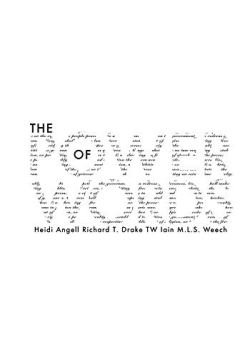
PowerOfWordsCoverWords have power. They can be used to cure, and to cut. They can be used to build up and to tear down.

The Power Of Words is an anthology that explored these ideas, taking the First Amendment as inspiration. Four tales by four authors‌—‌M.L.S. Weech, Heidi Angell, Richard T. Drake and me. And it’s out now, on e-book and paperback (with audiobook to follow soon).

This might sound like a sales pitch, but I’ve read all the stories, and highly recommend it. And at the bargain price of 99p/99c for a limited period, you can’t go wrong.

My story in The Power Of Words is called Ghost Stream, and to give you a taste of it, I’ve written a separate short, called Rumours, that you can read here. In this tale, you’ll meet the villain of Ghost Stream, and maybe start to see how manipulative he can be. He might not lie, but his words cannot be trusted!

So check out Rumours here, and The Power Of Words here.

Reworking a novel (part 1)

I think I knew this was coming, but I can’t ignore it any longer.

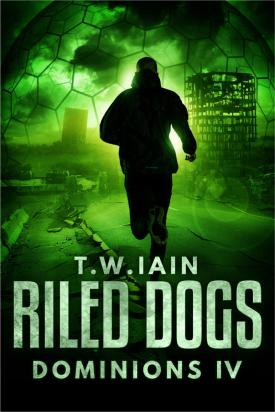
I wrote the first Dominions book, Dark Glass, back in 2015. It wasn’t the first novel I wrote, but it was the first I put through the whole editing process. It was the best I could do at the time, and I was pleased with how it turned out.

But since then, I’ve worked hard on my writing. I now have a better understanding of the craft of writing, as well as story-structure. I feel (know?) that the books I’m producing now are a marked improvement on that first novel.

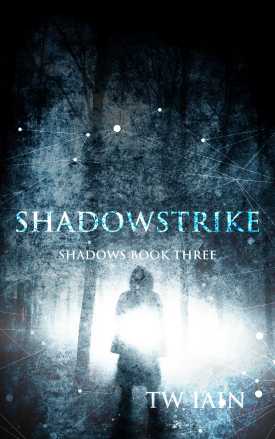
After finishing the third book in my Shadows series (due to be released late October), I planned on starting the next Dominions book. To get myself back into that world, I re-read Dark Glass.

Oh dear.

I’ve received some great comments about this book. On both Goodreads and Kobo some readers have given me 4 and 5 stars. But I also have some lower ratings, along with comments that the book is a bit slow. And on re-reading, I’d have to agree with them. Slow, too wordy, and the writing itself isn’t up to much.

At the back of my mind, I always suspected this. I ran a promotion through Freebooksy at the start of this year, and although I had a few thousand free downloads, I saw hardly any sell-through to the rest of the series. I know that many people who download a free book won’t read it for ages (if at all), but it should still have been a warning sign.

See, the whole reason for having a free first-in-series is to hook readers and encourage them to buy subsequent books. In many ways it doesn’t matter how good later books in the series are, if that first book doesn’t draw readers in.

Which leaves me with a big question‌—‌what do I do?

I have three options:

  • I could leave Dark Glass as it is and concentrate on writing the rest of the series. But is this a good use of my time if readers are not encouraged to read through to later books?
  • I could simply abandon the whole Dominions series and start something new. But while I have ideas for other series (far too many ideas!), there are some readers who have read subsequent books. I don’t want to let them down. Also, I’ve put a lot into this series. I don’t want to waste that time and money if there is another way to sort this out.
  • Or I could make Dark Glass better.

I’m going for the third option.

After re-reading Dark Glass, I can see sections that work well as they are, but need an edit to tighten up the language. I can also see things that need to be changed. The plot is too flimsy to sustain a whole novel. I’ve set too much up, and made too many promises at the start of the book that I don’t fulfil.

But I also have a better idea what the later Dominions books will contain, and I can use this re-working as an opportunity to seed some of that.

It’s going to be a lot of work, but it’s a challenge I’m looking forward to. I think I’ll learn a great deal. And so, I’m going to post updates on my progress. I’ll post excerpts, and I’ll talk about all the ups and downs. And if you want to join me on this journey, I’d love to hear your thoughts as we go.


The Importance of Reading Part 2: Concentrate!

sleep-2324347_1280When I worked as a teacher, we were always advised to split lessons into small chunks, because otherwise the attention of the students would start wandering. This seemed to make sense, especially when there was so much being said about how attention spans of today’s youth were so short. And having short activities that changed a lot did help keep students motivated.

But I don’t think this was down to attention span alone.

Many of the students I worked with played video games. Ask them what they’d been up to, and they’d talk about the games. When GTA3 came out, it was pretty much all some of them talked about. They spent hours playing the game, and complain that they were tired in school because they’d been up until the early hours.

If they could concentrate on one game for so long, what does this say about their attention span?

Of course, video games are designed to draw you in and keep you playing. They trigger dopamine rushes through constant rewards, and the fast pace, combined with beat-heavy music, increases adrenaline. Compared to hours driving round in a fast-paced game where you can control your own actions (and especially when you’re rewarded for doing things you’d never get away with in everyday life), doing ‘schoolwork’ is dull. Racing around a virtual world for hours is easy, but a few minutes taxing your brain to solve a maths problem using only pen and paper can feel like an eternity.

television-and-radio-2741799_1280The issue isn’t attention span but concentration. It’s easier to do something fun than something we find boring. It’s also easier to enjoy an activity when it gives instant rewards, and when it engages so many of our senses. This is why many people prefer watching films and TV over reading fiction.

And this is one reason why reading is so important.

To explain, let me back up a bit.

When we read, all we have are words on a page. We need to decipher these words, and the sentences they form. We use different parts of our brain to see, to decipher, and then to understand. We need to create our own image of what the writer is describing, and we need to engage our empathy to catch the emotions in the text.

All this takes time. Think about a story like Fight Club. The film is longer than average, clocking in at 139 minutes. The book is fairly short, about 200 pages (under 50,000 words), and this takes the average reader over 200 minutes to read.

Let’s take another example‌—‌The Lord Of The Rings (the complete trilogy). The extended versions of Peter Jackson’s film versions clock in at around 650 minutes (almost 11 hours). The book is over 1000 pages, taking just over 23 hours to read.

Reading a book takes more time and more concentration than watching a film. So why bother? Why not get the story at a faster pace, with less effort? After all, it’s still a story, right?

But they’re not the same. There’s a richness to reading that is missing from film and TV (just as there are things that audio-visual media do better than text). Yes, reading requires more effort, but there are still rich rewards in the pages of a book.

Keen readers know this instinctively. They know that sometimes a slow passage is simply a lull in the pace, and that their perseverance will be rewarded when action kicks in over the next few pages or chapters. They know that long descriptions set the scene, and might well give insight into characters and events. They know that the dialogue is not simply characters talking, but is also character and story development. Even if a reader cannot articulate this, they understand that each word is important.

But not everything in a book is automatically on the page. A good writer will hint at things rather than spelling them out. There might be a particular phrase that is crafted to trigger an emotion, or to remind us of something that we have (almost) missed earlier on. An aside from a character might alert us to something happening off-page.

These things are not obvious, and so we have to concentrate if we are to pick up on them. To get the most from a book, we don’t merely read the words‌—‌we are called to analyse the text, and to consider both what is written and what is alluded to.

learning-164331_1280This is an important skill to learn. In life, we don’t get everything handed to us on a plate (at least, the vast majority of us don’t). Not everything is explained to us in terms we understand. We can’t have what we want the instant we demand it. To get anywhere, we have to work‌—‌and that takes effort and concentration.

Reading teaches us to concentrate before we are rewarded. It also teaches us to focus on both what is obvious and what is hidden. It teaches us to avoid distractions‌—‌not only from the world around us, but also from ourselves.


So reading helps us slow down in our fast lives (to read my thoughts on this, click here for The Importance of Reading Part 1), and it increases our concentration. But it is also important for other reasons, and I’ll continue with my thoughts on this topic in a couple of weeks.

Short stories are back! New story ‘The Campaign’ free to read now.

After a break for the summer, I’m back into posting free short stories. I wrote quite a few first drafts while on holiday, so I have plenty to be working on over the next few months.

The first of these is The Campaign. I found myself wondering how holidays might change as virtual reality becomes increasingly realistic. Of course, there would be advantages‌—‌no need for hours spent at airports or on stuffy coaches, the ability to tailor the holiday to individual tastes, and so on. But there would be problems, too. As with any technological advance, there would be those who wished to disrupt it.

This story came from those thoughts, and you can read it here. As always, I’d love to hear your comments.

The Importance of Reading Part 1: Slow Down!


Reading is one of the greatest ways of spending time.

Okay, so I’m biased. I’ve always loved reading, and now that I’m writing seriously, I’m continually being reminded of the joys of reading. But I’m also learning more about the importance of reading.

I don’t meant the importance of being able to read. Of course it’s important to be able to decode written language. Without reading skills, we would be unable to understand instructions or warning messages, and our communication with others would be limited. Where once reading was the reserve of the wealthy educated, today being unable to read is something that causes shame.

reading-2557256_1280But there’s more to reading than simply understanding the words. Reading is an active pursuit‌—‌when we read, we decipher lines to discover the words, and then we analyse the flow of those words to uncover meaning. Reading is a journey, and we have to partake in it. The words mark a course, and we, the reader, have to put in the leg-work to reach the destination.

Maybe this is why other forms of story entertainment hold a greater pull. TV and films can be experienced far more passively, social media (in which our ‘friends’ contribute to stories played out in real time) plays out in smaller chunks that are easily digestible. Gaming is active, but in a different way to reading‌—‌the immersive element does not rely on our own imagination so much.

Yet reading is still incredibly popular, and I think this is fantastic. I believe that reading is not only enjoyable, but also incredibly important.

I posted recently about an episode of The Allusionist podcast that highlighted the mental health benefits of reading, but this is only one facet. Reading does so many things for us as readers.

Over the next few posts, I want to explore some of the reasons why I believe reading is so important.

I could have put all these reasons in one post. I could have come up with a list, or a series of images or something. But I’m going to take my time over this. I want to take things slowly.

And that dovetails nicely into my first reason:

Reading gives us the opportunity to slow down.

people-692005_1280Most people’s lives are hectic. Technology is wonderful, but it’s a double-edges sword. When technology started changing the way people worked, there were those who anticipated a time when a single person could do the work of twenty others, and in a fraction of the time. They envisaged a world where work took a few hours a day, and then we lived a life of luxury.

Yeah, right! Technology enables us to do more, and so our bosses‌—‌and their bosses, and so on‌—‌expect more out of us. We work long hours‌—‌yes, we can get far more done with technology, but so can everyone else. To stay ahead, we have to do even more.

And when we get home, there’s the constant bombardment of stimuli.

I can remember when there were three channels to choose from on TV, and they all shut down late at night. We had one television in the house‌—‌if you didn’t want to watch what others did, you went off to do something else.

Now, we have countless channels. Then there are subscription on-demand services. We have access to instant videos on YouTube. We have social media. We have real-time video communication. We’re inundated with messages.

If this is all too much, we do have the option of turning all our devices off, but this is hard for many to do‌—‌there’s always the fear of missing something ‘important’. And even if we do manage a digital detox, we can’t escape unless we hide in our own homes. Adverts bombard us in the high street, and music calls to us. Some adverts play videos, which are even more eye-catching. Everywhere we turn, there are images and voices scrambling for our attention.

I don’t think constant stimulation like this is healthy. We need time to slow down. However much we enjoy (and get a thrill from) this, we all benefit from moments of calm.

Reading can give us that time.

tranquility-2233620_1280It demands long periods of our attention, away from distractions. This might mean finding a quiet spot at home, or it might mean training ourselves to ignore the clamour around us (for instance, shutting off from the bustle of the morning commute).

Then, we need to give time up for reading. Rather than blasting through thirty-second videos, or flicking between different social media accounts, reading requires concerted effort over a number of minutes, maybe even hours.

And as we read, we are drawn into the story (or the journey of discovery if we are reading non-fiction). The noise around us fades away as the words take over. We step out of time and enter a new world. Our bodies rest as our imagination takes us to other places.

Reading enables us not only to slow down, but to disengage, to escape the rush of our lives. Reading gives us moments of calm. It can help us sleep‌—‌many studies have highlighted how good sleep is easier to achieve after winding down, and that staring at screens keeps our minds too active. It can give us the opportunity to take a breath and unwind.

But this is only one reason why reading is important. I’ll comment on more reasons later. Until then, enjoy the calm that reading can bring.

Book recommendations from this summer


Summer holidays are wonderful reading time. When it’s so hot that you don’t feel like moving, what can be better than lounging about with a book is ideal (and with e-readers, you don’t even need to physically turn pages). It’s an opportunity to catch up on some of those ‘must read’ books that have been on the ‘to-be-read’ list for far too long, or to dive into a new read.

A couple of weeks ago, I wrote about how reading was such a popular activity around hotel pools (and you can read that here). This week, I thought I’d share a few of my favourite reads from this summer.

PerdidoStreetStation_ChinaMievillePerdido Street Station‌—‌China Mieville

China Mieville is one of those authors where I’m almost embarrassed by how few of his books I’ve actually read. A couple of years ago I read King Rat (can recall enjoying it a lot), and earlier this year I read his short novel The Last Days Of New Paris (which left me feeling like I wanted to explore the world he created in far more detail).

So I’m long overdue a read of his first New Crobzun novel. I started it expecting to be impressed‌‌—‌‌and I wasn’t disappointed.

The world-building is incredible, not only in the setting but also in the characters‌—‌insect/human hybrids, bird-men and strange mutants. It’s all wonderfully imaginative, but when it’s combined with Mieville’s prose it’s an encompassing experience.

Some of the negative reviews of this book on Amazon complain that the story is slow to start, and while there is some justification in this comment, I think it’s necessary‌—‌to care about characters so strange in such an unfamiliar place, Mieville has to take us in hand and show us these wonders first. And when the story does get going, it’s a roller-coaster of a ride.

I’m not sure how to describe this book‌—‌it’s second-world fantasy, but there are nods towards sci-fi along with strong horror elements‌—‌but I think that’s a good thing. This book feels unique, and while that means it might not be to everybody’s taste, it’s a book I’d highly recommend.

And I really should read more of Mieville’s work before the year is up.

Artemis_AndyWeirArtemis‌—‌Andy Weir

Andy Weir, of course, came to fame with The Martian, which I greatly enjoyed. But I was wary of reading his second novel‌—‌The Martian felt like it could have been a one-off, and I didn’t want my enjoyment to be tainted by a disappointing follow-up.

I needn’t have bothered, because Artemis is just as good as The Martian. It’s not a sequel‌—‌it’s not even the same kind of book. Artemis is a fast-paced thriller set on a colonised base on the moon, with a spiky, sassy main character, gangsters, smuggling, and a bit of politics and business intrigue. There’s murder and fights too.

But what it does share with The Martian is science. I can’t comment on the accuracy of it, but it all sounds plausible‌—‌and in a novel, that’s good enough for me. The characters solve problems using physics, but science also causes many of their problems.

Oh, and like his protagonist in The Martian, the characters in Artemis do tend to swear quite a bit. Don’t know if Weir’s going to release a ‘child-friendly’ version of this, like he did with The Martian (personally I don’t see why he should), but unless you’re put off by ‘bad language’, this is another book I’d recommend‌—‌exciting and intelligent.

I’m already looking forward to whatever Weir comes out with next.

Obscura_JoeHartObscura‌—‌Joe Hart

I first heard of Joe Hart when I was writing Dark Glass. At the time, I was toying with calling my series Dominion, but when I did a search in Amazon I noticed a book called The Last Girl, a Dystopian story with the subtitle The Dominion Trilogy, Book 1. I checked out the author name, and discovered that Joe Hart had beaten me to my preferred series name.

His is a trilogy, though, whereas mine is longer. I added an ‘s’, and branded my books as Dominions. I’m sure he doesn’t mind‌—‌especially as his trilogy has done very well.

That’s not surprising, because they are good reads. So when I saw his new one on Amazon, I bought it.

Obscura isn’t Dystopian. In fact, it’s hard to describe. We have a protagonist who is searching for a cure to the version of dementia that destroyed her husband and now affects their daughter, so there are elements of medical thriller. But she’d addicted to painkillers, and as the book progresses it becomes a psychological thriller. Oh, and much of it happens in the near future, in space, so it’s also a sci-fi adventure.

If that sounds like it should be a mess, it isn’t. Hart weaves the story together brilliantly‌—‌a plot filled with misdirection and intrigue, but always remaining focused on the characters, especially the protagonist’s inner turmoil. It’s the kind of book where anything could happen, and I highly recommend it.

So another author goes on the ‘must read more’ list.


There were other books I enjoyed (the first three John Milton thrillers by Mark Dawson were fast-paced, enjoyable reads, and The King Of Space Must Die by Barry J Hutchison kept to the same high standards as the rest of the Space Team series but brought it all to a satisfying close), but I don’t have time to go into details here.

My ‘to-be-read’ list is still as long as ever, but I’m always on the lookout for more titles to add to it‌‌—‌‌any suggestions greatly appreciated.