There’s a common piece of writing advice that encourages new writers who want to make a success of their careers to write in a series. This does make a lot of sense, and there are many successful series writers (JK Rowling, James Patterson, Anne McCaffry, Jim Butcher)—but there are also those who tend to produce stand-alone books (Stephen King, Neal Stephenson).
But what is a series, and what is a stand-alone? King’s The Shining was a stand-alone, but a few years ago he produced a sequel in Doctor Sleep—so is this now a series?
This is worth looking into in a bit more detail, and although I’ll provide many examples, I’ll focus on two in particular—the books of Mark Dawson and the Star Wars franchise.
Let’s start at the beginning:
The pure stand-alone
This can be thought of as a story that is it’s own thing, unconnected to anything else. Generally, a stand-alone will have no loose ends, reaching a satisfying conclusion without the need to continue the story.
 There are many examples of stand-alones—Andy Weir’s The Martian, Neal Stephenson’s Seveneves, Tolstoy’s War And Peace. In some ways, before the sequels were released, the original Star Wars film (A New Hope) was a stand-alone—the Death Star had been destroyed, and the heroes won the day. However, Darth Vader survived, and already the seeds were sewn for a continuation of the story.
The series of stand-alones
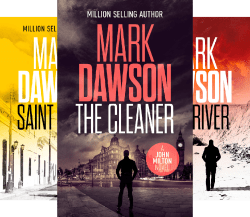 Mark Dawson’s John Milton books all feature the same fugitive main character, but each story involves a new adventure, and by the end of the book Milton has won through. Each book, therefore, is a stand-alone tale, but they are all connected by this same character. It isn’t necessary to read the series in order to enjoy the stories, because there is no (or very little) continuing story threads.
Milton is just one of a long line of characters to feature in series like this. Think of Columbo, Sherlock Holmes, Poirot, or James Bond. Sometimes these stand-alone series use groups of characters—NCIS, CIS, and so on.
This kind of series works well where the central character (or group of characters) is involved in mysteries or crimes—each story involves a new puzzle to solve. It’s worth noting that the central character(s) remains fairly consistent—there isn’t a great deal of character growth.
This type of series can work for other genres, though, and one example is Iain M Banks’ Culture books. Here, rather than a central character, the books are all connected through a shared world.
The self-contained series
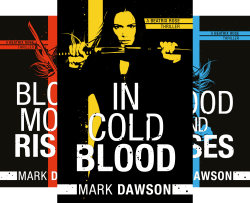 In one of the John Milton books, Mark Dawson introduced the character of Beatrix Rose. She was interesting enough to spawn her own spin-off series, and this is a self-contained trilogy telling the story of her tracking down those who have betrayed her. Each book is an episode of this quest, but by the end of the trilogy it is all over, and Beatrix’ story is told.
There are many more examples of this ‘story told over a number of books/films’ type of series. For many years, the original Star Wars trilogy was a complete story, but other examples include The Hunger Games, Twilight, Stephen King’s The Dark Tower series, and Asimov’s original Foundation trilogy.
It’s interesting that many long-story series are trilogies. The first part gives a fairly rounded story, but leaves enough open loops for a sequel (Darth Vader survives, Katniss wins the game, but the tyranny is still the same, and so on). The second part forces the main characters to face many problems, and often ‘sets up’ the ending by leaving the story off with more questions than answers (Han Solo captured, Luke with his hand chopped off). In the third and final part, the characters fight back, overcoming increasing odds to save the day.
A diversion into spin-offs and side-stories
 I mentioned a spin-off series above, but another term often heard is side-story, and this is perhaps the start of a spin-off. Basically, a side-story isn’t part of the main series, but is connected to it in some way. It might give more insight into events only hinted at in the main series (like Rogue One in the Star Wars universe), or explore the back-story of a particular character (like Solo).
Dawson’s Beatrix Rose started as a few side-story novellas, but there was a longer tale worth telling, and so he wrote her trilogy. So sometimes a side-story grows and becomes it’s own spin-off series—Buffy The Vampire Slayer spawned Angel, both Sarah Jane Adventures and Torchwood came from Doctor Who, Better Call Saul came from Breaking Bad, CSI and NCIS both have a whole host of spin-offs, as does Star Trek, and there’s now talk of a Game Of Thrones spin-off—and that’s just a small handful of examples.
The evolving series
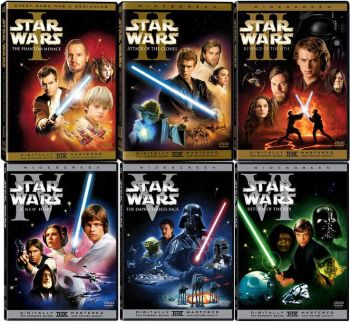 The stories in a series often hint at deeper stories, and series can evolve over time. So we have the growing story of Star Wars, with the prequel trilogy and the films set after the events in Return Of The Jedi (as well as all the spin-offs in books and animation).
The Dune books are another example—the first one can be read as a stand-alone, Frank Herbert originally conceived it as a trilogy but wrote more sequels, and now other authors are expanding the story with prequels and other tales.
I should mention Terry Pratchett’s Discworld books here. A series of stand-alone tales based in the same world, recurring characters have grown and developed as they’ve featured in different books. Think of Vimes, who starts off as a down-on-his-luck guard trying to cope with the likes of Corporal Nobbs, and ends up as an ambassador with links to the nobility. ‘His’ books can be read in any order, but there is pleasure in reading them chronologically to appreciate his growth. But there are also so many characters, and such a rich world, that there always felt like more stories were yet to be told. As with the expanding world of Star Wars (or, as another example, the Marvel Cinematic Universe films), each adventure gives rise to the potential for even more.
The continuing series / the serial
 Sometimes, a series evolves with an on-going arc, and Dawson’s Isabella Rose books are like this. They follow Beatrix Rose’s daughter (who originally appeared in those Beatrix Rose books I mentioned above, making this a spin-off of a spin-off), but although certain loops are closed in each book, there is a large overall story growing, and none of the books really end with Isabella in perfect safety—as readers, we know there is more to come.
These are often called serials, and they are very likely to employ cliff-hanger endings—think of the old black-and-white TV shows like Flash Gordon. Although there are many who dislike them in books (especially when unexpected), they are undoubtedly one way to garner interest in the next instalment. They’re not as common in films (where viewers still expect a ‘complete’ experience), but are still used in many TV shows.
These types of series can come to an end (as Game Of Thrones is), with the final season tying up enough of the story threads to satisfy fans. But there are some shows that keep on going—soap operas. These involve many characters with intertwining story-lines, and viewers are often following many threads at once. As one story-line comes to a conclusion, others are already rushing along, so the viewer is continually drawn back to find out ‘what happens next’.
As I’ve hopefully shown, there is no simple stand-alone/series dichotomy, but rather many ways of telling stories, and of having those stories grow over time. Stand-alones can become series, and series can spawn stand-alone tales. Stories intertwine all the time—and even in a stand-alone, there are hints of more stories.
It does appear that writing in a series can maximise success—if that series proves popular. But this doesn’t mean a series has to start as something huge. Most of the examples mentioned above started small (a single Star Wars film, the first John Milton adventure), and grew over time. And this makes a lot of sense—stories are living things, and the telling of one opens up the possibilities of more. Even if a particular story doesn’t focus on them, there are always questions. If a writer/producer can create stories to answer the questions readers/viewers are asking, then the series will grow.
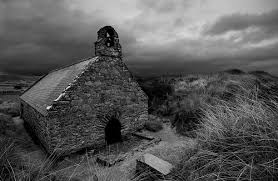 This one wrote itself pretty fast, and although the story’s fiction, the setting is real (with a bit of artistic license). St Tanwg’s Church, in the North Wales village of Llandanwg, sits amongst the sand dunes (I was told that it had been buried at one point, although a bit of research leads me to believe this is a bit of an exaggeration—about 150 years ago the church was in disrepair, part of the roof fell in, and the building filled with sand). Like many church sites, there’s a lot of hidden history here—so it seemed an opportune setting for a story about ancient power.
 Looking at this with cold logic, when it’s impossible for a single person to even read a fraction of what already exists, there seems no reason for putting more stories out into the world. Yet many of us continue writing, and continue adding to this immense pile of fiction available to readers.
 Once a reader finds that one book, of course, they often seek out others by the same writer. I know this through experience—it’s why I have every Douglas Adams book, why I’ve still got just about every Terry Pratchett book in paperback, every Iain Banks book. It’s why I get pre-orders of every book Barry Hutchison puts out, be they in the Space Team series or something else. It’s why I’ll look out for new books by the Platt/Truant/Wright team. And, as a writer, I know that, if someone clicks with one of my books, they’re likely to want more—and so I’ll do what I can to provide for them.

 One reason I felt cheated was down to a broken promise. In any book, the writer gives certain promises to the reader. These might not be made explicit, but most readers will pick up on them subconsciously. If a group of characters have been preparing for a big battle, then there is an inherent promise that there will be a battle. When the two main characters meet in a romance, even if they can’t stand each other initially, there is a promise hard-wired into the genre that they will end up in a happily-ever-after.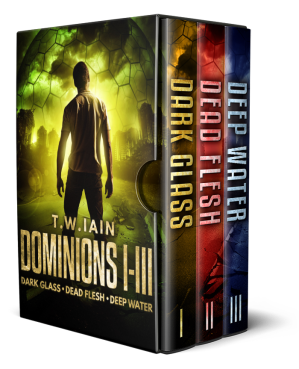
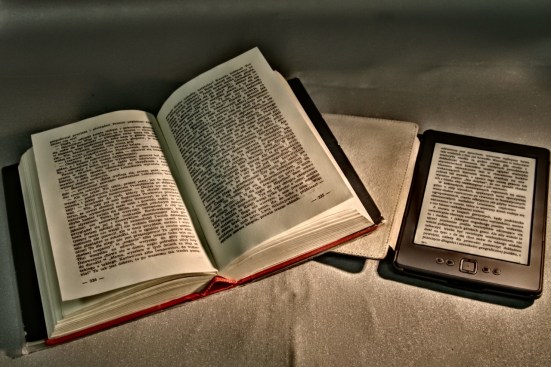 Digital books, too, didn’t become mainstream instantly. Back before smart phones and laptops, ebooks were pdf files, and many people simply didn’t want to read whole books on a bulky computer screen. But new formats were developed, chiefly epub and mobi, and new devices appeared. When Amazon released Kindle, e-reading really took off. Now, with so many people owning smart-phones, ebooks can be downloaded and read through apps, and reading large amounts of text on screens has become relatively normal. And with the rise in popularity of audiobooks, another shift is occurring in the way people read (consume) books.