Story is character


Douglas Adams has many great characters in Hitch-Hiker’s Guide To The Galaxy, but one of my favourites only exists for about a page‌—‌the sperm whale that is suddenly called into existence a few miles above the planet of Magrathea. Of course, the ending is fairly predictable.

“Hey! What’s this thing suddenly coming towards me very fast? Very very fast. So big and flat and round, it needs a big wide sounding name like‌…‌ow‌…‌ound‌…‌round‌…‌ground! That’s it! That’s a good name‌—‌ground! I wonder if it will be friends with me?”

I remember reading interviews with Adams where he explained how this whale came about. In cop shows on TV at that time there would often be chase scenes with both heroes and villains firing guns. Naturally, the villains were never the best of shots, and innocent bystanders would end up dying. What annoyed Adams about this was how nobody on-screen appeared to care‌—‌there was nobody to cry over this loss of life, or even say ‘Hey! I was going to play tennis with that guy this afternoon!’ (apologies if I’ve got the quote wrong‌—‌I’m going from memory here). In short, these characters were only there for one purpose‌—‌to be killed.

So Adams decided to write a character whose only role was to die, and make sure the reader cared about them.

I think it’s safe to say he achieved this.

But this points to the importance of characters in stories. Often, stories are viewed as primarily plots (the stuff that happens), with characters simply being the ones this stuff happens to. But in a good story, the plot is driven by the characters‌—‌initially through their reactions to events (like the thoughts going through Adams’ whale’s head), and then through their actions (although the whale’s meeting with the ground prevents anything in this example). Story is not so much the events as the characters’ reactions and actions. In fact, I believe we can go a stage further‌—‌characters are story.

play-stone-1744790_1280To illustrate this, I want to compare a couple of books‌—‌Arthur C Clarke’s Rendezvous With Rama and Andy Weir’s The Martian. Both are hard sci-fi, and as such both dive into scientific details. Both give the reader a sense of place through their scientific world-building.

Rendezvous… is about a team of astronauts investigating a huge alien artifact that has entered the solar system. We follow this team as they uncover various mysteries, learning more and more. Occasionally, things go wrong, but the team are professionally competent, and they soon solve any issues.

This is one problem I had with the book‌—‌there’s very little tension. Yes, there are the constant questions about Rama, but the whole ‘story’ is more like a narrative documentary than an adventure into the unknown. The characters (and I can’t remember their names, nor anything distinguishing about any of them) are simply tools through which Clarke can describe this fantastic world he has created.

Now compare this with The Martian. Mark Watney is stranded on Mars, and right from the start we’re with him as he struggles to survive. We ride with his ups and downs, feeling the tension of his struggles and the release as he solves problems. Yes, there’s science and maths in his solutions, and he’s competent and professional, but we relate to him as a person. What might have been a guide to survival on Mars becomes, through the character of Watney, a story of survival in a hostile environment.

Story comes to us through character, not through situations or environments.

Think of any successful book, and chances are you think of the characters driving the story.

The battle for Middle Earth is huge, too big for the average person to hold, and so Tolkien tells his story through the struggles of a few characters, primarily the hobbits. The fight between good and evil is made personal in Frodo’s struggle with the power of the Ring. Sam, his stout friend, gives us hope because he’s someone we can relate to‌—‌not particularly skilled, terrified much of the time, but with a firm belief in what is right, and a drive to do what he can to help Frodo. The story exists not in the vast sweeping history but in the struggles of these characters.

There are many other examples, of course. The conflict in JK Rowling’s wizarding world is brought to us initially through a young boy’s introduction to his own abilities as a wizard, and continues through his struggles both with his power and his develop into a young man, culminating in his confrontation with Voldemort. In the Hunger Games books, a whole world’s struggles are made real through the constant battling of Katniss Evergreen. Dune’s political intrigues are grounded in Paul Artreides, and his understanding of exactly who (what) he is. The battle against the Empire is shown through Luke Skywalker. The wonders of Douglas Adams’ bizarre universe are shown through the hapless character of Arthur Dent, confused and often wanting to simply have a lie down and a nice cup of tea. The fight against thieves in an office block is made personal through the character of John Mclane (and, to a certain extend, through Alan Rickman’s character‌—‌not a common thief but an exceptional one).

Without these characters, would these stories be the same? Would the stories really exist? Maybe they could be told in other ways, but they’d still need engaging characters. Maybe without Harry Potter, we’d have Neville Longbottom’s fight with Voldemort. Without Arthur Dent, maybe Hitch-Hiker’s Guide To The Galaxy would be Trillian’s story. We can’t know for sure. But we can say that, without characters, these stories would simply be stuff that happens.

Because characters don’t inhabit stories, they are stories.

Shadowfall free until Monday

Shadowfall (Shadows Book One) is free on Amazon until Monday.

Shadowfall_smallThe company enhanced Brice. They promised him action and adventure. But he’s stuck on a malfunctioning craft, with a crew who treat him like a child. He’s miles from home, in the worst storm of the season, and night is falling.

And in the shadows the creatures wait, their hunger growing.

The company prepared Brice for many things, but nothing can prepare him for what he must face when the shadows fall.

Click on the cover to download the first book in this sci-fi/horror series for free today.

My reading challenge for 2019

Over 2018, I took part in the Goodreads reading challenge, setting myself a target of 50 books the year. As I generally get through one or two books a week, I knew this was easily achievable, and I ended up with 83 completed books by the end of December.

But what does that mean?

Loads of books!Looking back at the list, most of the titles are just names of books. I can’t recall what happened in many of the stories, and I only have a vague idea of my thoughts on them. Yes, some stick in my mind‌—‌I enjoyed Joe Abercrombie’s First Law trilogy, and I’m still impressed at how Barry Hutchison can produce such entertaining and well-written Space Team books at such a fast rate. Andy Weir’s Artemis was good (and, more importantly, was definitely different to The Martian, proving that his first book wasn’t a fluke), and I loved China Mieville’s Perdido Street Station, both for the writing and the world-building. Way back at the start of the year I read Marcus Sakey’s Afterlife, and I recall being pleasantly surprised at the twists and turns in the story.

But the rest? Recollections of enjoying some, and maybe a few vague ideas regarding the actual stories, but generally not much else.

Of course, I don’t expect to remember everything I read, but I started thinking back to how I chose these books. Some were titles I specifically wanted to read (and this includes all the ones I’ve mentioned above), but for the others, I believe two factors were at the front of my mind, both influenced by this reading challenge. I chose many of the books over 2018 based on length and complexity. If I was vying between a few titles, I’d automatically lean toward shorter books as well as those that appeared easier.

checklist-1643784_640See, I chose books primarily because I wanted to complete the challenge, and it’s easier to read more books if they are shorter and not too taxing. I veered toward light reads that would only take a couple of days.

Of course, there’s nothing wrong with these types of books‌—‌reading fiction is primarily about entertainment, and I use it as a way of relaxing, so short periods of escapism are fine.

But a diet of only popcorn isn’t good. In between the lighter reads I should have been diving into more demanding works (like Perdido Street Station). As a writer, I should have used some of my reading to stretch my understanding of story and writing. As someone who reads, I should have sunk into at least a few texts that forced me to concentrate to a higher degree.

A number of years ago I told myself that I would read all of Honore de Balzac’s La Comedie Humaine (not in the original French, I hasten to add). This is a collection of about ninety titles, ranging from short stories to 500-page novels, and one thing I’ve found from the ones I’ve read is that the writing is dense. Paragraphs can stretch over many pages, and descriptions can be very detailed. There is a huge cast of characters who reappear in different titles, so keeping track of everyone is a challenge. They’re not easy reading.

I’m about a quarter of the way through, and I’ve found something to enjoy in each story. But I haven’t read any Balzac for a couple of years now. Especially over 2018, I’ve been distracted by shorter, lighter books.

This needs to change.

I have a growing list of other books I want to read, and other authors who I want to explore. There’s Brandon Sanderson’s long books (I was very impressed with the first Mistborn book, and promised myself I’d read more), and more by Joe Abercrombie. I have a number of Peter F Hamilton books on my Kindle. A few years ago I downloaded tons of out-of-copyright classics, and there are many of these that I feel I should read, including Jane Austen (I tried once, but never got more than a few pages in.)

literature-3324024_1280So, for 2019, I have a new reading challenge. Yes, I’m still going to read light, fun stuff (I’ve started the year with Ben Aabronovitch and Mark Dawson‌—‌both fine writers who produce great escapism for the reader), but I’m also going to push myself. I’m not going to treat books as a tick-list to get through. I’m going to give myself the time each book deserves.
I’ve still set a Goodreads challenge, though (again for fifty books), but I’ve done this as a means of keeping track of what I’ve read. I could use a simple list or spreadsheet, but Goodreads displays the covers of books I’ve read, which makes looking back far easier.

I’m confident I’ll reach fifty books again, but this year it will include a wider range. This year, I’m going to read like I mean it.


New short story – ‘Boxed In’

My first short story of 2019 is Boxed In. I’m not going to say too much about it, except to say that you can read it here.

Millenary3_low-resolution2And, as this is story number sixty one, I have another collection available. Millenary 3 contains the previous twenty shorts, all under a thousand words, bundled into a handy e-book (mobi, epub and pdf). You can download Millenary 3 for free here (and if you’ve missed the others, you can still get Millenary and Millenary 2 from this page).

My writing goals for 2019

2019

After falling short of my goals for 2018 (see this post for details), I’m almost wary of setting any for this year. But without goals, it’s easy to let things slip, so here are the things I hope to achieve over 2019.

Release the new edition of Dark Glass and seriously market the Dominions series

I should have the new version of Dark Glass out by the end of February, and then I can start marketing the whole series. I intend to run Amazon Ads (to drive sales on Amazon, obviously), Bookbub (to target other retailers, like Kobo and iBooks) and Facebook (to encourage mailing list sign-ups). Obviously, with Dark Glass being a permafree title, I’ll have to monitor read-through closely to calculate how effective the ads are.

I also plan to release a box-set of the first three Dominions novels, and use ads for this too. If the writing of the next Dominions books goes to plan, the box-set will probably come out over the summer.

Release two more Dominions novels

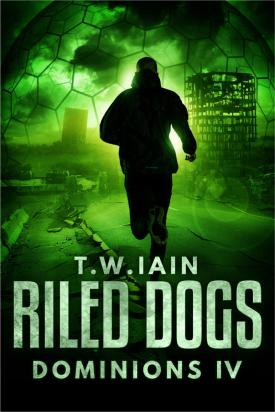
I’ve always viewed Dominions as a series of trilogies. The first followed Rodin’s journey of self-discovery, but dropped hints about a larger story involving the Domes and Authority. The next trilogy (which started with Riled Dogs (Dominions IV)) is wider in scope, following more characters as plans slowly unfold.

I’m pulling ideas together at the moment (and re-reading all the Dominions books has helped here), and I aim to release Dominions V and Dominions VI, along with another short story, around summer/autumn time.

Go wide with Shadows

I’m getting new covers done over the summer, and I’ll pull these books from Kindle Unlimited before this so that I can do a re-release/re-brand while going wide (running ads, reducing the price of the first book for a limited period, and so on). Out of all my books released so far, I feel this series has the strongest writing and tightest storytelling, so I want to give Shadows a big push.

Release paperback books

When I first put out my ebooks, there was so much to learn, so much to take on board, that I pushed paperbacks to one side. But this year, I intend to put out physical copied of as many books as I can. I’ve been learning about paperback formatting‌—‌even if I eventually hire someone to do this, it’s still important to know the basics. I’m getting new Shadows covers (including for paperback). And for Dominions, I’ll investigate Draft-2-Digital’s paperback service, which apparently can extrapolate a paperback cover from the e-book version.

Dive into dictation

I’ve recently purchased Dragon Naturally Speaking, and I fully intend to be dictating most of my fiction by the end of the year. There are a few reasons for this.

  • It’s faster. At the moment, I can type around 1500 words in an hour when I’m ‘in the flow’, but statistics I’ve read suggest that dictation potentially speeds this up to 5000 words per hour‌—‌a couple of half-our sessions will give me more words than three hours of typing.
  • It frees me up to ‘write’ all over the place. Especially with transcription, I could be ‘writing’ while doing stuff around the house and garden, going for a walk (although I’m conscious of the strange looks I might get) or driving.
  • Moving about while working has got to be healthier than sitting down (or even using a standing desk).

This will only be for first drafting, though‌—‌I’ll still use the laptop for editing. But the decreased time for producing that draft will still make the whole process faster.

A new project

I’m constantly getting new ideas, and I have a couple that could be developed into a new series. If things go well over the first half of the year, I’d like to start serious work on this new series toward the end of 2019.


So, five goals for 2019. Of course, I intend to add content to this website every week (alternating posts and short stories), I still want to develop my writing, and there is always more to learn about marketing and the business side of independent publishing.

Things will surely happen to disrupt these plans, but I’ll keep you posted on what’s happening, and I’ll give you a summary in about twelve months.

How was 2018 for me?


Another year over, another opportunity to look back at what I’ve achieved (or otherwise). Like any year, things haven’t always gone to plan.

Shadows

My aim for 2018: to release the third book in the trilogy in the first quarter of the year.

Shadowstrike_smallShadows was originally supposed to be a short series of ‘easy’ books as a palate-cleanser between writing Dominions stories, but each book required far more work than I’d envisaged. The third book, Shadowstrike, was no exception, and the editing stages involved a great deal of cutting and rewriting to reduce the overblown 160,000 word first draft to something just under 100,000. This took a lot of time, especially as I then had to do another couple of editing passes to improve the language, and I only managed to release the finished book a few months ago.

But I don’t see this as a failure. The book is far stronger for all that work‌—‌in fact, I feel that the Shadows series contains some of my best writing to date. And readers seem to enjoy the books‌—‌I received a cery positive review for Shadowfall, and my Kindle Unlimited page reads suggest that readers who start Book One generally continue on to finish the whole trilogy.

I was going to leave this series as a trilogy, but I’m rethinking this now. I might have more to report on that at a later date.

Dominions

My aim for 2018: to release Dominions IV and V along with a couple of supporting stories, and to start work on Dominions VI.

Well, that never happened.

Riled Dogs (Dominions IV)I already had an almost-finished version of Riled Dogs (Dominions IV), although I wasn’t ready to complete it because I planed to release IV and V close together. But with Shadowstrike taking far longer than expected, I knew I wasn’t going to get round to Dominions V before the second half of the year. And Deep Water (Dominions III) came out at the end of 2016‌—‌could I really leave over 2 years between that and the rest of the series?

So between edits on Shadowstrike I worked on Riled Dogs. This didn’t require too much‌—‌a quick polish, an external edit, and then all the formatting and finalising stuff (I already had a cover, and I’d been throwing around ideas for the product description for some time). I published the finished version back in March.

I also had a short that I’d originally written when I started work on Riled Dogs. This took a few more edits to complete, but being a short story, this didn’t take as long, and I was able to release Animus (A Dominions Story) as another free gift to my mailing list (although this will probably go on general release fairly soon).

When I’d completed Shadowstrike, I set to work on Dominions V. But I’d been enveloped in the world of Shadows for too long, and I needed to reacquaint myself with Dominions. I decided to re-read all the older books, and started (where else?) with Dark Glass (Dominions I).

And I wasn’t impressed.

This book came out in the summer of 2016, but was finished back in 2015. Three years further on, any my writing’s improved‌—‌and the state of Dark Glass made this obvious. The main character was passively carried along by the plot for most of the time, the story moved slowly, and the writing was overblown. And this was the first book in what I intend to be a nine-book series. How did I expect readers to pick up the second book if the first wasn’t a good read?

I couldn’t let this stand. I needed to re-write Dark Glass.

This had been my project for the last few months of 2018, and I’m far happier with the new version. It’s almost finished, and should be out early next year.

Marketing

I’m constantly learning in this area, and had some success with KU free days and a Kobo promotion. But paid advertising is becoming more necessary, with Amazon especially leaning towards a ‘pay to play’ environment. Over early December I ran a few Amazon Ads for Shadowfall, but without success. I had quite a few impressions (meaning that the cover showed up when potential readers were searching for what I considered to be similar books), but hardly anyone clicked (under 1%). I believe this is down to the cover, and after a lot of consideration I’ve decided that all the Shadows covers need to change.

Other projects

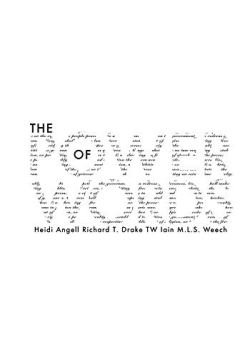
PowerOfWordsCoverBack in 2017, MLS Weech sent out a call for stories inspired by the First Amendment, to be included in an anthology he was putting together. He accepted my story (Ghost Stream), and then started an intense editing process that stretched into 2018. It was a lot of work, but it’s definitely made the story stronger (and I learnt a great deal from the whole process).

The release of The Power Of Words was at the start of October, and we had a Facebook party‌—‌the first time I’ve been involved with one of them. We’ve garnered a few decent reviews, and I’m proud to be a part of this anthology. There’s also an audio version‌—‌and listening to someone else narrate my own story was an eye-opening (ear-opening?) experience. It was like discovering a new story, and it’s pushed me further down the road to getting audio versions of my other stuff.

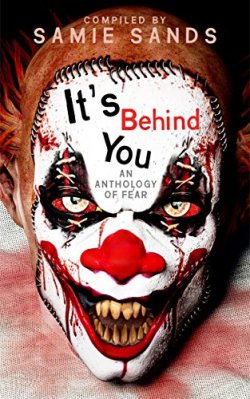
It's Behind YouBack in March, I had a short story (The Reason We Run) included in Samie Sands’ horror collection It’s Behind You.

I’ve continued to post a new story under 1000 words on my website every couple of weeks. I did have a break in the summer (putting out posts connecting the stories by themes instead), but I finished the year with my 60th of these shorts, and have just compiled the last twenty into another collection (Millenary 3). I’ve also continued to post various thoughts/musings on reading and writing, keeping up my schedule of putting something new on the website every week.


So that’s been my year in writing/publishing. Two novels released, a couple of shorts (including a very long one) in anthologies, and more shorts and posts on the website. Not the year I’d envisaged, but I’ve learnt and I’ve developed. I’m a stronger writer now, and I’ve increased my understanding of marketing and the business side of independent publishing. Re-writing Dark Glass, while appearing to be a backward step, will put the series on firmer foundations. It’s also given me the courage to accept that the Shadows covers weren’t helping sales of those books.

And I have plans for 2019, some more formed than others (and some little more than sparks of ideas at the moment). But I’ll tell you about them next time.

A free collection of short tales to see you through the holiday slump

Too much food, and there’s that bloated feeling. Add drink, and concentrating for any length of time simply isn’t going to happen. Then there’s the strange limbo of work between Christmas and New Year. You don’t want to start anything too big, because why not wait until the beginning of the year?

So you want something small to keep you occupied, even at home. A long novel’s going to be a struggle, and you know you’re not going to get round to all those books you promised you’d read, way back at the start of the year. You need something easily digestible, something to take in bite-sized chunks.

I’ve got just the thing for you.

On Monday, I posted my sixtieth 1000-word short story, and as I’m collating each twenty stories into ebooks, that means the third of these collections is now ready.


Millenary3_low-resolution2Millenary 3

Twenty more dark coffee-break reads.

A man must choose between family and what he knows is right. A beast does what she must to keep her offspring alive. An agent struggles to prevent aliens taking the world. A tourist gets more than he bargains for in a virtual holiday. A sociopath runs with her violent impulses. An un-named character is stuck in a never-ending maze of rooms.

And then the world ends‌—‌but not in a way anyone expects.


These stories aren’t necessarily happy, and some of the characters in them are downright nasty. But if you’re looking for some short reads to see you through to the end of the year, you can download Millenary 3 for free here.

‘The End Of The World’ – a short story for the holiday season

Sometimes, I get a line stuck in my head. It usually stays deep down, but it’s there, working away in my subconscious mind, pulling in other ideas as it grows. Often, the only way to get rid of that line is to set it free.

The End Of The World started like that, with the line ‘The world ended sixteen days ago, and nobody noticed.’ But I didn’t want this to be a depressing story. I wanted something that is sympathetic to the holiday season (and having certain similarities with Groundhog Day might help here!)

You can read the story here.

And there will be more new stories throughout 2019.

Fresh eyes (Reworking a novel part 7)

I’ve finished the next edit of Dark Glass now. I’m happy with the structure of the story, and pleased the main character actually does stuff now. I also think the writing’s far stronger than in the original version.

But there are always doubts. What if I’ve got rid of some sections that readers liked? What if the new scenes don’t work as well as I think?

I’m too close to the story at this point, and with more editing I’ll run the risk of reading what I wanted to write rather than what is actually on the screen. Yes, I’ll let the book rest before doing another edit, but I’m also going to use beta-readers. (Maybe that should be alpha-readers‌—‌I’m never totally sure which term is correct.)

That means I’m asking other readers if they’d mind looking through it. They can then come back to me with any comments‌—‌and I mean any comments. This process will serve no purpose if the only responses I receive are all ‘yep, enjoyed that’ or something similar. Praise is good, but constructive criticism is far more useful. I want them to tell me, for example, that they didn’t believe the characters would act as they did in Chapter 20, or that certain chapters felt flat, or that I had a character with short hair at the start of the book and long hair at the end (maybe if the story took place over a year this would be feasible, but in a story that has a time-frame of a few days?).

This is both exciting and a bit scary‌—‌what if readers hate the book? What if, based on their comments, I need to do more major re-writing? What if they say ‘something’s not quite right’, but can’t put their finger on exactly what’s up with the book, leading me to spend ages trying to figure out what the actual problem is before I can fix it?

But, as with the whole of this re-writing project, I have to look on the positive. Whatever beta-readers find, it will ultimately make the book stronger.

Of course, spending a few hours reading a book that you know isn’t ‘finished’ is a big ask, and I’m incredibly grateful to anyone who offers to help. I’ve already my mailing list for anyone wishing to do this, but if there’s anyone else who would like to help make this new edition of Dark Glass, please contact me (twiain@twiain.com).

I’m not going to look at the manuscript again until the new year. By then, hopefully I’ll have some comments to work with, and I can dive into the final stages of re-writing Dark Glass.


Previous ‘Reworking a novel’ posts:

Forever improving (part 6)

A successful first draft (part 5)

Editing or rewriting? (part 4)

The first draft is always a mess (part 3)

Broken Promises (part 2)

Reworking a novel (part 1)