There are many ways to tell a story. Two of the most popular are books and films, and although the same story can be told in both formats, each has its own strengths and weaknesses, and it is rare that a single title will work well on both screen and page.
In my experience, if the movie is an adaptation of a novel (or short story), the movie will not work as well. Conversely, if the book is a movie novelisation, the original film will be superior. There are exceptions, where both book and movie stand up on their own (Fight Club, The Princess Bride, Lord Of The Rings, and Trainspotting spring to mind), but generally whichever came first is the stronger telling, and the adaption is a reflection.
 I read the original Star Wars novel when it came out (way back in 1977). I’m sure I enjoyed it, because I remember reading it a few times. But I re-read it recently, and I was unimpressed—and I think I know what the problem was.
It follows the film too closely.
One of the criticisms levelled at the Harry Potter books is that JK Rowling doesn’t write novels, but films in prose form. Maybe that’s overly harsh, but the books are very visual, and it is easy to play the films along mentally when reading them. But if Harry Potter is films in prose, Star Wars is little more than a straight description of what appears on the screen.
Yes there are some additional scenes, and occasionally we are in the heads of one of the characters, but generally, the book describes the film, scene by scene. It’s like a fleshed-out script. Yes, reading the book reminded me of the film, but it also made me regret wasting my time ploughing through the words when I could have got a better experience spending two hours with the DVD.
Films are visual, but books need to work harder to evoke similar images. An expression on a character’s face can convey emotion, but to convey the same emotion in words requires more (or different) work. It is not enough to simply describe the images.
Think of the space battles in Star Wars. On the screen, we cut between close-ups of the pilots and wide shots of X-Wing fighters screaming past. There are explosions all around. We hear voices, and laser fire. Everywhere is action and adrenaline-fuelled excitement, and the speed of movement only increases the tension.
In the book, we get paragraphs describing these quick cuts, and they soon become a list of what is happening rather than a narrative of the action. One moment, we’re with Luke, then suddenly we have someone firing a missile from another fighter. Then we’re back with Luke for a moment, before a paragraph describes fighters screaming through the trench on the Death Star. After that, we’re in another cockpit, with sparks surrounding the pilot as he cries out.
The cutaways work on film, but not in the book.
I’ll give another example. At one point in the film, the camera watches R2-D2 following a path on Tattoine, and we get the impression that he (it?) is being watched, and we feel nervous anticipation. In the book, we get a description of this scene, but it conveys next to no emotion.
Why? In the film, we are concerned about the little robot (or at least we are interested in seeing what happens next). We feel for R2. But with a straight description, everything is distant. We are too far removed from what is happening.
For that scene to work in text, I can’t help feeling it would have been better to be in R2’s head, or at least see his point of view. Maybe have a description of the rugged terrain, and the caves along the route, with R2’s sensors picking up life-forms. There’s movement, high up on a cliff, but when R2 turns his head, it’s already gone. But he has his mission, and he needs to carry on, even though he doesn’t like this inhospitable terrain. And there are all the stories he’s heard, and the information in his data banks, of the creatures that roam this desert planet.
See what I mean? In text, we need to be closer to the characters’ emotions. We need more than a description of what is happening. A cool scene in a film might grab us, and a brief glance at a character is often all that is needed to convey emotion, but in a book we often need something more internal.
The book is a ‘novelisation of the film’, and so maybe the author (credited as George Lucas, but I believe Alan Dean Foster did the actual writing) was limited to what he could do. Or maybe the book was rushed, being pushed through to release at the same time as the film. After all, Star Wars was the movie where merchandising really took off, and the ‘book of the film’ perhaps should be seen in light of that.
Back in the seventies, the only way to see the film was at a cinema, until it was released on video three years later, and on television a couple of years after that. Fans didn’t have the opportunity of on-demand viewing, but the merchandise surrounding a film kept it fresh. The action figures enabled fans to reenact their favourite scenes. And maybe the book’s main purpose was to be a reminder of the film, and the way the movie played out in my head as I read the book should be seen as a mark of its success.
I can’t help thinking it could have been a great novel, though. The story itself is a classic, taking the Hero’s Journey and placing it in an exciting new setting, with alien worlds to explore and a cast of interesting characters. And these characters have conflicting motives that change over time. The story has an incredible scope, from the bickering robots to the world-destroying space-station, from Luke being ripped from his quiet home life to Leia’s political machinations, from Solo’s ‘get what you can’ attitude to the battle of ideologies between Empire and Rebellion. Love and death, war and peace, survival and friendship—Star Wars touches on them all.
Surely this deserves more than a bulked-out movie script.
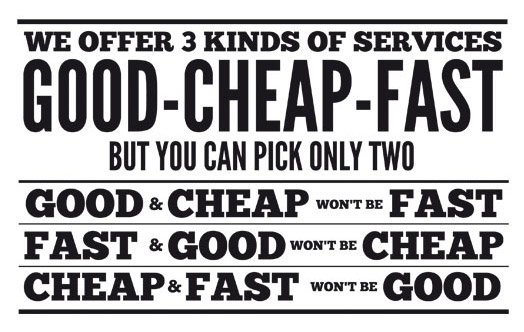
 Everyone is different. Every writer works in their own way. Some are able to achieve a flow state, and the words fly from their fingers. Some use dictation to work at 5000 words per hour on their first drafts. There are those who plan meticulously before they start writing, and so there is not as much structural work required later (and I believe this is Lee Child’s method). And others are simply capable of putting in ten hours of work on their books every single day.
 But in books (in fact, in any art), this becomes problematic. Good art has a long-lasting appeal. Well-written books can be re-read countless times and still feel fresh. Classics last forever.
 So, there you have a few of the things I picked up on while reading the Tube Riders trilogy. As you can no doubt tell, I was impressed. I’m going to be following Chris Ward from now on, reading more of his books (and his newsletters — he asks some interesting questions). He’s my kind of author—exciting, entertaining, and instructive.
 It’s interesting how different arts view the development of talent. In the visual arts, it is common for a painter’s early years to be regarded as training, or as an apprenticeship period. It is often later works that are more highly valued. Then there are actors who mature with age, performing with more gravitas and filling larger roles. The ones who relied on their looks fall by the wayside, but the ones who worked at their craft and developed their acting skills earn increasing respect.
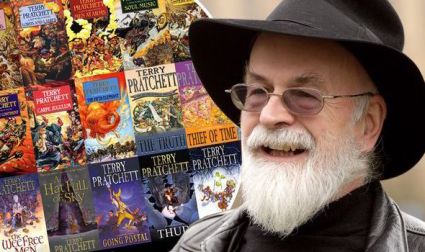 Terry Pratchett is a case in point. He wrote a few books before starting on the Discworld series, but they are not a patch on his later works. Even with the Discworld series itself, it took him quite a few books before he got into his stride. The Colour Of Magic and The Light Fantastic are still Pratchett, but nowhere near as good as many of the later ones.
 Recently I formatted a PDF version of my first
 There is a saying—‘you get what you pay for.’ Now, I’ve read some fantastic free books, both out-of-copyright classics and books by new authors, so the correlation between cost and quality is not rigid. But there is a great deal of poorly-written free stuff out there. And this, combined with the (thankfully lessening) idea that only traditionally published authors are good writers, has led to a certain attitude towards free books—that they can’t be much good.
 Another problem I can see with free is one of quantity. As I mentioned before, there are more free books available than anyone can read in a lifetime. Through projects like Gutenberg, older classics are available to all. ‘First in series free’ is such a popular business model that there are a glut of books in every genre that can be downloaded without any cost.
 So I have problems with the free model. But I still download free books. Sometimes, when I enjoy a book, I’ll buy more by the author, so I know that free can work as a marketing strategy. And authors like Nick Stephenson have boosted their writing careers through this strategy.
