I’ve got another short story for you, called Don’t Go. It’s a little gentler than normal (although there’s still death in the air, and it’s not all light and fluffy). Let me know what you think of it.
You can read it here.
I’ve got an idea for a story. It’s great. It’s got this wonderful twist, one that turns everything on it’s head. See, what happens is….
But I don’t want to tell you. Not yet. See, you might take it and use it yourself. Then it wouldn’t be anything special when I write it. I don’t want to let this idea go. It’s that good.
Okay. I’m excited. I’ll tell you. See, it’s set in our world, but there’s an alien race living amongst us. They have been for years.
What do you mean, it’s been done before? I haven’t got to the good bit yet. See, this hero character stumbles upon the truth, and it looks like this alien race are trying to take us over. They do stuff like rig elections, and make sure there are all these dodgy additives in food.
Okay, okay, so that’s been done before. But you still haven’t let me get to the proper bit yet. There’s this twist.
You going to shut up and let me finish?
Thank you.
So this hero’s being guided by some secret organisation, and they’re trying to fight these aliens. They don’t want to be taken over. But our hero, he stumbles upon something. And it changes everything.
See, these aliens know that humans are dying out. They’ve known for years. And they came down, not to take us over, but to help us. Instead of wanting to destroy us, they are trying to save us.
Neat twist, right?
 Maybe. But the idea doesn’t make the story. It could be turned into something amazing, or end up run-of-the-mill, or even terrible. It could be a success, but it could just as easily be a failure.
Why? Because ideas are not important.
Okay, that’s an over-generalisation. Obviously, it is important to have an idea before writing, or before creating anything. You need to know, or at least have an inkling, where the story is going. You need to have a starting point, be that an interesting character, some event, or simply a concept (what if we used scent as our main means of communication? Oh, The Simpsons got there first – ‘Smell ya later!’).
But the idea in itself is nowhere near as important as the execution.
Don’t believe me? Think of any story you like — book, film, TV show, doesn’t matter. Now boil the story down to a single sentence, the idea around which everything else hangs.
Here’s one. Young person forced to leave home and fight, eventually triumphing over evil.
Sound familiar? It’s Star Wars, right? Or maybe (if you take ‘person’ to mean ‘person-like being’) it’s Lord Of The Rings. Or countless other stories.
Now think of a concept for a story. Try this one. The world is an illusion.
Cool-sounding concept. It’s The Matrix.
Or is it The Wizard Of Oz, where everything turns out to be a dream? Maybe it’s The Truman Show.
Three very different stories, but they could have come from the same initial idea.
The initial idea isn’t that important. It’s what you do with it that matters.
 But even that only goes so far. Imagine two writers have the same initial idea, and map out identical story outlines. They have the same characters and settings. But the finished stories would be different. One might be heavy on poetic descriptions, where the other is filled with fast-paced dialogue. One might have a gritty edge, and the other might go for a softer, more family-friendly approach. One might stress the outer struggle of the characters while the other focused on their internal dilemmas.
Same ideas, different outcomes.
There is something else to consider when thinking about ideas. And that is the sheer abundance of them.
Don’t believe me? Coming up with ideas is easy. Look around yourself, or think about the things around you. Pick two different objects. Now combine them.
I’m going to pick a train set and an exercise bike for this example, as they are both things that are (sometimes) in our conservatory. My first thought on combining these is this; the power from the exercise bike is fed to the train set. While I pedal, the train runs. When I stop, the train stops.
Not a great idea, but let’s run with it. Imagine this train set is somehow a real railway system. When I pedal, I enable real trains to run. Obviously, that would take more than one person using an exercise bike. So there’s a whole bank of us, all pedalling furiously, so that the trains run on time. Our hard work enables all those business bods to get to work.
We can’t afford to stop, because then the transport network grinds to a halt. It’s not only about commuters. There are goods to transport as well. And, in this imaginary world, rail is the major transportation system. So those of us pedalling like mad are truly keeping the world running.
It’s a sweatshop.
This idea has legs (like the ones pedalling round and round). It raised so many questions. Are we pedalling through choice, or because we are forced to? Who is overseeing the pedal stations? What happens when the cyclists revolt? What happens when someone realises that pedal power could be used for other purposes?
Another example, again from our conservatory. There’s a plant in a pot on a table, and another in a pot on the floor. Which one is superior? The one on the table possibly has a ‘higher’ starting position, but the one on the floor is larger, and takes up more overall space. They are at different sides of the room. Is this because they can’t stand to be near each other?
So now my mind’s going off in all kinds of directions. Plants are intelligent. Maybe they have the ability to move themselves. Maybe the plants have been planning a takeover, rebelling against their treatment at the hands of humans. Eventually, they will start selective breeding programs, producing humans with more pleasing features, or ones that grow quicker. Maybe they will find a way of breeding humans through budding. Then some mad plant scientist will create a hybrid, part plant and part human. Fauna sapiens or something.
Sounds like it might end up as a comedy, but again that depends on the execution. Compare Day of the Triffids to Little Shop of Horrors.
See? I came up with a cool idea, and others have already beaten me to it. But that doesn’t matter, because the idea is only the starting point.
It’s what I do with it that is important. And that’s when the real work starts.
Life Story is a new short, free to read here.
Everyone tells stories. When you tell someone what you’ve done that day, it’s a story. When you relate a tale from your childhood, you’re a storyteller. But stories always have an angle. And sometimes, the stories we tell are fabrications.
But any story, once told, is alive.
You are the story you tell.
Read Life Story here, and check out more free shorts here. And, as usual, I’d love to know what you think.
What do you read?
I’ve never been a fan of that question, and my standard response is to say ‘I read books.’ Yes, this answer is glib, and it’s also inaccurate, or at least incomplete. Ignoring the whole issue of what a book is (is it a physical thing, or are we ready to accept mobi and epub files as books?), I read other things. There are posts and articles online, and magazines. When I get a new CD I’ll read through the accompanying booklet. And I’m one of those strange people who actually reads instructions when they get something new.
But when people ask what you read, that isn’t what they want to hear. Usually, they mean to ask ‘what kind of fiction do you like to read?’
I find this really hard to answer.

I could say I enjoy speculative fiction, but many are unfamiliar with that term. This means I have to explain that it is fiction that stretches the imagination, often in alternative settings. It encompasses fantasy and science fiction, as well as horror. But this includes a plethora of sub-genres, and there are many books in this wide-open field that I have not enjoyed. To be honest, some high fantasy bores me, and hard military sci-fi often veers towards a gung-ho attitude I struggle with. And while I am drawn towards darker fiction, I appreciate the occasional blast of humour, and a light-weight ‘fun’ read can be an excellent mental palate-cleanser.
But I enjoy other types of fiction too. I picked up one of Bernard Cornwell’s Sharpe books a few months ago, and greatly enjoyed it. James Clavell’s Shogun is another recent read that impressed me, especially in the way the romance is handled. Then there are all the fantastic classics. Wuthering Heights is a favourite, and I enjoy Thomas Hardy’s novels. And there are the ‘literary’ authors on my list of favourites; Iain Banks, Cormac McCarthy, Douglas Coupland, Chuck Palahniuk.
Then there are newer authors, ones I have come across because of the e-book revolution. Chris Ward, Barry Hutchinson, Sean Platt & Johnny B Truant, Mark Dawson, Rick Gualtieri. These are authors whose writing I enjoy, and who tell good stories. What particular flavour of story, what genre, isn’t important to me, because I trust them to entertain me. Maybe they’ll make me laugh, or maybe they’ll make me think. They might take me on an exhilarating thrill ride, or they might make me shiver with dread.
I think I’m drawn to characters more than plot, but I’ve read Colin Dexter’s Inspector Morse books a few times, and it is the mystery in each that draws me in. I might say story is important, but American Psycho is wonderful because of the way Bret Easton Ellis uses language, and the way he writes such a compelling but nasty character with only the barest of linear structures. The story is secondary (at best) to the character, and the ideas behind the writing are more important than the narrative drive.
I enjoyed Umberto Eco’s The Name Of The Rose, but I’m not sure if this was because of the mystery, or the amount of information it contained, or the challenge of reading something that made me think. Or maybe it was because the book is one of those ‘must read’ books, and I wanted to know what I thought of it.
So you see my problem with the question ‘what do you read’. I read different books for different things. I am drawn in by exciting stories just as much as well-crafted sentences or wonderfully-drawn characters. Sometimes I want a roller-coaster read, other times I want to drift into a new world. Sometimes I want to be challenged, other times I want popcorn. I can forgive clumsy prose if the story pulls me along, but I also appreciate artistic use of language.
Every book is unique. Every book that appeals to me does so for its own reason, and each book I read gives me something new.
So maybe saying ‘I read books’ isn’t such a flippant answer after all.
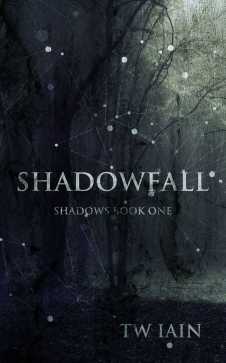
The first novel in the Shadows series, Shadowfall, is out now, for 99p/c for a limited time. It’s also in Kindle Unlimited, so anyone with a subscription to that can read for free.
Click here to find out more.
And if you sign up for my newsletter, you can download the exclusive prequel, Shadowlair.
It’s time for another short story. The Pinnacle is the story of two once-friends on a climbing trip. Or possibly it’s about maturity verses remaining carefree. Then again, it might be about the lengths people travel to protect what they believe to be important.
No, scrap all that. It’s close to 1000 words for your enjoyment. Read into it whatever you want.
But, as always, I’d love to hear what you think of it.
Read the story here, and don’t forget the full list of short stories here.
A few weeks ago I wrote about the problems of film novelisations, using Star Wars as an example (and you can read that post here). It’s time to redress the balance, and write about a book-of-the-film that works.
 I first read William Kotzwinkle’s novelisation of ET: The Extra-Terrestrial when it came out, back in 1982. I remember enjoying it, and I can also recall thinking that it felt like a ‘grown-up book’. It had some rude words in it, and for a young boy this was a definite plus-point.
As far as I can tell, it is no longer in print, and my copy disappeared long ago. However, I came across an audiobook version on Youtube a few weeks ago, and gave it a listen. And I really enjoyed it.
I think the ‘rude words’ I remember occurred in a scene where Elliot and his brother are arguing, and one of them uses the phrase ‘penis-breath’ as an insult. Nowadays, that’s not too shocking, but this was the eighties, and I wasn’t yet a teenager. It was one of those phrases that contained the proper biological term, so it was almost okay, but it still pushed the boundaries. It’s a phrase I can imagine children using. They might not understand why it could be insulting, or what it implied, but it was definitely not something you wanted to be called. It wasn’t a phrase many parents would allow their children to use.
In the book after that insult is thrown out, Kotwzinkle gives us a glimpse into the mother’s thoughts. She wonders where her children could have picked up such a phrase, and worries about what else they might be exposed to. And underlying this (and much of the mother’s musings) is a feeling that she’s losing control. She’s a single mother of three children, holding down a job and trying her best, but maybe that’s not good enough.
This moment highlights why Kotwzinkle’s ET is more than just a reminder of the film. He gives us rich insights into the characters’ thoughts and emotions. He doesn’t simply describe what happens on screen, but translates those subtle facial expressions into an interior dialogue that breathes life into the pages.
Kotzwinkle does this for the character of ET as well. In the film, the alien comes across as child-like — he’s smaller than the children, and he shows a bemused wonder at much of the world around him. At times (such as when he samples beer and becomes drunk), he’s there to provide comic moments. But in the book he is an ancient scientist, specialising in Earth’s plant-life. He is intelligent, and he cares greatly for plants and all other life. When he becomes drunk, he is confused, and we feel for him.
He also feels drawn to Mary, the mother. This might be hinted at in the film (it’s a long time since I’ve seen it), but in the book he becomes infatuated with ‘the willowy one’. When he is dressed up (a ‘comedy moment’ in the film), Kotzwinkle has him wondering if Mary will accept him if he looks more like a human. This interior dialogue turns a light-hearted break in the action into an internal struggle, and draws us closer to ET.
The film, like many of Spielberg’s others, is a ‘children’s film for all ages’, and I can’t help but think that Kotwzinkle was aiming this book at an older audience. Where the film saw things through the eyes of the children, especially Elliot, the book focuses more on ET and Mary. It’s a subtle shift, but one that helps make the book more rounded. Children can still read the book, and enjoy the story of ET and Elliot. But older readers are able to understand Mary’s worries, and are presented with a far richer story.
Kotzwinkle has written many children’s books, so he must have known what he was doing. And I would imagine he was given the freedom to go where his writer’s instinct led him. Whoever commissioned this novelisation must have known they were hiring someone with literary credentials, and they let him do what he had to do.
Yet he doesn’t stray the events in the film. Like the Star Wars novel, it’s almost a scene-by-scene rendition. But it takes the visuals and the dialogue as a starting point. It delves into the characters, using the palate of words rather than visuals and sound. It uses the strengths of writing to turn Melissa Mathison’s screenplay into a proper novel.
Maybe the Star Wars novelisation is an anomaly. I haven’t read enough books like this to draw any firm conclusions, but I did listen to the Dark Star audiobook recently. This was written by Alan Dean Foster (who also wrote the Star Wars novelisation), and much of this book is concerned with the characters’ internal struggles. It manages to turn a surreal film with a minimal plot into something intriguing and engrossing. In the film, characters stare off into the depths of space. In the book, we delve into their thoughts, their desires and their fears. It still retains the humour of the film, but adds a rich underbelly, much as Kotzwinkle’s ET adds another layer to Spielberg’s film.
Both books show that movie novelisations can stand up as novels, and can even, in many ways, surpass their source material.
Oh, the audiobook version of ET I found is on the ‘Audiobooks for the Damned’ channel on Youtube. If you have any interest in 80s films (from blockbusters like Back To The Future and Terminator to cult classics like Scanners and the aforementioned Dark Star), and a few hours listening time spare, check it out.
Whatever is happening, the mundane is never far away. The master criminal may well have a moment of doubt, wondering if the oven is still on. The professional assassin might be worried about their kid’s school tests. The hired thug might be struggling with the breakup of a relationship. And a husband-and-wife torture team, when you got past their job, would be just like any other couple.
This story, A Little Moment Of Happiness, sprung from these kind of thoughts. You can read it here.
 TW Iain is not my real name.
For any of you who have read my ‘about the author’ page, this should come as no surprise. I use a pen-name.
I’m not alone in this. Throughout the history of the written word, people have worked under pseudonyms. Some writers use multiple pen-names.
So why pretend to be someone else? Surely, if I’m proud of my books, I shouldn’t have a problem with them coming out with my real name on the cover. And if I’m embarrassed about them, or I’m worried that they’re not good enough, what am I doing throwing them out into the world?
It’s not that simple. There are many reasons for using a pen-name.
A lot of writers stick to one genre, occasionally flirting with others but always returning to their core. JRR Tolkien wrote some children’s stories, but they were still set in fantasy worlds, or had elements of the myths that influenced the rest of his work. Robert A Heinlein was prolific, but stayed within the bounds of science fiction. Terry Pratchett wrote comedy, predominantly within a fantasy setting.
But other writers spread themselves wider. Julian Barnes writes literary fiction, but he has also written mysteries, released under the name Dan Kavanagh. When JK Rowling writes her Cormoran Strike books, she does so under the name Robert Galbraith.
There are good reasons for this. If readers are accustomed to a particular type of book from an author, they are not going to be happy if that author releases something too different. Cormoran Strike and Harry Potter are written for very different audiences.
Many authors who write across different genres cultivate different brands, with a pen-name for each one. Even someone like Johnny B Truant, who writes and produces a wide range of books under that name (which is not his real name anyway), uses another pen-name, Aubrey Parker, for his romance titles. Many authors who write clean romance and erotica use different names—readers wanting a sweet love story are not going to be enamoured by graphic sexual content, and the erotica readers are going to be disappointed if there is nothing physical between the main characters.
So using different names for different genres can help readers identify the books they are more likely to enjoy. It can work to avoid confusion and frustration
The Cormoran Strike books highlight another reason for using a pen-name, one that was more common years ago but that still (unfortunately) exists. Rowling’s Harry Potter books are written for children (of all ages), but the Cormoran Strike books are thrillers. This is a genre where, generally speaking, readers are more likely to accept a book written by a male.
There have been cases of female authors using male pen-names in order to gain acceptance throughout the history of the written word. Mary Ann Evans became George Eliot, Amantine Lucile Aurore Dupin became George Sands. Harper Lee, when she released To Kill A Mockingbird, dropped her first name (Nelle), using instead her more ambiguous middle name.
And such prejudices do still exist today, and I came across a book review recently that highlighted this. The book was by an author who used initials rather than a first name, and the reviewer was angry. He seems to have enjoyed the book, but also assumed the author was male. When he found out that this assumption was wrong, he changed his opinion of the book, and his review explained how he felt tricked, and would never have read the thing if he’d know the author was a woman.
I don’t know whether to laugh at the ridiculousness of it, or be concerned that some people think like this.
Of course, many writers use initials rather than a name. Nora Roberts writes detective fiction as JD Robb. Another example is Joanna Penn. She writes books about the indie-publishing business, and is well-known and well-respected as a podcaster and speaker, and a driving force in the whole indie scene. She also writes dark thrillers with supernatural elements, and puts these out as JF Penn. Yes, part of her reason for doing this is to separate her two brands, but I believe she went with initials partly because it makes her books more acceptable to a wider audience.
There are times when male authors lean towards a female pseudonym, especially in romance, as the previously mentioned example of Truant/Parker highlights. I have also heard of a husband-and-wife team who write erotica, but they use her name on the covers, because many erotica readers are more comfortable reading books written by a female.
As a final example of this, when Bloomsbury published the first Harry Potter book, they suggested Rowling use initials, on the basis that boys were less likely to pick up a book written by a woman.
This is, I think, a big reason for using a pen-name, and there are a number of facets to it that are worth considering.
Generally, the job people do comes to define who they are. When someone asks ‘what do you do?’ they mean ‘what job do you do that takes up the main part of your day and provides your main financial support.’ Anything else is considered a hobby, maybe interesting but often frivolous. The job is the important thing.
So some writers, especially those with ‘important jobs’, or those working in a role that brings them into contact with ‘the public’, can use a pen-name to shield the writing part of their life.
For others, there can be tension between their ‘job’ and their ‘writing’. I’m thinking here of those who work with, but also write stories of a more adult nature (such as erotica or hard horror). And some of you reading this will feel awkward at this point. Is it right that someone producing such adult material can also work as, for example, a teacher? Is that even safe?
There’s no reason why it shouldn’t be safe. A teacher might work with children, but they are still an adult. A teacher with children of their own has engaged in activities that are unsuitable for kids. As long as that part of their life does not have a negative effect on their job, there should be no problem. But a teacher writing for a mature audience needs to be careful, and using a pen-name can help greatly. It is not about hiding, but about keeping different parts of their life separate.
This doesn’t only apply to those working with the young or the vulnerable. For many people, it is healthy to have some separation between work and home life. Books, once they are released, are public. Family is private.
Eric Arthur Blair wrote a book describing his early life living in poverty, but he didn’t want this to embarrass his family, so he used the name George Orwell. Out Of Africa was originally credited to Isak Dinesen, although it is now available under the author’s real name of Karen Blixen. It is unclear why she used a pen-name, but one suggestion is that the Blixen family were well-known in Denmark, and she wanted to protect the family name. Or maybe she didn’t want to be seen as cashing in on her family’s credentials.
Maybe this is why Joe Hill writes under that name, and not under his given name of Joseph Hillstrom King. Being the son of Stephen King would definitely garner interest from the public, but it would also pile on the expectations. Using the name Joe Hill helps his books succeed or fail on their own merits.
And, interesting, this is a reason that King himself used a pen-name for some of his books. He wondered if his books were selling because they were good, or because his name was splashed across the cover, and so he produced a series of titles under the name Richard Bachman, with none of the marketing push his ‘King’ novels got. He never answered his own question, though, because after a few years he was ‘outed’ when people spotted how similar in style Bachman was to King (especially in Thinner, which contained a similar supernatural element to his ‘King’ books).
So using the anonymity of a pen-name can protect family, and it can provide a way of proving (or otherwise) an author’s writing. It can also provide a way of escaping expectations, either externally or internally imposed—important when a writer wants to go wherever the story leads without having to worry about possible repercussions in the ‘real world’.
This one might appear flippant, but the sound (and look) of a name is part of a writer’s brand, and plays a role in marketing and selling books. I’ll give a few examples.
Charles Lutwidge Dobson is a bit of a mouthful, but the name Lewis Carroll rolls of the tongue in the playful manner associated with Alice’s adventures. The name Joe Hill has a far stronger impact than Joseph Hillstrom, especially for a writer of horror and thrillers. Daniel Handler is a fairly forgettable name, but Lemony Skicket grabs the attention and promises something different.
The Harry Potter author has no middle name, but someone obviously thought J Rowling didn’t sound quite right. So she borrowed the first letter of her mother’s name, and became JK Rowling.
Sometimes, the better sounding pen-name can work against prejudices too, especially when readers might be wary of trying a ‘foreign’ author. So Jozef Korzeniowski becomes Joseph Conrad, and Alisa Zonov’yevna Rosenbaum becomes Ayn Rand.
And the look of the name? I recall hearing that ‘Stephen King’ is an ideal name for marketing because of how it looks on the book cover—longer first name in smaller letters, with the strong second name in larger letters.
Of course, there are many more reasons writers use pen-names, but this post is already too long. And besides, does it really matter? The name is a label, and it is useful for branding and marketing, but after that? When I’m reading a book I don’t think about who the writer is. I don’t look at the cover. I just want a well-told story.
This fortnight’s story is The Tracker. I’m not going to say any more about it. Give it a read and let me know what you think.
Read it here. For other short stories, click here.

