Another year over. Where does the time go (and all those usual cliches)? But this is a good opportunity to reflect and to look forward, and in that spirit I thought I’d look back at some of my reading highlights of 2017.
I started keeping a log of all the books I read at the start of the year, and that tells me I read roughly 25 non-fiction books (mainly about writing and publishing), 25 novellas and 80 novels (and quite a few short stories, either on their own or in anthologies). They have been both traditionally published and independently published (with the latter probably in the majority, simply because I started using Instafreebie earlier in the year), and span a range of genres (some of which are not what I would normally read).
So, some highlights.
The new-to-me author who has been around for ages
It’s often said that even an old book is new to someone who has not yet read it, and I’ve read quite a few older books for the first time this year. This includes Old Man’s War by John Scalzi (which I enjoyed, although it felt a little rushed), A Falcon Flies by Wilbur Smith (not the kind of thing I’d normally read, but I’m definitely interested in reading more) and Sharpe’s Tiger by Bernard Cornwell (which was a great read, even though I don’t often go for historical war novels. I think it worked for me because it focused on the character of Sharpe rather than the historical details). But the one that impressed me the most was Brandon Sanderson’s first Mistborn novel, The Final Empire.
 I’ve heard Sanderson talk on the Writing Excuses podcast, so I expected something well written, and I was not disappointed. It’s long (pushing a thousand pages if I remember correctly), but never felt long-winded. Often, by the time I’m three-quarters through a book (of any length), I’m already thinking of what I want to read next, but I never reached that point with Mistborn.
I loved the magic system, and the way it worked almost like a science, with a clear set of rules. Again, I’ve heard Sanderson mention how he believes all magic systems need rules, and reading this novel showed me exactly what he means.
I already have more in this series on my to-be-read list, and can see Sanderson becoming one of my favourite authors.
The sci-fi/comedy that continues to work
Most combinations that include comedy fail. The humour might be annoying or puerile, and often the story takes a back-seat in the set-up to the next joke. Even something like the Hitch-Hiker’s Guide To The Galaxy series (which I love, despite what I am about to say) often feels like a series of cool, funny moments shoe-horned into a story-arc (possibly because this was how Douglas Adams wrote it, having no idea where it was headed).
But it can be done. Terry Pratchett did it expertly in many of the Discworld books, and Harry Harrison did a good job with his Bill The Galactic Hero books. And now, Barry Hutchison has written a series that strike just the right balance between humour and story.
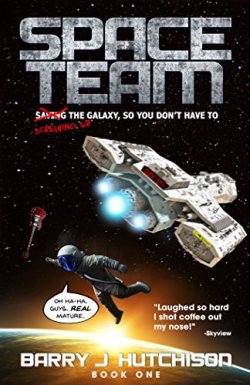 He released the first Space Team book back in 2016, but is now up to number seven (and has a spin-off with another couple of novels), and I don’t know how he puts out consistently good books so fast. The stories stand up on their own, with the humour based around the characters and the situations, but the stories stand up on their own too. The characters have also grown over the series, with ‘throw-away’ back-story helping to develop the characters even more.
If you like Douglas Adams, I’d recommend Space Team (and the first book is only 99p/99c, so what have you got to lose?)
The story-studio that continues to impress
I’ve been following the books (and writing careers) of the Sterling And Stone team for a few years now. They continually push the boundaries of independent publishing, and are unafraid to try new (or old) ideas. They started their author careers with serialised fiction, and have written sci-fi, horror, thriller, literary (and, under pen-names, children’s fiction and romance). They will write an unashamedly commercial series like Invasion, but also write books simply because they want to, like Crash.
 The three authors on the team usually write in pairs, so you either get a Sean Platt/Johnny B Truant book, or a Sean Platt/David Wright book. So far, I’ve enjoyed the ideas more in the former, but get a kick out of the darker writing of the latter.
This year, they’ve produced three things that have impressed me. First, the Platt/Truant literary book Devil May Care. It’s a kind of road trip book, with two story-lines that are related (and I won’t spoil things by saying how they connect, although I think I figured it out a good while before the authors intended). It doesn’t quite work for me, but I admire how Platt and Truant constantly push their writing in different directions—and there are moments, especially nearer the beginning, that contain some of the finest writing they have produced to date.
 They also published The Tomorrow Gene trilogy of sci-fi/thrillers, based around cloning. They billed this as the spiritual follow-up to their Invasion series, and it is clear that they were aiming for something commercial. But the ideas are definitely not dumbed-down, and these are intelligent reads. Also, each book has a different feel. The first begins fairly languidly, which suits the story perfectly, and the unsettling elements are allowed to creep in at their own pace. The second is incredibly fast-moving, with loads of action. The third deals more with conspiracies and lies, and is a more psychological book. Yet all three work well together.
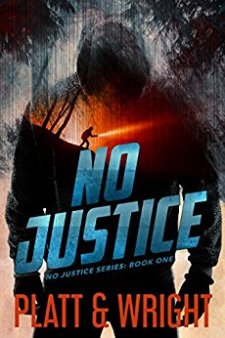 And finally, there is the Platt/Wright book No Justice. It is a very dark book, very unsettling, but this is a strength of their writing. The protagonist, the guy we’re supposed to be rooting for, is a vigilante, and he does some things that push the reader’s empathy. Yet this adds to the tension—you’re never sure if he’s going to go too far and become a full-on villain. Also, giving point-of-view scenes from the antagonist (a paedophile who kidnaps and later kills children) is a brave move, with disturbing moments where he justifies his abhorrent actions.
These books aren’t for everyone, but if you like to be challenged by what you read, and are not afraid of being unsettled, I’d recommend them.
The Dystopian series that taught me how to do it
 Along with Barry Hutchison, I’ve found another new favourite author this year in Chris Ward. He wrote the Tube Rider trilogy, and I loved the books. They are based in a future UK that is separated from the rest of Europe (these books were written before the Brexit vote, but now they feel worryingly possible), and the main characters are youngsters who ‘tube ride’ for kicks (grabbing hold of moving underground trains and hanging off the side). Of course, they see things they aren’t supposed to, and the story soon has them fleeing for their lives.
I love how Ward deals with the characters. None of them are perfect, and sometimes even the good characters do the wrong thing, occasionally for purely selfish reasons. He sets up the notion of ‘nobody is guaranteed to be a hero’ early on by having one of the gang betray the rest and then die—which also sets up the expectation that nobody is guaranteed to survive. The villains are very believable, with clear, logical reasons for their actions, and all have the possibility of redemption (whether that happens or not is a different matter, and I’m not going to give any spoilers). And the world Ward creates is frighteningly realistic and plausible.
For more of my thoughts on the Tube Riders series, click here.
I intend to read more of Ward’s books over 2018, including his new YA series, Endinfinium (starting with Benjamin Forrest And The School At The End Of The World).
Revisiting old books—not always a good move
I’ll re-read old books every now and then, but some of the ones I’ve returned to this year have left me questioning how I rated them so highly. I suppose I was more impressionable as a teenager when I first read James Herbert’s The Rats and the sequel, Lair, but now the prose feels somewhat clunky, and the stories don’t interest me as much. Robert R McCammon’s Baal read like a series of separate but connected stories, and Dean Koontz’s Watchers had story arcs that I felt could have been ignored for much of the time. I can’t help wondering how much of this ‘padding’ was at the request of the publisher, to make the book a certain length.
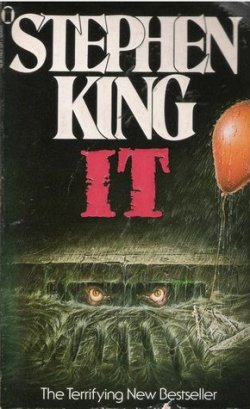 I also re-read Stephen King’s It. I can’t recall what I thought of it when I read it when it first came out, but I’m in two minds now. There are parts I love, but overall it felt too long and repetitive. Some of the creepy horror is excellent, though, and King is a master writer. One of those books where the parts are more impressive than the whole, and it hasn’t put me off re-visiting more of King’s books (or reading his newer novels).
The novelisation of the original Star Wars film was a disappointment (I’ve written about this in a previous post, which you can read here), but I did enjoy listening to the audio-book of the ET novelisation (and you can read more of my thoughts on this here). I read this years ago, and I’m sure I didn’t get a lot of the subtext when I was younger, especially the mother’s thoughts.
A perfect shorter story
 I’ll finish with a shorter work I really enjoyed — All Quiet In The Western Fold by Jamie Brindle. Imagine stories exist as living, breathing characters, in a wild west kind of setting. Stories are becoming sick, though, and the new sheriff has to investigate.
If that sound a bit strange, it is. But it is so well written, and manages to be serious and playful at the same time. For example, take this description:
High Sheriff Grok was a huge fat story, with thick wads of excess characterisation around his jowls and a pair of ugly similes that hung like ammo belts around his chest.
It’s a joy to read stuff like this, but the story itself is also intriguing, and makes me want to read more by Brindle. In fact, I have some of his books on my to-be-read list.
I have a lot of books on this list — far too many. Next year I need to stop downloading so much and get through more of the list (hard to do—I’ve already added a few more books over the holidays).
So, what else for next year? I’ve already mentioned wanting to read more from the authors above, but I also want to get back into some of the classics. A couple of years back I set myself the challenge of getting through all of Balzac’s Comedie Humaine (something like a hundred titles ranging from shorts to 500-page novels), and I don’t think I read any in 2017.
I’m also wanting to discover more new (to me) authors, so if you have any recommendations, I’d love to hear them. I prefer darker, more thoughtful stuff, but I’m open to just about anything (I’ve even read Fifty Shades, although I’m sure I shouldn’t have been laughing quite so much).
So, here’s to a good year of reading in 2018.
 One measure of worth is money, so how much do we pay for books? In the UK, a paperback is generally between five and ten pounds, and a hardback around twenty. E-book pricing varies considerably—there are the free or 99p books, right up to about twenty pounds.
 Think about what it takes to turn a story into a book. There is all the work the author puts in—planning, research, writing, re-writing and editing. There are external editors and proofreaders. This goes for all books, electronic and physical.
 Books, as a means of conveying a story, have a value in the words themselves, and the artistry and craft that are displayed in the writing. What we value in a book is the experience of reading.
 Which gives us another issue to consider—everyone is different. One person’s life-changing entertainment will be wasted hours to another. The same books could be considered a thrilling roller-coaster ride or a hideous excuse for gratuitous violence and bad language. A thrilling tale might be gratuitous violence and bad language to someone else. One person might value well-crafted prose, but another might find more of value in a finely-tuned story. One person might get swept up in rich descriptions, and another might be drawn into snappy, sarcastic dialogue.


 I’ve just noticed that Amazon has changed the price of my short story,
