Why a scathing review can be more helpful than a positive rating

Dom1CoverSmallI recently ran a promotion for Dark Glass on Kobo, and I’ve been very happy with the results‌—‌a few hundred downloads in over twenty countries. It’s exciting and strange to think that someone in Singapore has downloaded my book. They might even read it.

But things don’t stop with the download of the free book. Hopefully, I’ll see some sell-through, when readers of that first book choose to buy the rest in the series. Maybe a couple of people will join my mailing list.

And the other advantage of doing a promotion on a free book is the chance of getting more reviews.

Reviews are hard to come by, especially for someone near the start of their writer journey, but they are incredibly useful. Reviews give a certain amount of social proof to the book, they help guide other potential readers, and they opens up the opportunity to run more book promotions (certain sites will only accept books with a minimum number of reviews, or a certain minimum rating average.)

experience-3239623_1280Of course, not every reader leaves a review. Many people who download a free book will never even read it. Some will start it and never finish it. And many who reach the end will move straight on to another book. It takes effort to write even a couple of lines.

Many book sites allow readers to leave ratings, though‌—‌usually between one and five stars. This, clearly takes less effort and time than writing a review, and so it is no surprise that on sites such as Goodreads and Kobo, there are often more ratings than reviews for individual titles.

Before running this promotion, I had a single five-star rating on Kobo. But a few days into the promo, I noticed a couple more ratings go up.

One was a three-star rating, the other two-star.

I could have become upset by these lower ratings, but I prefer to look at the positive. These two readers had still read the book and had taken the time to leave a rating, and for that I’m very grateful. And I know that not everyone will enjoy what I write, just as I don’t enjoy some very popular books, and other books that I love also have their fair share of low ratings. Everyone has their own taste, their own things they like to see in a book (and things they don’t want to see).

But there was one thing that I found frustrating‌—‌these were ratings without reviews.

See, I want to improve in my writing. While I want to write books that I enjoy, I also want others to enjoy them. A low rating tells me that someone found problems with the book, but without any comments I don’t know what they had issue with. I don’t know what I need to work on. Did they find the pace too slow? Were the characters hard to engage with? Were there issues with the writing itself? Were they turned off by the violence and the occasional swearing? Or did my product description lead them to expect a different kind of story?

Some of these things might be down to taste‌—‌and that might simply mean that Dark Glass was not a book for them. But I’d like to know. I’ve had high ratings, and very positive feedback via e-mail (someone recently commented on the ‘brilliant story’ in Dark Glass, which made me feel pretty good!), but I’m clearly not satisfying everyone.

feedback-2849603_1280I know there are problems with Dark Glass‌—‌it was the first book I brought out, and since then I’ve improved as a writer. At some point I’d like to revisit Dark Glass‌—‌as it is the first book in the series, and probably the first book people will read, I want it to be as good as I can make it. But without feedback, I can only improve so much. Without being informed of the issues readers have and the problems they find, I can only change the errors I see.

I doubt many people who have downloaded Dark Glass have read it yet (I know I’ve got free books from a couple of years ago that I haven’t got round to reading yet). Many copies will probably never get opened. But out of those that are opened, I’m looking forward to more reviews and ratings. High ratings and positive reviews will obviously be great, but I hope readers are honest, and those who didn’t enjoy the book as much as they expected let me know why. Then I can take readers’ comments on board, and use this feedback to improve my writing and storytelling.

And this is a process that I know I will repeat with every book. I’ll never write a perfect book, and there will always be those who don’t enjoy my writing, but I can still strive to improve.

 

New short story (follow up to last one)

My last short story, For Blood, had a creature attacking a village, and those villagers doing what they could to defend it. This time, in For Blood (II), it’s the creature’s story.

I’m heavily into edits of Shadowstrike (the third Shadows novel) at the moment, and there are may different monsters in that book. But they aren’t all ‘evil’. Even the most monstrous have reasons for their actions.  In many cases, monsters are only defined as such by our own perceptions. Truth is often a matter of viewpoint rather than fact.

Anyway, you can read For Blood (II) here. And, as always, I’d love to hear your thoughts and comments.

Hiding behind a book with no cover

reading-2557256_1280It’s always interesting to see what books others read. As a reader yourself, I’m sure that, when you first walk into someone’s home, your eyes are drawn to their bookshelves. When you see someone reading on a train, or in a cafe, or on a park bench, it’s hard to resist turning your head to catch sight of the book cover.

But that’s only possible if they’re reading a print copy. If they’re using an app on a phone, or a dedicated e-reader, there is no visible cover. They could be reading anything.

Annoying in some ways, but from another angle it’s incredibly liberating. While some people might want to be seen with certain books, I would imagine most readers simply want to enjoy the book, without having the outside world intruding. And we don’t want strangers judging us on one book we happen to be reading at that particular moment.
E-books allow us to read anonymously.

And this, I believe, has been of benefit to certain genres of fiction.

Maybe the most obvious example is erotica (or, as I believe it is referred to on Kobo, ‘active romance’). While many people enjoy reading erotica, there has always been (and still is) a certain stigma attached to these books, and for a lot of readers it is (was?) something of a guilty pleasure. With covers that leave little to the imagination, reading erotica has long been something reserved for those quiet moments behind closed doors.
But without covers, this issue goes away.

You could argue that people openly read the Fifty Shades books, but the covers for these books (and other ‘mainstream erotica’) are far more subtle. And, with any popular book, a reader can always say they were simply trying to figure out what all the fuss was about. People feel safe reading popular books.

But erotica isn’t the only genre to have benefited from books with no cover. I’d say that genre fiction in general now has a wider ‘open’ readership.

This is (in part) down to how people want to be perceived, and can be illustrated by something supernatural thriller author and indie-publishing expert Joanna Penn has often said.

When she started writing, she believed that she should write something ‘proper’, citing Umberto Eco as an example. ‘Proper’ authors like Eco wrote serious literature, books that won prizes and were praised for their literary merit. But the books she enjoyed reading were things like Dan Brown thrillers.

adult-2242164_1280I think this is a fairly common mindset‌—‌writing (and reading) is seen as an intellectual activity, and books should be literary art. Yet we are drawn to stories and interesting characters. Art-house cinema and ‘serious’ films win praise, but most of us would prefer a couple of hours of escapism, with snappy dialogue, chases and explosions (or whatever flavour of ‘popcorn entertainment’ is your bag). And this carried over to our reading. We’d rather be seen with a ‘serious’ book than something frivolous, even if we’d rather be reading some pulpy sci-fi.

But now, with e-readers and phones, we can read exactly what we want, without fear of judgment.

Of course, the opposite could also be true. Some years ago, I’d read on my lunch-break, and one of my co-workers, seeing the size of the book, asked in a derogatory fashion, “What’s that, War And Peace?”, like reading something serious should be looked down on. (When I replied with a simple, truthful, “Yes”, the conversation was over, and I could carry on reading). If I’d been reading on my phone, they never would have made that comment‌—‌they probably would have assumed I was on social media.

The lack of a visible cover also goes some way to explaining the popularity of YA (Young Adult, for those of you unfamiliar with the term). Ostensibly, these books are aimed at older teenagers, but the various subgenres are popular with all ages. Of course, Harry Potter and the Hunger Games books are YA that it is okay to read, but these books, like the Fifty Shades books, are available in more ‘mainstream’ covers.

None of this should really matter. We should be able to read what we want, when we want, without concerns over how others may see us. But we all judge. So reading e-books, where the only way someone else can know what we are reading is by either asking or by looking over our shoulder, is an ideal way to read whatever we want.

What makes a book ‘new’?

book-1738609_1280We are always looking for something new.

Visit just about any bookstore, and you will be confronted by shelves and displays of new books, by big-name or debut authors. Even on the digital bookstores, there are ‘new and noteworthy’ banners.

Sometimes, the new titles take us by surprise‌—‌we see a book that catches our eye, even though we were not previously aware of it. At other times, we eagerly await the new release from a favourite author. Just think how long fans have been anticipating the new George RR Martin title. Think back to the queues at bookstores in the middle of the night when the newest Harry Potter book was released.

But what does ‘new’ really mean?

I recently read Stephen King’s 11/22/63. The book was released in 2011, so it’s not a ‘new’ title. But I hadn’t read the book until now. As I read it, I was absorbing the story for the first time. It might not have been a new release, but it was a new book to me.

The same could be said for many books. I wasn’t born when Tolkien’s Lord Of The Rings was published, but when I read it as a teenager, the book was new to me. And somewhere, someone else is experiencing Tolkien’s book for the first time. Elsewhere, another reader is discovering Isaac Asimov or Robert Heinlein. Someone has just picked up their newly-acquired copy of Mary Shelley’s Frankenstein. Another reader has now reached the end of Tolstoy’s War And Peace, and someone else is looking with interest at a writer they have not yet tried called Jules Verne.

Books written over a hundred years ago, yet they are still being discovered today. Old book, but also new. And now, we have access to so many more old books that can be new to us.

A bit of history that will probably already be known to you:

bookstore-1315560_1280Before e-books took off, the main way of getting a new book (new to you as a reader, not a new release) was to visit a bricks-and-mortar store. And these stores wanted to stock what was more likely to sell, so of course they pushed ‘new releases’. They also stocked back-catalogue titles from big-name authors, and a selection of ‘classics’, but it was the new releases that they focused on.

Of course, not every new release sold well. Many titles had their few weeks being touted as the next must-read before all the unsold copies were returned to the publisher. Some of these turned up in ‘remainder’ stores, and some copies found their way into second-hand stores, but many were pulped.

And they still are. In the high-street physical books game, new release periods are vitally important. A book that doesn’t ‘make it’ in those first couple of weeks has failed.

But it’s different on e-book stores. There is no limited shelf space, and these stores can happily stock millions of titles. They use search engine AI to show titles that might be of interest, so the potential reader doesn’t have to walk up and down shelving.

And that changes things. Now, an old title can become ‘new’ for a second, or even third time.

This happened with Hugh Howey’s Wool series. It became one of those overnight-success novels, even though it had started as a fairly low-key short story, and had grown over time. Andy Weir managed something similar with The Martian‌—‌a story serialised on his web-site, then an independently-published e-book, it only started getting a large audience when he released the audio book. It got noticed by people involved in the film industry, and suddenly it was a big-budget film based on a ‘new’ book by a debut author.

And, of course, it was a new book to everyone who had not yet read it.

There are millions of books out there. And that means there are millions of new reads, just waiting to be discovered. They might have been written this year, or a couple of hundred years ago. But that doesn’t matter. They can still be discovered. And as readers, we can enjoy new stories for as long as we desire.


‘Crossing’ – new short story

A new short story for you. I’m not going to say too much about the story itself, but the idea for it stared when I was on a night ferry surrounded by mist‌—‌my mind started wondering what was hiding out there, and what secrets might be on the ferry itself. The ideas bounced around for a couple of hours, and later, on my bunk in the small cabin, I tapped away on my phone to get the first draft down.

Some editing later (on both phone and laptop), and Crossing is now on the site. You can read the story here.

Are reading and writing really solitary activities?

sunset-3089285_1280Both writing and reading are solitary activities‌—‌the writer hidden away in a dark room, tapping away at a keyboard as their imagined worlds pour out; and the reader in a secluded space, diving into those created worlds. Both are ‘introvert’ activities, forgoing any need for social interaction.
At least, that’s the obvious impression. But I don’t think this is the complete picture. I think that there’s a social angle to both writing and reading.

These thoughts coalesced after I received an e-mail from someone who had read my free book, Dark Glass, and was writing to tell me how much she’d enjoyed it. It had a great impact on me. I was incredibly pleased that someone had connected with something I’d written, of course, but I was also very thankful that she’d not only downloaded the book (from the plethora of free books that exist), but that she’d also read it, enjoyed it, and taken the time to contact me.

And it made me think about why I write.

I’ve often told myself that I write for pleasure, and that I’d carry on even if nobody read anything I write. There’s something wonderfully escapist in all the planning, there’s the exciting rush of first-drafting as those plans come to life, and the slow, steady moulding that is editing is possibly the most rewarding part of the whole process, where those initial ideas finally become a fully-rounded story.

While all this is true, it’s not the whole truth. This might describe the process of writing a story, but a story is not the same as a book.

Once I’ve taken the story as far as I can, I’ll pass it on to an editor, and make further adjustments based on their comments. I’ll spend time formatting files so that the e-books look good. I’ll hire a cover designer. And then there’s the whole area of marketing and promoting, which I’m constantly learning more about. I look for ways to get this book in front of potential readers. I have a mailing list with free, exclusive books. I post a short story on this website every two weeks, and link to it via social media. I do what I can to reach possible readers, and I’m excited each time one of my books is downloaded, be it free or paid for.

When I say I’m not too bothered about others reading my books, I’m deluding myself. All this extra work proves it. The cover is there to attract potential readers. Editing and formatting help make the reading experience as good as it can be. And of course I want my stuff to be read‌—‌why else would I be looking for ways to reach more potential readers?

Some of this is for validation‌—‌no matter how good I feel a story is, only when others read it (and comment on it) will I know if it ‘works’. But there is also the need to share. I’ve enjoyed creating this story, I believe it’s the best I can make it (with, of course, help from others), and I want others to enjoy it as well.

After all, stories that are kept private are only dreams, but to live stories need to be shared.

fantasy-2760153_1280There is also the desire to improve as a writer. I am determined to make the books I write in the future better than the ones I have already written. I want to be embarrassed by my writing from a few years ago. For that to come about, I have to develop, and one important way of developing is to receive feedback. This could be positive, so that I can replicate what’s working well, or it could be constructive criticism, so that I am made aware of weak areas.

So as a writer I want to share my stories with others. But what of those readers? Where does social contact intersect with solitary reading?

The most obvious way is in reviews. Not very many readers leave reviews, and the ones that do can range from a couple of words to in-depth reports. Some are positive, some are negative, some are critical, and some are simply indications of likes/dislikes. But they are all communication, passing on the readers’ thoughts to other potential readers, either encouraging them to get a particular book or warning them to stay away.

And some of these reviews themselves spark comments. Have a look at any of the reviews of popular books, and you will see discussions where others have either agreed or disagreed with a particular review. Sometimes these can become bitter, but at other times they can bring about genuine change of opinion. And, of course, for a potential reader, they can provide more information about the book.

This is merely an electronic version of something that has been happening for years and years, quite possibly since the invention of the printing press. If we have an opinion on something, we are likely to share that with our friends. So if we have read a book that kept us up all night because we couldn’t bear to put it down, we’ll tell friends about it. If books come up in conversation, we’ll drop the names of current reads, or authors we’ve enjoyed. If a friend starts moaning about a particular book, and we have read it, we can add our own thoughts, either in support of or against their arguments.

In short, we share.

system-927147_1280Sometimes, books can open up conversations with others‌—‌similar reading tastes gives common ground, helping us (especially those of us on the introverted end of the spectrum) overcome any hesitancy in social communication. We can also use quotes‌—‌If I were to quote a line from Douglas Adams or Terry Pratchett, and someone else were to come back with another quote, we instantly have a connection. Sometimes, that can be like being in a secret club, especially if our comments back and forth bring bemused looks from others.

And this leads on to another social aspect of reading‌—‌the book club. A few people meet regularly, all having read the same book, and they discuss, sharing their viewpoints and so on. The book club has adapted to the digital world, too, with sites like Goodreads. If you’re serious about reading, it’s worth checking out. There are reviews, of course, but also discussions in forums on many different aspects of reading and books, as well as quizzes and reading challenges.

Reading might be a solitary activity, but having read opens up social interaction. And this is obvious, when you consider that the written word is a means of communication, and that story-telling has always been one of the greatest forms of social contact. So I will keep on reading in solitude, but I will share that experience through talking and through reviews. And I will continue to write in my own little space, but I will present those stories in the best way I can, and I will share them with others.

Stories need to live, and that means they need to be shared. As Terry Pratchett said;

‘People think that stories are shaped by people. In fact, it’s the other way round.’

New short story – ‘Virtually Reality’

I’ve got another coffee-break short for you.

Virtually Reality isn’t as dark as my usual stuff. It isn’t violent, either. I don’t think it’s shocking‌—‌but I’d like to think it’s a little thought-provoking. Or maybe it’s nothing more than a few minutes of escapism.

I’ll let you decide for yourself.

You can read Virtually Reality here, and there’s a full list of my short stories here (all 49 of them)

Explaining The Everyday

I recently visited Beamish, a ‘living museum’ in the north of England. Set in rural land, it has different areas depicting life at certain times in history‌—‌a 1940s wartime farm, an 1900s town and pit village, and so on). Many of the buildings are genuine period properties, transported to Beamish and rebuilt brick by brick. Staff all wear period costumes, and play the parts of everyday people in these different areas‌—‌in the bakery, they make the bread and cakes using 1900s methods (and then sell them to visitors), and the guard at the wartime farm asked our children for their ID cards (and happened to have a couple they could take). Transport between the different areas is either by walking, or on restored buses and trams, complete with uniformed staff playing their parts.

BeamishRather than giving loads of information, it goes for an immersive experience. This approach allows visitors to experience these times and places, giving a more ‘real’ understanding of day-to-day life as it once was.

But, as we explored the place, one thought kept on coming back to me‌—‌it could never be totally realistic, because I was seeing all this through modern-day sensibilities. I couldn’t forget the ‘real world’, with all its tech and modern societal issues and so on. No matter how accurate the costumes and the settings and the acting, it was not my own reality.

And that got me thinking about fiction, especially any story that is not based in the here and now. It reminded me of the difficulties involved in making a story-world realistic in a genuine way.

vintage-1060202_1280Take historical fiction. The characters in the story should be used to the time period they are in, but as readers we might not be familiar with, for example, some of the social ‘rules’. So when, for example, a character removes their hat, this might mean nothing to us, but to the characters in the story it could be a sign of disrespect, and will colour their actions toward this character.
Then there is science fiction. We might take mobile phone technology for granted, and think nothing of texting or Tweeting or updating a profile, but these simple actions would be alien to someone from a hundred years ago. Now imagine how things might change in another century’s time‌—‌what will people then do that is normal to them, but unheard of to us?

So what’s the problem? Why not give us a bit of background info in the story so that we understand?

But that’s where the problem lies. How does a writer do this, without it coming across as a clunky explanation? How does a writer get this information across without shooting off on a tangent, or interrupting the flow of the story?

Surely, if the story concerns the characters, we need to remain with them as much as possible. We need to see both the story events and the story-world through their eyes, and experience it through their senses.

There are a few ways to solve this issue.

One that is possibly the easiest to pull off (and, unsurprisingly, one that is used a great deal, especially in fantasy stories) is to make the main character an outsider, someone who doesn’t initially know about the world.

The Harry Potter books are a great example of this. Yes, Harry is a wizard, but at the start of the series he doesn’t know this. He discovers this whole other reality, and has to learn how it works‌—‌and that allows us to learn through his story. It’s even pointed out in the books, most often by a frustrated Hermionie bemoaning Harry’s lack of knowledge.

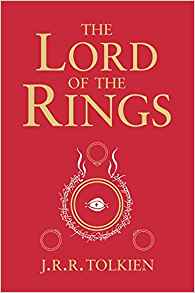
LordOfTheRings_JRRTolkienThe Lord Of The Rings does something similar, through having hobbits as the central viewpoint characters. Although they are different to us, their world is similar to a kind of rural idyll we can relate to. This allows Tolkien to teach us, the reader, about the world beyond the Shire as the hobbits experience it.

Another example is Umberto Eco’s The Name Of The Rose. By having one of the main characters as an apprentice, Eco is able to have the master giving information in a natural way, helping us, the reader, make sense of what is happening. Similarly, in Conan-Doyle’s Sherlock Holmes stories, Holmes has to explain himself to the less quick Watson, allowing us (the even slower readers?) to keep up too.

But what if there are no characters close to ‘us’? What if there is no in-story novice who requires explanation?

There’s a thing called ‘maid and butler’, from stage-plays. Two servants appear, cleaning or whatever, and they talk about the current situation of the main characters‌—‌but often, it comes over extremely false. “As you know, Ethel, the master is due to return from his recent sojourn to the south of France, where he has been wooing young Miss Forester.” Yes, it gives us information, but it sounds unnatural‌—‌both characters know these facts, so why are they talking in this manner?

So, how do authors avoid this?

One way is simply through good writing craft.

ConsiderPhlebas_IainMBanksAn example of this is in Iain M Banks’ Culture books. The main characters are not human, and so they have alien (to us) ways of doing things. There are many references to characters glanding various compounds, but I don’t believe this is ever overtly explained, but context makes it clear that Culture residents can artificially introduce various drugs into their bodies by manipulating internal reservoirs. In a short phrase like ‘she glanded Bliss’, Banks leads us to understand that this character is giving herself some kind of euphoric ‘high’ as a way of coping with her situation.

Sometimes, an author will throw the reader in at the deep end, and force the reader to think. Michael John Grist does this in his Ruins War trilogy (beginning with Mr Ruin). Right from the start, we’re diving minds, and fighting the Lag in sublavic ships. There’s very little to explain these terms, but as a reader it is clear that these things all mean something, so we go along with it, trusting that things will become clear eventually.

Books like this aren’t necessarily light reads, but good ones (like Mr Ruin) are worth the effort, because our perseverance is rewarded. Also, we are in the characters’ world from the start, totally immersed.

But sometimes there is need for explanation. There are books where a little up-front understanding will help the reader appreciate the story far more. And there are a few ways an author can do this.

Isaac Asimov uses one common method in his Foundation books. He starts each chapter with an excerpt from a fictional encyclopeida, giving some background information while still leaving questions, and all without disrupting the flow of the story. Other authors include extracts from ‘historical’ documents.

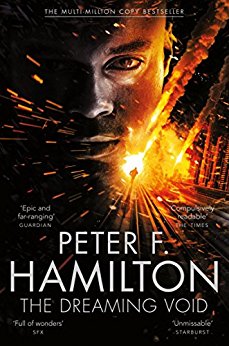
DreamingVoid_PeterFHamiltonSome authors delve into the details, but turn a possible distraction into an effective part of their writing. I’ve recently read The Dreaming Void by Peter F Hamilton, and there are long passages of explanation, far more than the story actually needs. But it adds to the whole world, and in a genre like hard sci-fi, many readers actively want these details. Similarly, Neal Stephenson, in Seveneves, provides so much technical information that at times it reads like a manual‌—‌but that is one aspect of his writing that his readers like. In the wide realm of science-fiction, some readers are drawn to the ‘fiction’ side, while others thrive on the ‘science’.

Of course, JRR Tolkien did this too, but on a far larger scale. The Hobbit and The Lord Of The Rings are the ‘stories’, but the details of the world he created fill up not only a lengthy appendix, but also many more books. And this is another way of doing things‌—‌write the stories so that the average reader can appreciate the story, even if they don’t quite get all the references, but provide additional writings for those who want to dive deeper.

Ultimately, though, the method used is not as important as the end results‌—‌to allow the reader to experience as fully as possible the characters’ world. Maybe, as with the Beamish museum, total immersion is not possible, but that doesn’t mean we stop trying. It’s one of the joys of reading fiction set in different places and different times, filled with characters who are different to us‌—‌it gives us an experience we cannot get in our normal lives. It helps us see a world, be it real or imaginary, in a new way.

I don’t know who said it, but this quote is perfect:

I read books not because I don’t have a life, but because I choose to have many.

New short story – ‘Paradise’

Enduring solitude for the greater good, or something else?

I wanted to write a new story, but had no idea for plot or character or anything else. But I had an image in my head‌—‌someone on a planet, wearing a space-suit, bounding over rocks.

I started writing, and ideas developed and came together, resulting in this new short story, Paradise.

You can read it by clicking here. I hope you enjoy it.