Shadowfall (Shadows Book One) is free, but only on Kobo, and only until Sunday 28th.

Click here for more details.
Shadowfall (Shadows Book One) is free, but only on Kobo, and only until Sunday 28th.
Click here for more details.
This story was another one that started life as an exercise in free-writing (writing whatever came to mind, with no plan). For ages, I wasn’t sure where it was going, and it was only when I returned to it recently that I added the last few lines, then the first few—and the story made some kind of sense.
At least, I think it does.
Decide for yourself. Bugs is free to read here.
As always, I’d love to hear your thoughts on it. Just add a comment after the story.
 This fantasy and science-fiction giveaway has over 150 free books, covering all kinds of science fiction and fantasy, in all kinds of lengths (short stories, novellas, samplers, full novels, even multi-book collections). But it’s only running until the 15th of this month, so you only have a couple more days to discover your next favourite writer.
(Oh, and I’ve got a couple of books in it too.)
Click here before Monday to see the full list of books, and download some free reading for the summer. We might not be able to physically travel that much at the moment, but with these books we can go to places we’ve never even imagined.
There’s a classic study from 1972 where children were presented with a small marshmallow. They were offered a choice— eat it straight away or hold off for a short time. If they waited they were rewarded with a large marshmallow. Further studies seemed to indicate that those children who were better able to wait would later perform better in SATS tests, and would ultimately be more ‘successful’ in life.
But it’s not only children who struggle with delayed gratification. Too often, we all want something good straight away, grabbing what we can in the moment. Sometimes it’s hard to take that step back and view each situation subjectively.
This idea rears its head in my latest short story, Payment. It’s also influenced by the Raymond Chandler books I’ve been reading recently (partly as research for a new project I’m working on, and partly because I enjoy his writing).
You can read Payment here. As always, I’d love to hear what you think of it.
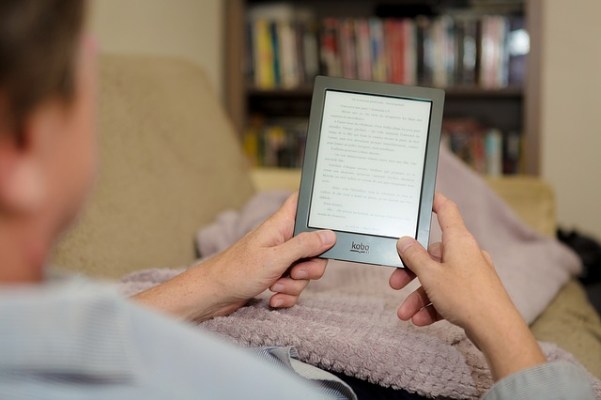
Many publishers are struggling at the moment. With so many bookstores across the world closed, sales of paperbacks and hardbacks have fallen. But reports have shown that ebooks sales are stronger than ever, and many independently published authors (who tend to focus on ebooks over print versions) have reported strong profits over the last couple of months.
Many, but not all. I’ve sold far fewer books since March than I did over the first couple of months of the year. My sales aren’t exactly high at the best of times, and my current dip could be down to any number of reasons, but I did wonder if genre is a factor in this. While people are reportedly reading more than usual, there might be a bias toward certain genres. Maybe the particular niche my books fall in is simply not what many want to read at the moment.
To investigate this further, I took a look at the top Kindle ebook sellers in the UK, and a few types of book dominated the list—feel-good reading, crime and thrillers, and biographies and memoirs.
Feel-good books make perfect sense—this is reading as an escape from the worries of real life. But crime and thrillers can be violent and disturbing—at first glance, not exactly an antidote to real-world troubles.
These connected genres are still selling well, I believe, for a couple of reasons. First, they are incredibly popular in ‘normal’ times, and so many crime and thriller fans will keep reading what they know and love. But secondly, these stories often end very positively. Yes there are dark crimes and twisted motives, and the characters (and, vicariously, the readers) are placed in increasingly tense situations. But at the climax, the crime is solved and the perpetrator(s) brought to justice. The hero defeats the evil antagonist. Everything turns out well.
When real life is messy and uncertain, we look for something reliable. We want to believe that good will always triumph, and that wrongs will be set right. So these genres give us that feel-good ending, and do work as an escape from our real-world troubles.
Then there are the biographies and memoirs. The appearance of non-fiction doesn’t surprise me—on top of the ‘usual’ non-fiction readers, there are many who struggle with fiction when times are tough. But we’re all drawn to story, and stories of people’s lives fulfil this.
Consider too the nature of biographies and memoir. Many of these stories involve the narrator facing and overcoming some obstacle. They fight against the odds, emerging stronger at the end, the pain and depression and hopelessness becoming the lessons and motivation to succeed.
What better antidote to all the doom and gloom than reminders that there is hope, and that it is possible to not only survive adversity but come through stronger than before?
So the bestsellers are filled with books that offer either escape or the promise of success.

But what of the very obvious absences in this bestseller list? Where was the horror and science fiction? Where was the darker stuff? In short, where were the type of books I enjoy reading?
It’s clear to see why darker books aren’t too popular at the moment (although I contend that horror is generally a positive genre, with good triumphing over very powerful evil, and you can read my thoughts on this here). Readers who dabble in these kinds of books might be staying away from anything disturbing, wanting instead to use reading as a booster to their positivity. And those of us who find enjoyment from darker books even in hard times are not numerous enough to push these titles into bestseller lists.
Maybe this is why my own books aren’t selling too well at the moment. Maybe I need to work harder at finding suitable potential readers, those who would enjoy science-fiction horror or dark Dystopian thrillers.
There might be trends in reading, but every reader is different. There’s an audience for every kind of book. Asking what the best books to read in trying times is impossible to answer in any but the most general terms. One reader’s engrossing Dystopian tale is another’s bleak trudge through depression. One reader’s buoyant romance, where love shines through, is another’s saccharine overdose of tweeness. One reader is drawn to cosy mysteries where the amateur sleuth and friends solve the murder, while another is pulled toward gritty stories where the criminals and those chasing them are all riddled with flaws that threaten to destroy them from the inside.
So the best thing to read is whatever will make you feel better, whatever engages you, whatever gives you the enjoyment, escapism and mental stimulation you seek.
But, most importantly, keep reading. Reading always helps.
No new short story this week (sorry), but I do have a few things I’d like to mention.
The short stories and novellas in my Dominions series are free on all platforms (click here to see details). They’ve garnered more interest than I expected, so I’ll keep them free for a while longer.

I’m also thinking of changing things with the rest of the series. Ebook sales and downloads are constantly changing—what garnered decent sales a year ago won’t necessarily be as effective today. There’s no ‘set it and forget it’ method of ebook sales, and I have to consider different strategies and tactics. I have to be willing to change, and to experiment with new ideas.
I don’t want to set all my books to free (it would be nice to at least recoup costs!), but free is powerful. I’m reminded of that at the moment through the pleasing number of downloads of the two titles I have in the Fantasy & Sci-Fi Giveaway on BookFunnel. And this giveaway is still on, with over 150 titles. For a complete list of the books, click here.
And now, I need to get back to the first draft I’m in. I’ve almost finished—and then I’ll have time to work on a couple of short stories (before planning the next book, and editing the new one, and everything else that needs doing!)
I think I might have to download some of those free books and escape into someone else’s story for a while.
If you’ve looking for a new fantasy or science fiction read, there are over 150 free titles in this promo. There’s something for everyone here—Dystopian stories, military sci-fi, space opera, epic fantasy, urban fantasy, and more.
(Oh, and a couple of my books too).
Check out this amazing giveaway here.
There are two parts to any written story—the story itself (plot, characters, and so on) and the writing (word choice, sentence construction, and so on). In an ideal book, both would work equally well. Exquisite (but not distractingly ‘showy’) writing would bring to life a well-constructed story, with realistic characters and vivid settings.
But there’s no such thing as a perfect book. It’s one of the reasons writers keep on writing—each book presents an opportunity to close the gap on perfection, to elevate the writing and storytelling from mediocre to good, from good to great.
I was thinking on this recently, after a couple of interesting reads.
[Note: there might be spoilers ahead!]
 The first of these books was The Wall by John Lanchester. I’ve enjoyed other books by Lanchester (such as Mr Phillips and Fragrant Harbour), although I can’t recall much about them now. He’s definitely a writer in the ‘literary’ camp. But this new book of his was also billed as a Dystopian story, and I was intrigued to read his take on that genre.
The Wall follows a new Defender on the Wall, a defensive structure that encases the country. His job is to watch out for Others who might attempt to gain access. Any Other breaking into the country means a Defender being sent out to sea—one in, one out.
The style of writing is fairly simple, perfectly suiting the protagonist’s character as he enters this strange new world. It also suits the monotony of his job—standing in the cold, staring into the darkness, with nothing happening. But there are interludes—a trip home, where he realises how he’s changed, and a holiday with his new friends from the Wall. And, of course, there’s an attack. Despite fighting hard (and even shooting a traitor), the main character is sent to sea, with a couple of others from the Wall (three in, three out).
He has some adventures out at sea. And…that’s it.
The story is little more than things that happen, one after the other. For most of these events, the main character is little more than an observer, or a passive participant. The story ends in what seems to be an arbitrary place. There’s no real resolution, no clear story arc.
And yet, I still enjoyed the book. I enjoyed seeing these scenes through the eyes of this character.
In short, I liked the writing in The Wall, but the story left me cold.
 The second book was The Trusted by Michelle Medhat. I heard her talk about this book (and the whole series) on a podcast, and it sounded intriguing enough for me to buy straight away. A fast-paced thriller, political intrigue, near-future tech, and a smattering of aliens—sounded perfect.
It started well, but I found myself becoming distracted by the writing itself. Nothing major, just little things—clunky exposition in dialogue, apparent shifts in point of view within scenes, too much tell. It felt more like a description of a movie than a book.
But I still finished the book. Despite my disappointment in the writing, I wanted to find out what happened next—to the point that I’m considering buying the next book in the series.
Two books I enjoyed, despite both leaving me in part underwhelmed. One engaged me through the writing, the other through the story.
But which do I prefer—writing or story?
I think it depends on a few factors.
Average writing won’t bother me if the story’s good, but if the writing is too amateur I can be turned off even if the plot is ingenious. Well crafted prose can be a joy in itself, but without a resemblance of a story to hang the language on I can soon become fatigued.
It also depends on my mood. If I’m tired, or if there is too much else going on, I want escapism in my reading. This could be why The Trusted worked for me at the moment. But at other times I want stimulation, and I’ll better appreciate those books that require more effort in the reading, books where the pleasure is derived from sinking into the language itself.
This does mean that when I don’t particularly enjoy a book, it isn’t necessarily down to the book itself. It could simply be the wrong book for me at that time. There are books I loved in my late-teens that I now find tedious, and other books I struggled with when I was younger but that I now consider worthy classics.
Is writing more important than story? Is story more important than writing? I don’t think it matters. Everyone has their own preferences, and these can change at any time. The aim is to enjoy reading, in whatever form that enjoyment takes—carried along by the story, emotionally attached to the characters, awed by the dexterity of language, pleasingly immersed in each scene.
And if one book doesn’t quite hit everything we want, there’s only one thing to do—keep reading more books.
So there’s only one thing to do—keep reading.
Another free story for you. The idea for this one, The Long Way Round, came to me while ironing (strange, the places the mind wanders when plodding along). It’s not as dark as my usual stories, so if you’re looking for a lighter read, this could be just what you’re looking for.
You can read The Long Way Round here. And as a reminder, I have four collections of short stories in ebook form, for those who prefer to read on an e-reader. Click here for links to these books.
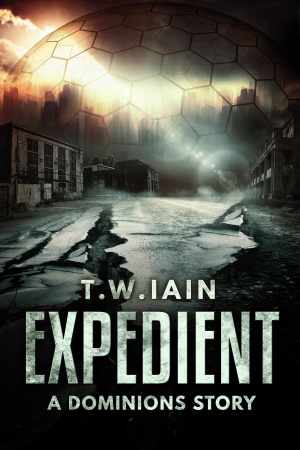
After writing about the benefits of shorter fiction for a quick burst of entertainment (which you can read here), I’ve put the novellas and short stories in my Dominions series down to free (for a couple of weeks at least, possibly longer). Click on the images below to go to available stores, or visit this page for more details.
(Note: If for any reason the retailer of your choice, I’ve added all the books to BookFunnel, where you can download for free in various formats (epub, mobi and pdf). BookFunnel also have great customer service, should you have any difficulties getting the files onto your reading device. These links are further down this post, under the book covers)



(please note that BookFunnel links are now inactive)

