Using short stories to try something new


I love reading novels, but occasionally I’ll get an anthology of short stories. I’m usually drawn to a particular title by one or two authors who I enjoy, but there are always stories by others I’m unfamiliar with. These anthologies are fantastic opportunities to try new writers without committing to hours of reading a novel would take.

I’ve submitted short stories to anthologies (and there’s one coming out in October that I’m very excited about), and a large draw is having new readers discover my work. Hopefully, a few readers will enjoy my stories enough to check out (and buy) my novels.

But there is another benefit to writing short stories, and that is the opportunity it presents to experiment. I want to improve as a writer, and that means pushing myself outside my comfort zone. That might mean trying a new genre, or it might mean trying a new style of writing. Clearly, writing complete novels for this kind of experimentation/developmental process would take too long, so I use short stories.

I’d like to highlight some of these stories here. Some have been more successful than others, but all of them have helped me improve.

And, as before, the comments below may contain spoilers, so you can always click on the title of each story to read it first.

Old Bones Burn Strong

I’ve always enjoyed fantasy. When I first read Lord Of The Rings, I’d go to my room as soon as I was home from school and spend what felt like a few hours simply reading. I remember being excited when I found Stephen R Donaldson’s Gilden Fire (the ‘lost’ chapter from one of his Thomas Covenant books) in a second-hand shop. I used to spend hours designing Dungeons And Dragons worlds, and creating new monsters.

So I wanted to try writing fantasy. I couldn’t figure out how to write a full-on epic as a short story (although I’m sure it is possible), so I came up with something smaller in scale, maybe a scene that could come from a larger story. Hopefully it stands up on its own, though.

Of course, as with science fiction, fantasy can be more of a setting than a genre, so this is also simply a story of an old man doing what he can to protect those he loves.

The Rendezvous

Another genre I read from time to time is thriller, and I wondered if I could manage an espionage story in under a thousand words. It took a lot of work, especially in editing‌—‌I needed to include the scene itself, but also hint at everything that had gone before.

Like many of my short stories, this started from an image‌—‌a man sitting outside, drinking a coffee, waiting for someone. The coffee instantly intrigued me, and I always knew there was something sinister about it. (A thought’s just come to me‌—‌maybe I should have had the man picking up the cup with his left hand, playing on the fact that the word ‘sinister’ is Latin for ‘on the left side’.)

The story, like so many others, developed as I wrote it, and required a great deal of editing. This was a fun puzzle, though‌—‌keeping enough happening in the scene itself to tell its own story, but also including enough hints and references to make the larger story understandable. Overall I’m pretty pleased with how it turned out.

Perfect

My stories tend to be dark. There’s usually death involved, or at least pain. So I challenged myself to write something ‘gentle’‌—‌a story where nobody died, with no dark undercurrents.

I wouldn’t call this romance, but it might be close. I recall wanting the dialogue to give the idea that this couple know each other well, and I think I got close to that.

Maybe I didn’t totally escape darkness‌—‌after all, the idea of the perfect moment does imply that other moments are less than perfect. But there is more happiness than pain in this story.

Never Only One Side

I’d already written a story using nothing but dialogue (Allegiance), but I wanted to see how far I could take this idea. I wanted a whole story that was only one side of a conversation.

A monologue would have been easier, but that’s usually one person talking to themselves. I wanted another character on the other side, someone who responded to the story’s main character, but who we never directly hear. The part of the conversation we ‘hear’ had to be realistic, while at the same time the story had to hold together.

On re-reading, it’s not as clear as I’d first thought. And I did cheat by having a second voice at the end (although it is through the same phone the main character used, so maybe I’m bending the rules rather than breaking them).

The Illusion Of Control

Stories are normally written in either third person (he did this, she did that) or first person (I did this). But there’s also second person (you did this, you did that).

This isn’t used much, except in ‘choose your own adventure’ books. It’s hard to write a story and convince the reader that they are the main character. Normally, books don’t address the reader at all (’breaking the fourth wall’), and second-person can feel like this the whole time.

But just because something’s hard, that doesn’t mean it shouldn’t be attempted, and I’ve wanted to write a second-person story for a while now.

I still haven’t managed it, but The Illusion Of Control is close. It seems to be second person at the start, but I cheat. About half-way through, it should become clear that the reader is not the main character, but that the story’s main character (or, at least, narrator) is talking to the reader. The character (and I suppose I can use that word for an AI) is monologuing, so this story is actually in first person.

The content of this story was influenced by Surviving AI: The Promise And Peril Of Artificial Intelligence by Calum Chace (well worth a read), and while I’m intrigued by the ideas I brought into The Illusion Of Control, I’m not convinced it works as a story. I’ll probably return to these ideas, though (I already have something in mind).

And I still want to write a second-person story.


Five short stories where I pushed myself to try something different, some more successful than others. I hope you found them entertaining. If you have any comments, on these or other stories I’ve written, I’d love to hear from you‌—‌simply add a comment below.

Why I enjoy writing horror shorts

I’ve enjoyed reading horror for as long as I can remember. As a teenager, along with sci-fi and fantasy, I would devour anything by James Herbert and Stephen King. So when I started writing, it was obvious that I’d try my hand at horror.

My Shadows series combines horror and sci-fi, but most of the horror I’ve written has been as short stories. There’s something about that size of story that works well in the genre. Think of Lovecraft, or Poe—‌loads of creepy shorts. And even though I read mainly novels as a teenager, I have fond memories of reading King’s short-story collections, like Skeleton Crew. I can’t recall the names of the stories, but there are tales that I still remember clearly, decades later.

I think it’s because horror is more effective if it is not explained. A good horror tale will drop hints, and let our imagination fill in the gaps—‌and our own minds know what scares us far better than a writer does. That’s why films like Jaws and Alien, where the monster is not seen until some way into the film, and even then only in part, are far more effective horrors than their sequels (although to be fair, the rest of the Alien films don’t pretend to be horrors so much as action/sci-fi stories).

I’d like to point you to a few of my own horror stories now, with a few words of introduction. There may be spoilers, though, so follow the links (click the titles) to read the stories first.

Escape

This was the first short to appear on the website that was written in first-person, and I think that point of view works well for horror. It draws us in to the main character, and helps us experience what they are going through.

Escape was influenced by Terry Pratchett. In one of his books (I can’t recall which), a wizard tries to build a death-proof box. He sets up various spells or whatever to ward of the presence of Death, and then he climbs in, only to hear a dark voice saying DARK IN HERE, ISN’T IT? Only then does he realise that a death-proof box isn’t going to work without air-holes.

Pratchett tells that story far better, and it’s played for laughs. Escape takes a darker turn.

Invitation To Dinner

Horror works well when the scary other-world aspects are at odds to an otherwise normal setting. Going back to Alien, although it is set on a space-ship, the characters are miners, and it is easy for us to relate to them as they sit around moaning about the company—‌they’re just regular workers, like us. Yes, they’re on a space-ship, but it’s a run-down workplace and home. It’s not that much different to places we know.

Then into this every-day setting comes something totally unexpected.

With Invitation To Dinner, I wanted things to appear very normal at the start, almost to the point of being boring. But, hopefully, various phrases stick out, indicating that all is not as it seems, until the horror presents itself at the end.

It’s Not Murder If They’re No Longer Human

This story came about from a bit of free-writing, where I started with a single idea and wrote whatever came to mind. That idea was an image of someone stepping into a room, exhausted, with blood dripping from their fingers.

The story developed as I wrote, and grew tighter as I rewrote and edited (and this took a while, as the original draft was well over twice the length of the finished story). I purposely left things vague—‌is the main character deluded? Are those he’s killed aliens or zombies?—‌mainly to let the reader use their imaginations. But I also like the idea of someone doing what they know (or believe) to be the right thing, but knowing that others will recoil in horror at their actions and see them as a monster.

The Offering

This is another story, like Invitation To Dinner, where the horror only appears at the end, and even then it’s subtle. But in this story, I didn’t want the main characters to realise they were facing horrors—‌to them, what happens is normal. And maybe (I purposely don’t give their ages, but hopefully they come across as fairly young) it is normal, which only makes what happens more horrific.

Crossing

This is my first attempt at a ghost story, but I include it in this post about horror because the two genres are related (or maybe ghost stories are a sub-genre or horror). But I wanted to present this story not from the point of view of someone seeing a ghost, but from the ghost himself.

I remember a story I read (or maybe it was read to us at school), where a group of children in the time of the second world war (I think) found themselves in a strange house, full of futuristic marvels. Three other children appeared, and looked at them with fascination and also fear.

I can’t recall much about the plot, but I do know that the original three children had somehow gone into the future, and the children they saw were reacting as if they were seeing ghosts‌—‌three children from the past who suddenly appeared in their own house.

I like this idea of someone realising they are a ghost, and this is what I set out to do in crossing. It was tough to write (or, more accurately, tough to edit)—‌a long period of time has to pass in the story, and the main character has to realise what is happening slowly. I needed to give clues without necessarily giving everything away. But I’m pleased with how it turned out.

It might not be as horrific as the other shorts I’ve mentioned above, but hopefully it gives the reader a small shudder when they realise what’s going on.


I’m sure I’ll write more horror shorts in the future (I think I have a couple in early drafts already), and I hope you enjoyed these ones.

How I used short stories to explore characters

In stories, characters are as important (or maybe more important) than plot. They help the reader relate to the story-world, and they bring emotion to the work. Without characters, the story is just a bunch of stuff that happens.

So the writer has to know the characters. Many writers will make notes on all kinds of information that never appears in the novel, but it informs the portrayal of that character, making them more rounded, and more interesting to the reader.

There are lots of ways of doing this. Some writers have character questionnaires. Others ‘interview’ their characters, or write short passages in that character’s voice. And short stories can help too.

I’ve used all these techniques to give myself a better understanding of my characters, and today I’d like to point you to some of my short stories that helped me when I was writing the characters in the Dominions books. I’ve made some notes on these below. Some of these notes might include spoilers, but you can always read the story by clicking on the link/name of each one.

Rodin / A Lesson In Death

Despite being a cold, calculating killer, I always knew there was more to Rodin (mainly wrapped up in his forgotten past). To him, the perfect job was one where only the target dies, with minimal fuss and suffering. He planned to give as little chance as innocent people getting caught up in each contract.

But things have a tendency to go wrong, and there would always be times when Rodin was forced to kill to cover his tracks.

And then a question came to me‌—‌what would he do if he was disturbed, mid-killing, by a child. His cold, logical side would say that the child had to die, and he’d justify this by telling himself that everyone dies eventually, and that maybe he would be saving the child from future suffering.

But would he be able to go through with that, or would another part of his character stop him?

I didn’t know which way he’d go, so I wrote this story to find out.

Genna / Influential Friends

From the moment I wrote Genna in Dark Glass, she was one of my favourite characters. She has strength, but its the kind that can be supple, bending round situations. And she has to be people-smart too‌‌—‌after all, she runs a district where everyone is out for themselves. She has to know how to play people.

She doesn’t have much time on the page in Dark Glass (although she is a far more important character in Riled Dogs, and will have a larger part to play in Dominions VI), but I wanted to know more about her. I wanted to see a part of a normal day for Genna.

I knew that a normal day would involve meetings, and that everyone she met would have their own agenda. I also knew that she’d use one of the most important weapons she has‌—‌information.

Jimny / The Customer Is Always Right

I like Jimny. He’s appeared in early drafts of every Dominions book so far, but I have been forced to cut him from all but Dark Glass and the mailing list exclusive novella Control (although he does appear, unnamed, in Expedient).

As with Genna, he is only seen when he is helping Rodin. But I wanted to explore his everyday life. I wanted to know what drove him. I knew he found pleasure in serving others, but I didn’t know which gave him more satisfaction‌—‌providing food and drink, or providing information.

The Customer Is Always Right allowed me to see this. It also (in a longer, earlier draft) told me some things about his father. But that story will have to wait.

Maybe when I write the next couple of Dominions novels, because he will return. I’m certain of that.

Sertio / Clay

When I started writing the book that would become Dark Glass, I was making the story up as I went. I was also writing from multiple viewpoints, and one of these was that of Sertio, the sculptor.

This early draft never got beyond about ten thousand words, and much that I wrote then never made it into the proper version of the first Dominions book. But, through writing those early sections, I learnt a great deal about Sertio.

There are hints in Dark Glass, behind his flamboyance, but I though it would be interesting to write a short with Sertio as the central character. Already knowing some of the secrets of his past, I wanted to explore how he created his art, and discover what drove him.

This story doesn’t explain his past, but it does give an insight into his creative process (or maybe creative impetus). The idea of striving for perfection in art is not uncommon, but perfection is an aspiration, not a goal that can ever be achieved. Maybe this is where some of Sertio’s deeper melancholy comes from‌—‌the understanding that he will never achieve what he desires. Or maybe the need to keep on trying is a way of coping with his inner demons.

Shorack / Blood Bind

In Riled Dogs, Shorack is introduced as a strong character, leading his family to success in the dangerous world of the districts, but it isn’t long before he’s struggling. He needs the support of others, and comes across as, ultimately, rather weak.

That is his arc in Riled Dogs, but I wanted to know about his strength prior to that. I wanted to see him making tough decisions. I wanted to explore how he could lead a family that was as much a cut-throat business as a flesh-and-blood society.

And maybe he will regain his strength, in the Dominions books that are already in early planning.


So, five characters from the Dominions books, and five opportunities to dive into their characters a little more. I hope you enjoy these snapshots of their everyday lives (especially if you have read the Dominions books). And, as always, I’d love to hear any comments you have.

A look back at some of my older stories

There never seems to be enough time…

For the last couple of years, I’ve posted either a short story on this site every two weeks. It’s been fun (and often challenging), but I think it’s time to take a break. I’m working on the third Shadows novel, and I need to do more on the marketing/business side of writing and publishing. Add in other work and family, and I need to consider how to use my time and energy most effectively‌—‌and so the short stories will be put on hold for a while.

But I still want to keep posting here, so over the next few weeks I’m going to write about some of the older stories‌—‌a little background information and so on. This does mean that these posts might contain spoilers‌—‌but you can always click on the links (titles) to read the stories first.

I’ll start with some of my favourites.

Waiting

I think this is the story I’m proudest of. It’s also one of the few I’ve written that deal with reality.

It’s hard to escape the seemingly increasing news reports of a lone person killing many innocent victims, either with a ‘proper’ weapon (and school shootings spring to mind here) or utilising something like a vehicle as a weapon. And, of course, we’re shocked by what happens. We watch the images on TV and internet, and we hear about the lives lost. We ask how something like this could ever happen.

And then we go about our lives. Because, really, what else can we do?

But for some people, this isn’t an option. Maybe they were there, and they struggle to come to terms with what they experienced and witnessed. Or maybe they lost loved ones, and every waking moment is now a reminder that their family member or friend is no longer around. These are the real victims‌—‌the ones who survive, only to repeatedly face the tragedy as they struggle to come to terms with what has happened.

I have never been in a situation like this, and I doubt I can fully imagine what it must be like. But Waiting is an attempt to do that. And it’s a way to remind myself that, for every incident like this, the number of people it affects is far larger than those present.

…if you only walk long enough

This was fun to write, so having a title that quotes Lewis Carrol made perfect sense. It was also tricky‌—‌there’s a lot that happens, and editing it all down to under a thousand words took some time. Having each section start and end mid-sentence helped here‌—‌it’s surprising how much we fill in the blanks when we read.

There’s also a nod to Stephen King’s Dark Tower series. For all the flack he gets for the endings of his books (and I have to agree that many of them leave me pretty non-plussed), I did like how that series (spoiler alert) ended with the realisation that it was cyclic.

I though this could work well for a sort-of-horror short, with someone trapped in a loop but not realising it. I hope it works, and I’m pleased with how this story turned out.

Missing

This was one of the first shorts I wrote for this website, but it’s still one of my favourites. It started with an image‌—‌an old man, standing on his back step at dusk, calling for his cat. That was all I had, and I started writing whatever came to mind.

I’ve done this kind of discovery writing for a few stories, and it’s always interesting to see where they go. With this one, the discovery of what had happened to his wife was a surprise, and hopefully it works as a surprise for the reader too.

Unspoken

I went for a kind of retro sci-fi vibe with this, like Terry Gilliam’s Brazil (one of my favourite films). But the story itself was influenced by Ray Bradbury’s Fahrenheit 451. I only got round to reading this book recently (I know, I know‌—‌but there are so many books to read!), and I found myself wondering how book burning would work in the digital age. It’s easy to grab paper copies and destroy them, but with the internet, digital files can be everywhere, and they can be replicated over and over. If books were to be ‘burned’ now, there would not be bonfires in the streets, but simply data being replaced with a string of zeroes.


So, a few of my favourites. Next week, I’ll tell you about some of the stories that link in to my Dominions series, and how writing those shorts helped me discover more about the characters in those books.

But before then, there are over fifty stories free to read here, and, as always, I’d love to hear what you think.

Why a scathing review can be more helpful than a positive rating

Dom1CoverSmallI recently ran a promotion for Dark Glass on Kobo, and I’ve been very happy with the results‌—‌a few hundred downloads in over twenty countries. It’s exciting and strange to think that someone in Singapore has downloaded my book. They might even read it.

But things don’t stop with the download of the free book. Hopefully, I’ll see some sell-through, when readers of that first book choose to buy the rest in the series. Maybe a couple of people will join my mailing list.

And the other advantage of doing a promotion on a free book is the chance of getting more reviews.

Reviews are hard to come by, especially for someone near the start of their writer journey, but they are incredibly useful. Reviews give a certain amount of social proof to the book, they help guide other potential readers, and they opens up the opportunity to run more book promotions (certain sites will only accept books with a minimum number of reviews, or a certain minimum rating average.)

experience-3239623_1280Of course, not every reader leaves a review. Many people who download a free book will never even read it. Some will start it and never finish it. And many who reach the end will move straight on to another book. It takes effort to write even a couple of lines.

Many book sites allow readers to leave ratings, though‌—‌usually between one and five stars. This, clearly takes less effort and time than writing a review, and so it is no surprise that on sites such as Goodreads and Kobo, there are often more ratings than reviews for individual titles.

Before running this promotion, I had a single five-star rating on Kobo. But a few days into the promo, I noticed a couple more ratings go up.

One was a three-star rating, the other two-star.

I could have become upset by these lower ratings, but I prefer to look at the positive. These two readers had still read the book and had taken the time to leave a rating, and for that I’m very grateful. And I know that not everyone will enjoy what I write, just as I don’t enjoy some very popular books, and other books that I love also have their fair share of low ratings. Everyone has their own taste, their own things they like to see in a book (and things they don’t want to see).

But there was one thing that I found frustrating‌—‌these were ratings without reviews.

See, I want to improve in my writing. While I want to write books that I enjoy, I also want others to enjoy them. A low rating tells me that someone found problems with the book, but without any comments I don’t know what they had issue with. I don’t know what I need to work on. Did they find the pace too slow? Were the characters hard to engage with? Were there issues with the writing itself? Were they turned off by the violence and the occasional swearing? Or did my product description lead them to expect a different kind of story?

Some of these things might be down to taste‌—‌and that might simply mean that Dark Glass was not a book for them. But I’d like to know. I’ve had high ratings, and very positive feedback via e-mail (someone recently commented on the ‘brilliant story’ in Dark Glass, which made me feel pretty good!), but I’m clearly not satisfying everyone.

feedback-2849603_1280I know there are problems with Dark Glass‌—‌it was the first book I brought out, and since then I’ve improved as a writer. At some point I’d like to revisit Dark Glass‌—‌as it is the first book in the series, and probably the first book people will read, I want it to be as good as I can make it. But without feedback, I can only improve so much. Without being informed of the issues readers have and the problems they find, I can only change the errors I see.

I doubt many people who have downloaded Dark Glass have read it yet (I know I’ve got free books from a couple of years ago that I haven’t got round to reading yet). Many copies will probably never get opened. But out of those that are opened, I’m looking forward to more reviews and ratings. High ratings and positive reviews will obviously be great, but I hope readers are honest, and those who didn’t enjoy the book as much as they expected let me know why. Then I can take readers’ comments on board, and use this feedback to improve my writing and storytelling.

And this is a process that I know I will repeat with every book. I’ll never write a perfect book, and there will always be those who don’t enjoy my writing, but I can still strive to improve.


Are reading and writing really solitary activities?

sunset-3089285_1280Both writing and reading are solitary activities‌—‌the writer hidden away in a dark room, tapping away at a keyboard as their imagined worlds pour out; and the reader in a secluded space, diving into those created worlds. Both are ‘introvert’ activities, forgoing any need for social interaction.
At least, that’s the obvious impression. But I don’t think this is the complete picture. I think that there’s a social angle to both writing and reading.

These thoughts coalesced after I received an e-mail from someone who had read my free book, Dark Glass, and was writing to tell me how much she’d enjoyed it. It had a great impact on me. I was incredibly pleased that someone had connected with something I’d written, of course, but I was also very thankful that she’d not only downloaded the book (from the plethora of free books that exist), but that she’d also read it, enjoyed it, and taken the time to contact me.

And it made me think about why I write.

I’ve often told myself that I write for pleasure, and that I’d carry on even if nobody read anything I write. There’s something wonderfully escapist in all the planning, there’s the exciting rush of first-drafting as those plans come to life, and the slow, steady moulding that is editing is possibly the most rewarding part of the whole process, where those initial ideas finally become a fully-rounded story.

While all this is true, it’s not the whole truth. This might describe the process of writing a story, but a story is not the same as a book.

Once I’ve taken the story as far as I can, I’ll pass it on to an editor, and make further adjustments based on their comments. I’ll spend time formatting files so that the e-books look good. I’ll hire a cover designer. And then there’s the whole area of marketing and promoting, which I’m constantly learning more about. I look for ways to get this book in front of potential readers. I have a mailing list with free, exclusive books. I post a short story on this website every two weeks, and link to it via social media. I do what I can to reach possible readers, and I’m excited each time one of my books is downloaded, be it free or paid for.

When I say I’m not too bothered about others reading my books, I’m deluding myself. All this extra work proves it. The cover is there to attract potential readers. Editing and formatting help make the reading experience as good as it can be. And of course I want my stuff to be read‌—‌why else would I be looking for ways to reach more potential readers?

Some of this is for validation‌—‌no matter how good I feel a story is, only when others read it (and comment on it) will I know if it ‘works’. But there is also the need to share. I’ve enjoyed creating this story, I believe it’s the best I can make it (with, of course, help from others), and I want others to enjoy it as well.

After all, stories that are kept private are only dreams, but to live stories need to be shared.

fantasy-2760153_1280There is also the desire to improve as a writer. I am determined to make the books I write in the future better than the ones I have already written. I want to be embarrassed by my writing from a few years ago. For that to come about, I have to develop, and one important way of developing is to receive feedback. This could be positive, so that I can replicate what’s working well, or it could be constructive criticism, so that I am made aware of weak areas.

So as a writer I want to share my stories with others. But what of those readers? Where does social contact intersect with solitary reading?

The most obvious way is in reviews. Not very many readers leave reviews, and the ones that do can range from a couple of words to in-depth reports. Some are positive, some are negative, some are critical, and some are simply indications of likes/dislikes. But they are all communication, passing on the readers’ thoughts to other potential readers, either encouraging them to get a particular book or warning them to stay away.

And some of these reviews themselves spark comments. Have a look at any of the reviews of popular books, and you will see discussions where others have either agreed or disagreed with a particular review. Sometimes these can become bitter, but at other times they can bring about genuine change of opinion. And, of course, for a potential reader, they can provide more information about the book.

This is merely an electronic version of something that has been happening for years and years, quite possibly since the invention of the printing press. If we have an opinion on something, we are likely to share that with our friends. So if we have read a book that kept us up all night because we couldn’t bear to put it down, we’ll tell friends about it. If books come up in conversation, we’ll drop the names of current reads, or authors we’ve enjoyed. If a friend starts moaning about a particular book, and we have read it, we can add our own thoughts, either in support of or against their arguments.

In short, we share.

system-927147_1280Sometimes, books can open up conversations with others‌—‌similar reading tastes gives common ground, helping us (especially those of us on the introverted end of the spectrum) overcome any hesitancy in social communication. We can also use quotes‌—‌If I were to quote a line from Douglas Adams or Terry Pratchett, and someone else were to come back with another quote, we instantly have a connection. Sometimes, that can be like being in a secret club, especially if our comments back and forth bring bemused looks from others.

And this leads on to another social aspect of reading‌—‌the book club. A few people meet regularly, all having read the same book, and they discuss, sharing their viewpoints and so on. The book club has adapted to the digital world, too, with sites like Goodreads. If you’re serious about reading, it’s worth checking out. There are reviews, of course, but also discussions in forums on many different aspects of reading and books, as well as quizzes and reading challenges.

Reading might be a solitary activity, but having read opens up social interaction. And this is obvious, when you consider that the written word is a means of communication, and that story-telling has always been one of the greatest forms of social contact. So I will keep on reading in solitude, but I will share that experience through talking and through reviews. And I will continue to write in my own little space, but I will present those stories in the best way I can, and I will share them with others.

Stories need to live, and that means they need to be shared. As Terry Pratchett said;

‘People think that stories are shaped by people. In fact, it’s the other way round.’

Explaining The Everyday

I recently visited Beamish, a ‘living museum’ in the north of England. Set in rural land, it has different areas depicting life at certain times in history‌—‌a 1940s wartime farm, an 1900s town and pit village, and so on). Many of the buildings are genuine period properties, transported to Beamish and rebuilt brick by brick. Staff all wear period costumes, and play the parts of everyday people in these different areas‌—‌in the bakery, they make the bread and cakes using 1900s methods (and then sell them to visitors), and the guard at the wartime farm asked our children for their ID cards (and happened to have a couple they could take). Transport between the different areas is either by walking, or on restored buses and trams, complete with uniformed staff playing their parts.

BeamishRather than giving loads of information, it goes for an immersive experience. This approach allows visitors to experience these times and places, giving a more ‘real’ understanding of day-to-day life as it once was.

But, as we explored the place, one thought kept on coming back to me‌—‌it could never be totally realistic, because I was seeing all this through modern-day sensibilities. I couldn’t forget the ‘real world’, with all its tech and modern societal issues and so on. No matter how accurate the costumes and the settings and the acting, it was not my own reality.

And that got me thinking about fiction, especially any story that is not based in the here and now. It reminded me of the difficulties involved in making a story-world realistic in a genuine way.

vintage-1060202_1280Take historical fiction. The characters in the story should be used to the time period they are in, but as readers we might not be familiar with, for example, some of the social ‘rules’. So when, for example, a character removes their hat, this might mean nothing to us, but to the characters in the story it could be a sign of disrespect, and will colour their actions toward this character.
Then there is science fiction. We might take mobile phone technology for granted, and think nothing of texting or Tweeting or updating a profile, but these simple actions would be alien to someone from a hundred years ago. Now imagine how things might change in another century’s time‌—‌what will people then do that is normal to them, but unheard of to us?

So what’s the problem? Why not give us a bit of background info in the story so that we understand?

But that’s where the problem lies. How does a writer do this, without it coming across as a clunky explanation? How does a writer get this information across without shooting off on a tangent, or interrupting the flow of the story?

Surely, if the story concerns the characters, we need to remain with them as much as possible. We need to see both the story events and the story-world through their eyes, and experience it through their senses.

There are a few ways to solve this issue.

One that is possibly the easiest to pull off (and, unsurprisingly, one that is used a great deal, especially in fantasy stories) is to make the main character an outsider, someone who doesn’t initially know about the world.

The Harry Potter books are a great example of this. Yes, Harry is a wizard, but at the start of the series he doesn’t know this. He discovers this whole other reality, and has to learn how it works‌—‌and that allows us to learn through his story. It’s even pointed out in the books, most often by a frustrated Hermionie bemoaning Harry’s lack of knowledge.

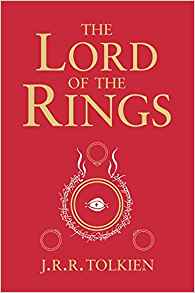
LordOfTheRings_JRRTolkienThe Lord Of The Rings does something similar, through having hobbits as the central viewpoint characters. Although they are different to us, their world is similar to a kind of rural idyll we can relate to. This allows Tolkien to teach us, the reader, about the world beyond the Shire as the hobbits experience it.

Another example is Umberto Eco’s The Name Of The Rose. By having one of the main characters as an apprentice, Eco is able to have the master giving information in a natural way, helping us, the reader, make sense of what is happening. Similarly, in Conan-Doyle’s Sherlock Holmes stories, Holmes has to explain himself to the less quick Watson, allowing us (the even slower readers?) to keep up too.

But what if there are no characters close to ‘us’? What if there is no in-story novice who requires explanation?

There’s a thing called ‘maid and butler’, from stage-plays. Two servants appear, cleaning or whatever, and they talk about the current situation of the main characters‌—‌but often, it comes over extremely false. “As you know, Ethel, the master is due to return from his recent sojourn to the south of France, where he has been wooing young Miss Forester.” Yes, it gives us information, but it sounds unnatural‌—‌both characters know these facts, so why are they talking in this manner?

So, how do authors avoid this?

One way is simply through good writing craft.

ConsiderPhlebas_IainMBanksAn example of this is in Iain M Banks’ Culture books. The main characters are not human, and so they have alien (to us) ways of doing things. There are many references to characters glanding various compounds, but I don’t believe this is ever overtly explained, but context makes it clear that Culture residents can artificially introduce various drugs into their bodies by manipulating internal reservoirs. In a short phrase like ‘she glanded Bliss’, Banks leads us to understand that this character is giving herself some kind of euphoric ‘high’ as a way of coping with her situation.

Sometimes, an author will throw the reader in at the deep end, and force the reader to think. Michael John Grist does this in his Ruins War trilogy (beginning with Mr Ruin). Right from the start, we’re diving minds, and fighting the Lag in sublavic ships. There’s very little to explain these terms, but as a reader it is clear that these things all mean something, so we go along with it, trusting that things will become clear eventually.

Books like this aren’t necessarily light reads, but good ones (like Mr Ruin) are worth the effort, because our perseverance is rewarded. Also, we are in the characters’ world from the start, totally immersed.

But sometimes there is need for explanation. There are books where a little up-front understanding will help the reader appreciate the story far more. And there are a few ways an author can do this.

Isaac Asimov uses one common method in his Foundation books. He starts each chapter with an excerpt from a fictional encyclopeida, giving some background information while still leaving questions, and all without disrupting the flow of the story. Other authors include extracts from ‘historical’ documents.

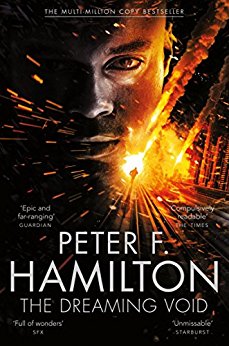
DreamingVoid_PeterFHamiltonSome authors delve into the details, but turn a possible distraction into an effective part of their writing. I’ve recently read The Dreaming Void by Peter F Hamilton, and there are long passages of explanation, far more than the story actually needs. But it adds to the whole world, and in a genre like hard sci-fi, many readers actively want these details. Similarly, Neal Stephenson, in Seveneves, provides so much technical information that at times it reads like a manual‌—‌but that is one aspect of his writing that his readers like. In the wide realm of science-fiction, some readers are drawn to the ‘fiction’ side, while others thrive on the ‘science’.

Of course, JRR Tolkien did this too, but on a far larger scale. The Hobbit and The Lord Of The Rings are the ‘stories’, but the details of the world he created fill up not only a lengthy appendix, but also many more books. And this is another way of doing things‌—‌write the stories so that the average reader can appreciate the story, even if they don’t quite get all the references, but provide additional writings for those who want to dive deeper.

Ultimately, though, the method used is not as important as the end results‌—‌to allow the reader to experience as fully as possible the characters’ world. Maybe, as with the Beamish museum, total immersion is not possible, but that doesn’t mean we stop trying. It’s one of the joys of reading fiction set in different places and different times, filled with characters who are different to us‌—‌it gives us an experience we cannot get in our normal lives. It helps us see a world, be it real or imaginary, in a new way.

I don’t know who said it, but this quote is perfect:

I read books not because I don’t have a life, but because I choose to have many.

Reading Fast and Slow

Some books, I shoot through. Others seem to last ages. And it’s not simply because I’m not interested in reading them. It feels like the length of the book is not the only factor in how fast it takes me to read it.

Time_Angel

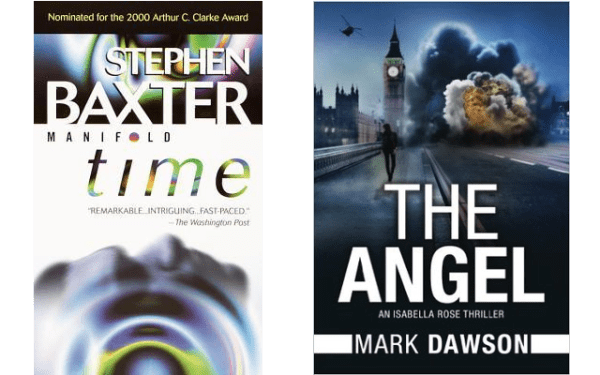
A couple of books highlighted this to me recently. I read Mark Dawson’s first Isabella Rose thriller, The Angel over a couple of days (which is about what time I’d expect to take for one of his books), but before that I read Stephen Baxter’s Time, and this took ten days.

Time clocks in at about 550 pages, and The Angel at 350, so I’d expect to read the latter quicker. But the maths doesn’t add up‌—‌350 pages in two days works out at 175 pages a day, so Time should have only taken about four days. Not over twice that time. And there was no difference in the amount of reading time I had available for each book, either.

But The Angel flew by, and Time took its time.

Why? Why do some books take ages while others feel like they’re over almost as soon as I’ve started?

Length of chapter/paragraph/sentence

It’s common writing advice that short, sharp sentences make for a fast pace. This works really well in thrillers. The ones with punchy sentences. A couple of words. It keeps the tension high. It keeps you reading.

Single-sentence paragraphs work well, too.

Then there’s the opposite‌—‌the languid, drawn out prose that linger on the scenery, like a slow-panning camera, allowing you to savour the setting. Then there are the sentences that dive deep into a character’s thoughts, often leaping about from idea to idea (because that is how thoughts work), so by the end of the sentence you can hardly recall the beginning, and you feel like you have been on a journey between those full stops, and you need a moment to recover before you drift into the next sentence. These sentences are written to draw the reader in, or to offer the reader the opportunity to dwell on the poetry of the language.

It doesn’t always work that way, but generally something written with a short, snappy style tends to flow faster.

It also results in more white space on the page, and this is another factor in reading speed, for a couple of reasons. First, a page of solid text can appear daunting, and we almost need to build up the will to start attacking it, whereas a page with lots of white space is more appealing and we dive straight in. And secondly, it is easier for readers to lose their place in dense passages, so they proceed with more care, taking more time to ensure they don’t miss out lines.

With the books I mentioned above, The Angel has lots of short sentences and paragraphs, with loads of white space on the page. Time has its short, sharp moments, but overall the sentences are longer, and there are long passages with a couple of paragraphs taking up single pages.

Information

Stories are there to provide entertainment, but in many stories there is a need to impart some information as well. Baxter’s Time has a strong hard sci-fi element, with lengthy scenes where the characters discuss in-depth science. At times it veers close to becoming a lecture, and it requires effort for someone unacquainted with that type of science (like myself) to follow the arguments. This concentration naturally slows down the reading speed. As much as I enjoyed these passages in Time, they took longer to get through than more action-based scenes.

Compare that to Dawson’s book. Yes, there is technical information in this book‌—‌such as details of weapons and other pieces of kit. It’s what you would expect in this type of well-researched thriller, and it makes the book more believable, more grounded in reality. But Dawson keeps these passages short, a paragraph or two at the most, often only a brief sentence. He doesn’t allow the information to detract from the story.

And this highlights a difference between the books. In Time, Baxter is exploring scientific possibilities, and so the information is an integral part of the story itself. Hi work is as much about the ideas as it is about the story. But in The Angel, the story is the most important aspect, and technical information is there as colour.

Description

This is similar to information, but is also connected with giving the reader different depths to each image. There are some wonderful passages in Time where the characters are watching space, and naturally Baxter uses many words to do this in order to give us the huge scope of what they are seeing (and feeling). He builds up a dense picture for us, taking his time (and many words) to get things just right.

universe-2742113_640

But this doesn’t work for a fast-paced action sequence (of which there are many in The Angel). Here, we want action, not description. A car might be red, or a particular make, but we don’t need to know about the rust on the wheel-arches, or the dent in the rear. Likewise, when a thug attacks the hero, we’re not interested in his shirt, or exactly how tall he is, or if he’s shaved that morning. We want to know what he’s going to do, and how the hero’s going to respond.

Obviously, some colour is good. A fight scene that is nothing more than a blow-by-blow account of the action gets boring. We need some emotion, and we need some details so that we can ground the fight in reality. But we don’t need too much that is overly descriptive. We don’t want to slow down for unnecessary detail.

So a terse style, more suited to thrillers like those written by Dawson, pulls us through the book, increasing the speed at which we read.

Language

Most people, even if they know a great many words, use a limited vocabulary in their day-to-day lives. Maybe this is down to the need (or desire) to be readily understood‌—‌using possibly obscure words will make others pause, and could lead to misunderstandings. And this is as true with text as it is with the spoken word.

Some books (or passages within books) benefit from using a wider vocabulary, but they are usually more literary works, where the particular choice and usage of words are a main part of the pleasure of the book. These are books that are designed to be savoured, designed to be devoured slowly. They are books where we are invited to acknowledge the poetic and aesthetic word-crafting of the author.

But stories are different. Stories need to be told using language that doesn’t get in the way. We want to know what happens next, and we don’t want to be distracted by flowery prose. Maybe a sharp one-liner or two in dialogue, and possibly the odd enriching description, but for the most part we are interested in the story. We want to know how the characters are going to get out of a particular situation.

Thinking of those two books I read, The Angel is definitely plot-driven. Although Dawson does use a wider vocabulary than other authors in his genre (and that is one of the things I like about his writing), he doesn’t let it get in the way of the story. Baxter is different‌—‌there are times when he wants us to take our time, to savour the images he is presenting, and so a more expansive vocabulary is required.

Story Time and Jump Cuts

The scope of Time is large. There are passages that describe short periods of time, but the story takes place over years. Months can pass in a couple of paragraphs. In contrast, the events in The Angel take place over very short time periods, and an action sequence of only a minute or so might take two or more pages to describe.

At first, it might appear that this would make Time read quicker than The Angel‌—‌slowing down to describe in detail what is happening, for instance, in a fight scene should make those intense few minutes last far longer, right? And maybe, sometimes, it does work this way. But I think the reverse can happen, too. If we know that things are moving fast in the story, we naturally read faster. Similarly, if events in the story are unfolding over many weeks or months, we feel that we can take our time.

It depends on how that passage of time is described.

man-2797590_640

One technique Dawson uses to keep the tension high and to keep us reading is that of cutting between points of view. We might start off a sequence with one character, but then (usually at the moment when they are in greatest danger), we cut to another character, and learn what they have been doing. We chop and change quickly, which is like the fast cutting of a movie action sequence. It keeps us wanting to return to each character, eager to find out what happens to them.

In Time, although there are a number of point-of-view characters, we are generally with each one for more pages, and for more time. This is like the kind of movie shots that follow the character or action with one camera, giving us a long, unbroken sequence that allows us to dive deep into the scene. There is no urge to rush, so we read at a more leisurely pace.


Of course, there are many more things that can affect reading speed. There are all those external factors, like interruptions (a sudden storm hammering rain against the window, the kids playing, noises on the street outside) and our current state of mind (feeling tired, having other things on our minds). Sometimes we have our own time constraints (something else to do, a new book we want to read), and we naturally speed up, maybe skim-reading some passages. A thick book might feel daunting, so we start with more trepidation. Or maybe we don’t want a thin book to finish, and we actively slow down (which is something that happened to me when I first read Douglas Adams’ Hitch-Hiker’s Guide To The Galaxy).

But that is one of the pleasures of books. Unlike films and TV programmes, or music, books are not constrained by time. We can fly through a hundred pages, or we can linger over a single sentence. We can enjoy a thrilling roller-coaster ride of a story, or we can savour the richness of the language. We can set aside an evening for the adrenaline rush of racing through a whole book, or we can read a little each night, drawing out the immersive pleasure of the book.

But however we do it, reading is always time well spent.


The Problem With Accents

I listened to a free audiobook of Dracula a while back. The narrators were all volunteers, and each took a separate chapter. Of course, the quality varied‌—‌some went for a drawn-out reading to heighten the dread, others went with a more conversational tone. There were some interesting mispronunciations, too, which might be down to a 19th century book by an English novelist being read by American narrators‌—‌language changes over time and place, after all.

Then there were the accents. Most of the narrators read in a single voice, but some used accents for occasional characters. This was most usually Van Helsing, and I believe his lines are written with a hint of his Eastern-European pronunciation.

The main characters in the book are ‘educated’, and all speak with proper diction (with the exception of Van Helsing), but they occasional encounter ‘locals’, who would naturally speak in dialect (mainly in the sections set around Whitby, so we’re talking Yorkshire accents here). For one of these, Stoker writes the dialogue as the character would speak.

nosferatu-1-615x349The narrator for this chapter did his best, and I don’t mean to mock him. I know I could do no better with, say, a Texas accent. I don’t even know if the narrator had ever heard a Yorkshire accent before attempting to read Stoker’s text. But the accent he narrated in didn’t work. You know Dick Van Dyke’s ‘cockney’ accent in Mary Poppins? Imagine that combined with the occasional Scottish twang, and you’ll have a rough idea what this Yorkshire character sounded like.
Again, I want to stress that this was a free audiobook, narrated by volunteers. They all did a far better job than I could do.

But it got me thinking about accents in books.

The standard advice for writing is to be careful with accents. If you have to ‘write accents’, don’t overdo it. The aim is to convey a flavour of the voice, but the text always has to be understandable. Add too much authenticity, and things go wrong.

This might sound counter-intuitive, but spoken and written language are two different things. Just listen to how people normally talk, and then imagine this written down. How many times do people ‘umm’ and ‘ahh’? How many sentences are left unfinished? How much is repeated? Even when people are telling a story of what happened to them, their words will not translate perfectly to text.

“So, like, I says to him, um, ‘you want this or not?’, right, and he’s all like ‘I don’t know’, and so, um, I say ‘but it’s your favourite’, and he’s still, like, unsure, um, so, like, I don’t know, is he winding me up or I don’t know, why doesn’t he want it, I don’t know.”

You get the idea.

So the advice with accents is to be sparing.

“Aye, they came up from the South, like they allus do.”
“You talkin’ to me, son?”

The odd word, the occasional missed letter. It helps give a flavour of the accent while still being readable.

Too much can be hard to read, and I think this is down to how we are taught to read, and the way our brain decodes the written word. Initially, we learn letters, and use these letters to make up words and parts of words. We learn that ‘ough’ is sounded ‘oooh’ in words like ‘through, and ‘ohh’ in words like ‘though’. Gradually, out brain starts to decipher these combinations automatically, and we no longer have to sound out individual letters and sort them into groups. Instead, we glance at a word and instantly understand it. This is when we really start reading.

But with words written in accent, we have to go back a step. The words look wrong, and our brains have to resort to mentally sounding a letter at a time. The odd dropped letter (walkin’, ‘ope), especially when signalled with an apostrophe, isn’t too bad. Bu’ a rendrin ah th’slurrd word a slip aht in t’heat o’normal torkin is allus a buggr t’unnerstan’. Even with apostrophes.

That’s why too much ‘accent’ in writing is a problem.

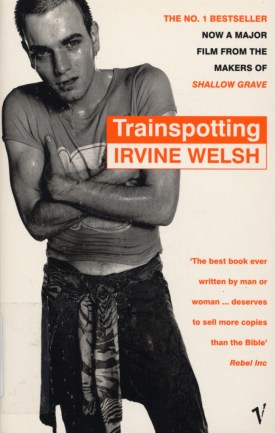
But there are authors who use this to great effect.Trainspotting_IrvineWelsh

One obvious example is Irvine Welsh, especially in Trainspotting. The story is set in Scotland, and is told through a series of incidents from different characters’ points of view. At first, it is hard to read. Welsh doesn’t only render the dialogue in accents, but also the prose. At first glance, a page can look like it is written in a different language entirely.

But with a little perseverance, it becomes easier to understand. And the language fits the story. We’re in the heads of these characters, and Welsh uses the accented language to see the world through their perspective. It makes the book far more immersive than it would have been if he’d ‘written properly.’

FeersumEndjinn_IainMBanksAnother book comes to mind here, and although it’s not written ‘in accent’, it is still relevant. That book is Iain M Banks’ Feersum Enjin. Take a little time over that title, and you’ll get an idea where I’m going with this.

(I haven’t read this book for a good few years, so apologies for being a little hazy here.)

The story is split between a number of viewpoint characters. One of these is written almost phonetically (and this is shown in the title‌—‌Fearsome Engine, while being ‘correct’, just doesn’t work as well.) Banks also uses ‘text-speak’, using numbers and symbols to replace letters (so ‘into’ becomes ‘in2’, and ‘at’ becomes ‘@’).

Here’s the first line from this character’s sections, to give you a taste of it:

Woak up. Got dresd. Had brekfast. Spoke wif Ergate thi ant who sed itz juss been wurk wurk wurk 4 u lately master Bascule, Y doant u 1/2 a holiday? & I agreed & that woz how we decided we otter go 2 c Mr Zoliparia in this I-ball ov thi gargoyle Rosbirth.

(Incidentally, that was a pain to copy out. I’m used to typing, so deliberately mis-spelling things slowly me down.)

Why does Banks use this style of writing? Again, it is down to character. This character is young, with a naive outlook on life. The language reflects this, unhindered by convention and free to view things in an intuitive and original manner. Language is used to provide insight into the character.

And, as with the Scottish dialogue Welsh uses, it does become easier to read as you go along.

There are those who say that all writing should be like this. Every so often there are rumblings about written language being too tied up with rules that, on the face of it, make no sense, and that words should be spelt out as they are sounded.

I’m not going to get into a major discussion on this, but I will point out one of the major problems with this approach to spelling, and it comes back to accents. A word like ‘out’ might be spelt ‘auwt’, or maybe ‘owt’. But ‘owt’, in some parts of the country, is a word that means ‘anything’ (as in ‘you doing owt today?’). So if we came across a word spelt ‘owt’, what is the meaning of it? We’d need to decipher the surrounding words, using context to gain meaning. But if we see the word ‘out’, we know what it is because we have been taught that this combination of letters reflects a certain concept.

And this is the problem with phonetic spelling. Spoken language varies from country to country and from region to region, even when the language is ostensibly the same. The English language is spoken in many flavours across the world. If written English reflected that, its universality would be greatly reduced.

This is the thing to remember with writing accents‌—‌we write to be understood. If the accent gives an insight into the character or the setting, or brings a scene to life, then it has its place, if used carefully, like a dash of seasoning. But overuse creates a barrier, like heavy seasoning can mask other flavours. And then, the reader is pulled out of the story, just as I was listening to that strange accent in Dracula.

AllusionistLogoNote: I listen to a lot of podcasts. One of them, The Allusionist, is all about words and language, and it just so happens that the latest episode is all about accents. You can give it a listen here.


Does Writing Spoil Reading?

knowledge-1052010_1280I had a good friend who studied English at A-level. I was a little envious of that, until he told me that it pretty much put him off reading for pleasure. Whenever he read, he’d start analysing the sentences, and searching the subtext. He’d find himself comparing that book to others. Reading became an exercise, one that he no longer wanted to do. He said it took him years before he could pick up a book and simply enjoy it.
Of course, there’s nothing wrong with analysing and studying literature. But reading, at least reading fiction, is primarily a leisure activity. It should be fun, even while being scary or confusing or thought-provoking. It should be a pleasurable experience. Reading fiction should not be a chore.

I understood what my friend meant, at least in theory. But now, I’m starting to appreciate what he meant on a different level.

I’ve been writing seriously for a while now, and I’m constantly working to improve my craft. Obviously, that involves lots of writing, but reading is important too. There are all the ‘how to’ books, but becoming a critical reader of fiction is also extremely helpful.

I don’t use ‘critical’ in a negative way here, although there are increasingly times when I spot ‘mistakes’ in books I read, and find myself thinking of ways to improve the writing. Learning from the ‘mistakes’ of others is always useful, but learning how to do things ‘right’ is equally important. I’ll read a passage, then re-read it in an attempt to figure out how the author was using language.

TomorrowGene_PlattTruantI’ll give you an example from something I’ve read recently‌‌—‌The Tomorrow Gene by Sean Platt and Johnny B Truant. It’s another of their ‘big idea speculative thriller’ books. They always push the envelope with their books, and it’s been interesting to watch their development as writers.

The main character in this book is called Ephraim. It’s not a name I’m familiar with, and I’d imagine there are many others who are unsure how to pronounce it. The authors must have been aware of this potential difficulty, and so they include these lines of dialogue in an early scene:

“How do you prefer to be addressed? As Mr. Todd? Or as‌…” She peeked again at the tablet. “Eff-ryum?”
“It’s pronounced EEE-frum.” Then, unnecessarily, “It’s biblical.”

I read that, and had to stop. It impressed me. It’s a great way of telling the reader how to pronounce the name. It’s providing information through dialogue, in a way that feel natural and unforced. Even the added ‘it’s biblical’ comment isn’t random‌‌‌—‌‌it tells us that Ephraim has been asked about his strange name so often that explaining it becomes automatic. We gain insight into the character while being told, subtly, how to pronounce a tricky word.

If I wasn’t interested in writing, I doubt I would have dwelt on this. I might have realised what was happening, but it would have been a passing moment. I doubt the lines would have impressed me in quite the same way, and I’m pretty sure they wouldn’t have pulled me out of the story.

Johnny and Sean intended their craft to be invisible, and for the reader to remain in the story, but I had totally the opposite reaction.

I was analysing rather than simply enjoying, and I now understood, on a different level, how my friend had problems simply enjoying reading.

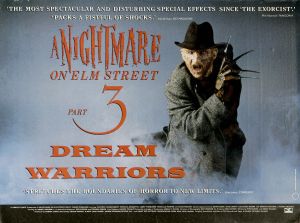
nightmare_on_elm_street_3_poster_02This isn’t the first time I’ve experienced something like this. I can recall, years ago, watching the third Nightmare On Elm Street film in a cinema. There is one scene where one character has tendons pulled from their hands and feet, turning them into a puppet. When this came on screen, there were definite sounds of discomfort around me, but I can clearly remember thinking ‘how did they do that and make it look so good?’

I used to watch a lot of DVDs (remember them?), and if I had the choice, I’d always go for the ‘special edition’ with all the behind-the-scenes footage and ‘making of’ features. I’d re-watch the film, maybe with the director’s commentary, and I’d find so many little things I hadn’t noticed first time round. Knowing how a particular sequence was created, and the camera tricks it used, added another layer to my enjoyment of the film.

Maybe there’s always been a part of me that is interested in what is happening behind the camera, or beneath the page. Maybe that’s why I found Stephen King’s Danse Macabre so interesting, and can still recall his explanation of how he slows the pace just before a scary moment in his books. And maybe that’s why being an avid reader has not been enough, and I have to write.

As I learn more about the craft of writing, I spot more and more examples (both good and bad) in books. In some ways, this means that I have lost a certain innocence in reading‌‌—‌I can’t experience the thrill of the story in quite the same way as someone who is able to read purely for pleasure. But it does not meant that reading is no longer enjoyable for me. I simply come to the story from a different angle, and see different things in the writing. Not better or worse, but simply different.

EdenExperiment_PlattTruantBut back to The Tomorrow Gene. The authors run an occasional podcast, called Backstory, where they go behind the writing of one of their books (and they refer to these are their ‘DVD extras’, so it’s no surprise that they interest me). They posted one recently that talked about the whole Tomorrow Gene trilogy, even though they’d only released the first book. I believe they did this by accident, because a few days later they’d taken this podcast down‌—‌but I’d already downloaded it, so I gave it a listen.

Maybe I shouldn’t have done so, because they discuss certain plot twists that occur in the second and third books. But I’ve listened to it now, and I can’t un-listen (although the books deal with mind and memory manipulation, so maybe one day…)

I’ve since read The Eden Project, the second book, and I found it better than the first. Yes, I felt like I knew more than I should have done, but it was still a great read, and I’m looking forward to the release of the third book. Knowing what’s coming hasn’t spoilt the books for me. If anything, I’m looking forward to finding out how the authors build up to, and then reveal, their big surprises.

So does writing spoil reading?

No. It adds another layer of understanding, and another angle of approach. It opens up more levels of appreciation.

As someone who is writing more and more, reading is now both a learning experience and a leisure activity. Depending on the book, I now have more scope for immersing myself in the writing.

And if reading is making me a better writer, then writing is also making me a better reader.