How I used short stories to explore characters

In stories, characters are as important (or maybe more important) than plot. They help the reader relate to the story-world, and they bring emotion to the work. Without characters, the story is just a bunch of stuff that happens.

So the writer has to know the characters. Many writers will make notes on all kinds of information that never appears in the novel, but it informs the portrayal of that character, making them more rounded, and more interesting to the reader.

There are lots of ways of doing this. Some writers have character questionnaires. Others ‘interview’ their characters, or write short passages in that character’s voice. And short stories can help too.

I’ve used all these techniques to give myself a better understanding of my characters, and today I’d like to point you to some of my short stories that helped me when I was writing the characters in the Dominions books. I’ve made some notes on these below. Some of these notes might include spoilers, but you can always read the story by clicking on the link/name of each one.

Rodin / A Lesson In Death

Despite being a cold, calculating killer, I always knew there was more to Rodin (mainly wrapped up in his forgotten past). To him, the perfect job was one where only the target dies, with minimal fuss and suffering. He planned to give as little chance as innocent people getting caught up in each contract.

But things have a tendency to go wrong, and there would always be times when Rodin was forced to kill to cover his tracks.

And then a question came to me‌—‌what would he do if he was disturbed, mid-killing, by a child. His cold, logical side would say that the child had to die, and he’d justify this by telling himself that everyone dies eventually, and that maybe he would be saving the child from future suffering.

But would he be able to go through with that, or would another part of his character stop him?

I didn’t know which way he’d go, so I wrote this story to find out.

Genna / Influential Friends

From the moment I wrote Genna in Dark Glass, she was one of my favourite characters. She has strength, but its the kind that can be supple, bending round situations. And she has to be people-smart too‌‌—‌after all, she runs a district where everyone is out for themselves. She has to know how to play people.

She doesn’t have much time on the page in Dark Glass (although she is a far more important character in Riled Dogs, and will have a larger part to play in Dominions VI), but I wanted to know more about her. I wanted to see a part of a normal day for Genna.

I knew that a normal day would involve meetings, and that everyone she met would have their own agenda. I also knew that she’d use one of the most important weapons she has‌—‌information.

Jimny / The Customer Is Always Right

I like Jimny. He’s appeared in early drafts of every Dominions book so far, but I have been forced to cut him from all but Dark Glass and the mailing list exclusive novella Control (although he does appear, unnamed, in Expedient).

As with Genna, he is only seen when he is helping Rodin. But I wanted to explore his everyday life. I wanted to know what drove him. I knew he found pleasure in serving others, but I didn’t know which gave him more satisfaction‌—‌providing food and drink, or providing information.

The Customer Is Always Right allowed me to see this. It also (in a longer, earlier draft) told me some things about his father. But that story will have to wait.

Maybe when I write the next couple of Dominions novels, because he will return. I’m certain of that.

Sertio / Clay

When I started writing the book that would become Dark Glass, I was making the story up as I went. I was also writing from multiple viewpoints, and one of these was that of Sertio, the sculptor.

This early draft never got beyond about ten thousand words, and much that I wrote then never made it into the proper version of the first Dominions book. But, through writing those early sections, I learnt a great deal about Sertio.

There are hints in Dark Glass, behind his flamboyance, but I though it would be interesting to write a short with Sertio as the central character. Already knowing some of the secrets of his past, I wanted to explore how he created his art, and discover what drove him.

This story doesn’t explain his past, but it does give an insight into his creative process (or maybe creative impetus). The idea of striving for perfection in art is not uncommon, but perfection is an aspiration, not a goal that can ever be achieved. Maybe this is where some of Sertio’s deeper melancholy comes from‌—‌the understanding that he will never achieve what he desires. Or maybe the need to keep on trying is a way of coping with his inner demons.

Shorack / Blood Bind

In Riled Dogs, Shorack is introduced as a strong character, leading his family to success in the dangerous world of the districts, but it isn’t long before he’s struggling. He needs the support of others, and comes across as, ultimately, rather weak.

That is his arc in Riled Dogs, but I wanted to know about his strength prior to that. I wanted to see him making tough decisions. I wanted to explore how he could lead a family that was as much a cut-throat business as a flesh-and-blood society.

And maybe he will regain his strength, in the Dominions books that are already in early planning.


So, five characters from the Dominions books, and five opportunities to dive into their characters a little more. I hope you enjoy these snapshots of their everyday lives (especially if you have read the Dominions books). And, as always, I’d love to hear any comments you have.

A look back at some of my older stories

There never seems to be enough time…

For the last couple of years, I’ve posted either a short story on this site every two weeks. It’s been fun (and often challenging), but I think it’s time to take a break. I’m working on the third Shadows novel, and I need to do more on the marketing/business side of writing and publishing. Add in other work and family, and I need to consider how to use my time and energy most effectively‌—‌and so the short stories will be put on hold for a while.

But I still want to keep posting here, so over the next few weeks I’m going to write about some of the older stories‌—‌a little background information and so on. This does mean that these posts might contain spoilers‌—‌but you can always click on the links (titles) to read the stories first.

I’ll start with some of my favourites.

Waiting

I think this is the story I’m proudest of. It’s also one of the few I’ve written that deal with reality.

It’s hard to escape the seemingly increasing news reports of a lone person killing many innocent victims, either with a ‘proper’ weapon (and school shootings spring to mind here) or utilising something like a vehicle as a weapon. And, of course, we’re shocked by what happens. We watch the images on TV and internet, and we hear about the lives lost. We ask how something like this could ever happen.

And then we go about our lives. Because, really, what else can we do?

But for some people, this isn’t an option. Maybe they were there, and they struggle to come to terms with what they experienced and witnessed. Or maybe they lost loved ones, and every waking moment is now a reminder that their family member or friend is no longer around. These are the real victims‌—‌the ones who survive, only to repeatedly face the tragedy as they struggle to come to terms with what has happened.

I have never been in a situation like this, and I doubt I can fully imagine what it must be like. But Waiting is an attempt to do that. And it’s a way to remind myself that, for every incident like this, the number of people it affects is far larger than those present.

…if you only walk long enough

This was fun to write, so having a title that quotes Lewis Carrol made perfect sense. It was also tricky‌—‌there’s a lot that happens, and editing it all down to under a thousand words took some time. Having each section start and end mid-sentence helped here‌—‌it’s surprising how much we fill in the blanks when we read.

There’s also a nod to Stephen King’s Dark Tower series. For all the flack he gets for the endings of his books (and I have to agree that many of them leave me pretty non-plussed), I did like how that series (spoiler alert) ended with the realisation that it was cyclic.

I though this could work well for a sort-of-horror short, with someone trapped in a loop but not realising it. I hope it works, and I’m pleased with how this story turned out.

Missing

This was one of the first shorts I wrote for this website, but it’s still one of my favourites. It started with an image‌—‌an old man, standing on his back step at dusk, calling for his cat. That was all I had, and I started writing whatever came to mind.

I’ve done this kind of discovery writing for a few stories, and it’s always interesting to see where they go. With this one, the discovery of what had happened to his wife was a surprise, and hopefully it works as a surprise for the reader too.

Unspoken

I went for a kind of retro sci-fi vibe with this, like Terry Gilliam’s Brazil (one of my favourite films). But the story itself was influenced by Ray Bradbury’s Fahrenheit 451. I only got round to reading this book recently (I know, I know‌—‌but there are so many books to read!), and I found myself wondering how book burning would work in the digital age. It’s easy to grab paper copies and destroy them, but with the internet, digital files can be everywhere, and they can be replicated over and over. If books were to be ‘burned’ now, there would not be bonfires in the streets, but simply data being replaced with a string of zeroes.


So, a few of my favourites. Next week, I’ll tell you about some of the stories that link in to my Dominions series, and how writing those shorts helped me discover more about the characters in those books.

But before then, there are over fifty stories free to read here, and, as always, I’d love to hear what you think.

Why a scathing review can be more helpful than a positive rating

Dom1CoverSmallI recently ran a promotion for Dark Glass on Kobo, and I’ve been very happy with the results‌—‌a few hundred downloads in over twenty countries. It’s exciting and strange to think that someone in Singapore has downloaded my book. They might even read it.

But things don’t stop with the download of the free book. Hopefully, I’ll see some sell-through, when readers of that first book choose to buy the rest in the series. Maybe a couple of people will join my mailing list.

And the other advantage of doing a promotion on a free book is the chance of getting more reviews.

Reviews are hard to come by, especially for someone near the start of their writer journey, but they are incredibly useful. Reviews give a certain amount of social proof to the book, they help guide other potential readers, and they opens up the opportunity to run more book promotions (certain sites will only accept books with a minimum number of reviews, or a certain minimum rating average.)

experience-3239623_1280Of course, not every reader leaves a review. Many people who download a free book will never even read it. Some will start it and never finish it. And many who reach the end will move straight on to another book. It takes effort to write even a couple of lines.

Many book sites allow readers to leave ratings, though‌—‌usually between one and five stars. This, clearly takes less effort and time than writing a review, and so it is no surprise that on sites such as Goodreads and Kobo, there are often more ratings than reviews for individual titles.

Before running this promotion, I had a single five-star rating on Kobo. But a few days into the promo, I noticed a couple more ratings go up.

One was a three-star rating, the other two-star.

I could have become upset by these lower ratings, but I prefer to look at the positive. These two readers had still read the book and had taken the time to leave a rating, and for that I’m very grateful. And I know that not everyone will enjoy what I write, just as I don’t enjoy some very popular books, and other books that I love also have their fair share of low ratings. Everyone has their own taste, their own things they like to see in a book (and things they don’t want to see).

But there was one thing that I found frustrating‌—‌these were ratings without reviews.

See, I want to improve in my writing. While I want to write books that I enjoy, I also want others to enjoy them. A low rating tells me that someone found problems with the book, but without any comments I don’t know what they had issue with. I don’t know what I need to work on. Did they find the pace too slow? Were the characters hard to engage with? Were there issues with the writing itself? Were they turned off by the violence and the occasional swearing? Or did my product description lead them to expect a different kind of story?

Some of these things might be down to taste‌—‌and that might simply mean that Dark Glass was not a book for them. But I’d like to know. I’ve had high ratings, and very positive feedback via e-mail (someone recently commented on the ‘brilliant story’ in Dark Glass, which made me feel pretty good!), but I’m clearly not satisfying everyone.

feedback-2849603_1280I know there are problems with Dark Glass‌—‌it was the first book I brought out, and since then I’ve improved as a writer. At some point I’d like to revisit Dark Glass‌—‌as it is the first book in the series, and probably the first book people will read, I want it to be as good as I can make it. But without feedback, I can only improve so much. Without being informed of the issues readers have and the problems they find, I can only change the errors I see.

I doubt many people who have downloaded Dark Glass have read it yet (I know I’ve got free books from a couple of years ago that I haven’t got round to reading yet). Many copies will probably never get opened. But out of those that are opened, I’m looking forward to more reviews and ratings. High ratings and positive reviews will obviously be great, but I hope readers are honest, and those who didn’t enjoy the book as much as they expected let me know why. Then I can take readers’ comments on board, and use this feedback to improve my writing and storytelling.

And this is a process that I know I will repeat with every book. I’ll never write a perfect book, and there will always be those who don’t enjoy my writing, but I can still strive to improve.


New short story (follow up to last one)

My last short story, For Blood, had a creature attacking a village, and those villagers doing what they could to defend it. This time, in For Blood (II), it’s the creature’s story.

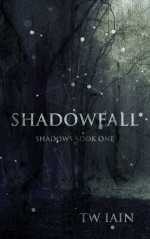
I’m heavily into edits of Shadowstrike (the third Shadows novel) at the moment, and there are may different monsters in that book. But they aren’t all ‘evil’. Even the most monstrous have reasons for their actions.  In many cases, monsters are only defined as such by our own perceptions. Truth is often a matter of viewpoint rather than fact.

Anyway, you can read For Blood (II) here. And, as always, I’d love to hear your thoughts and comments.

Hiding behind a book with no cover

reading-2557256_1280It’s always interesting to see what books others read. As a reader yourself, I’m sure that, when you first walk into someone’s home, your eyes are drawn to their bookshelves. When you see someone reading on a train, or in a cafe, or on a park bench, it’s hard to resist turning your head to catch sight of the book cover.

But that’s only possible if they’re reading a print copy. If they’re using an app on a phone, or a dedicated e-reader, there is no visible cover. They could be reading anything.

Annoying in some ways, but from another angle it’s incredibly liberating. While some people might want to be seen with certain books, I would imagine most readers simply want to enjoy the book, without having the outside world intruding. And we don’t want strangers judging us on one book we happen to be reading at that particular moment.
E-books allow us to read anonymously.

And this, I believe, has been of benefit to certain genres of fiction.

Maybe the most obvious example is erotica (or, as I believe it is referred to on Kobo, ‘active romance’). While many people enjoy reading erotica, there has always been (and still is) a certain stigma attached to these books, and for a lot of readers it is (was?) something of a guilty pleasure. With covers that leave little to the imagination, reading erotica has long been something reserved for those quiet moments behind closed doors.
But without covers, this issue goes away.

You could argue that people openly read the Fifty Shades books, but the covers for these books (and other ‘mainstream erotica’) are far more subtle. And, with any popular book, a reader can always say they were simply trying to figure out what all the fuss was about. People feel safe reading popular books.

But erotica isn’t the only genre to have benefited from books with no cover. I’d say that genre fiction in general now has a wider ‘open’ readership.

This is (in part) down to how people want to be perceived, and can be illustrated by something supernatural thriller author and indie-publishing expert Joanna Penn has often said.

When she started writing, she believed that she should write something ‘proper’, citing Umberto Eco as an example. ‘Proper’ authors like Eco wrote serious literature, books that won prizes and were praised for their literary merit. But the books she enjoyed reading were things like Dan Brown thrillers.

adult-2242164_1280I think this is a fairly common mindset‌—‌writing (and reading) is seen as an intellectual activity, and books should be literary art. Yet we are drawn to stories and interesting characters. Art-house cinema and ‘serious’ films win praise, but most of us would prefer a couple of hours of escapism, with snappy dialogue, chases and explosions (or whatever flavour of ‘popcorn entertainment’ is your bag). And this carried over to our reading. We’d rather be seen with a ‘serious’ book than something frivolous, even if we’d rather be reading some pulpy sci-fi.

But now, with e-readers and phones, we can read exactly what we want, without fear of judgment.

Of course, the opposite could also be true. Some years ago, I’d read on my lunch-break, and one of my co-workers, seeing the size of the book, asked in a derogatory fashion, “What’s that, War And Peace?”, like reading something serious should be looked down on. (When I replied with a simple, truthful, “Yes”, the conversation was over, and I could carry on reading). If I’d been reading on my phone, they never would have made that comment‌—‌they probably would have assumed I was on social media.

The lack of a visible cover also goes some way to explaining the popularity of YA (Young Adult, for those of you unfamiliar with the term). Ostensibly, these books are aimed at older teenagers, but the various subgenres are popular with all ages. Of course, Harry Potter and the Hunger Games books are YA that it is okay to read, but these books, like the Fifty Shades books, are available in more ‘mainstream’ covers.

None of this should really matter. We should be able to read what we want, when we want, without concerns over how others may see us. But we all judge. So reading e-books, where the only way someone else can know what we are reading is by either asking or by looking over our shoulder, is an ideal way to read whatever we want.

What makes a book ‘new’?

book-1738609_1280We are always looking for something new.

Visit just about any bookstore, and you will be confronted by shelves and displays of new books, by big-name or debut authors. Even on the digital bookstores, there are ‘new and noteworthy’ banners.

Sometimes, the new titles take us by surprise‌—‌we see a book that catches our eye, even though we were not previously aware of it. At other times, we eagerly await the new release from a favourite author. Just think how long fans have been anticipating the new George RR Martin title. Think back to the queues at bookstores in the middle of the night when the newest Harry Potter book was released.

But what does ‘new’ really mean?

I recently read Stephen King’s 11/22/63. The book was released in 2011, so it’s not a ‘new’ title. But I hadn’t read the book until now. As I read it, I was absorbing the story for the first time. It might not have been a new release, but it was a new book to me.

The same could be said for many books. I wasn’t born when Tolkien’s Lord Of The Rings was published, but when I read it as a teenager, the book was new to me. And somewhere, someone else is experiencing Tolkien’s book for the first time. Elsewhere, another reader is discovering Isaac Asimov or Robert Heinlein. Someone has just picked up their newly-acquired copy of Mary Shelley’s Frankenstein. Another reader has now reached the end of Tolstoy’s War And Peace, and someone else is looking with interest at a writer they have not yet tried called Jules Verne.

Books written over a hundred years ago, yet they are still being discovered today. Old book, but also new. And now, we have access to so many more old books that can be new to us.

A bit of history that will probably already be known to you:

bookstore-1315560_1280Before e-books took off, the main way of getting a new book (new to you as a reader, not a new release) was to visit a bricks-and-mortar store. And these stores wanted to stock what was more likely to sell, so of course they pushed ‘new releases’. They also stocked back-catalogue titles from big-name authors, and a selection of ‘classics’, but it was the new releases that they focused on.

Of course, not every new release sold well. Many titles had their few weeks being touted as the next must-read before all the unsold copies were returned to the publisher. Some of these turned up in ‘remainder’ stores, and some copies found their way into second-hand stores, but many were pulped.

And they still are. In the high-street physical books game, new release periods are vitally important. A book that doesn’t ‘make it’ in those first couple of weeks has failed.

But it’s different on e-book stores. There is no limited shelf space, and these stores can happily stock millions of titles. They use search engine AI to show titles that might be of interest, so the potential reader doesn’t have to walk up and down shelving.

And that changes things. Now, an old title can become ‘new’ for a second, or even third time.

This happened with Hugh Howey’s Wool series. It became one of those overnight-success novels, even though it had started as a fairly low-key short story, and had grown over time. Andy Weir managed something similar with The Martian‌—‌a story serialised on his web-site, then an independently-published e-book, it only started getting a large audience when he released the audio book. It got noticed by people involved in the film industry, and suddenly it was a big-budget film based on a ‘new’ book by a debut author.

And, of course, it was a new book to everyone who had not yet read it.

There are millions of books out there. And that means there are millions of new reads, just waiting to be discovered. They might have been written this year, or a couple of hundred years ago. But that doesn’t matter. They can still be discovered. And as readers, we can enjoy new stories for as long as we desire.


‘Crossing’ – new short story

A new short story for you. I’m not going to say too much about the story itself, but the idea for it stared when I was on a night ferry surrounded by mist‌—‌my mind started wondering what was hiding out there, and what secrets might be on the ferry itself. The ideas bounced around for a couple of hours, and later, on my bunk in the small cabin, I tapped away on my phone to get the first draft down.

Some editing later (on both phone and laptop), and Crossing is now on the site. You can read the story here.

Are reading and writing really solitary activities?

sunset-3089285_1280Both writing and reading are solitary activities‌—‌the writer hidden away in a dark room, tapping away at a keyboard as their imagined worlds pour out; and the reader in a secluded space, diving into those created worlds. Both are ‘introvert’ activities, forgoing any need for social interaction.

At least, that’s the obvious impression. But I don’t think this is the complete picture. I think that there’s a social angle to both writing and reading.

These thoughts coalesced after I received an e-mail from someone who had read my free book, Dark Glass, and was writing to tell me how much she’d enjoyed it. It had a great impact on me. I was incredibly pleased that someone had connected with something I’d written, of course, but I was also very thankful that she’d not only downloaded the book (from the plethora of free books that exist), but that she’d also read it, enjoyed it, and taken the time to contact me.

And it made me think about why I write.

I’ve often told myself that I write for pleasure, and that I’d carry on even if nobody read anything I write. There’s something wonderfully escapist in all the planning, there’s the exciting rush of first-drafting as those plans come to life, and the slow, steady moulding that is editing is possibly the most rewarding part of the whole process, where those initial ideas finally become a fully-rounded story.

While all this is true, it’s not the whole truth. This might describe the process of writing a story, but a story is not the same as a book.

Once I’ve taken the story as far as I can, I’ll pass it on to an editor, and make further adjustments based on their comments. I’ll spend time formatting files so that the e-books look good. I’ll hire a cover designer. And then there’s the whole area of marketing and promoting, which I’m constantly learning more about. I look for ways to get this book in front of potential readers. I have a mailing list with free, exclusive books. I post a short story on this website every two weeks, and link to it via social media. I do what I can to reach possible readers, and I’m excited each time one of my books is downloaded, be it free or paid for.

When I say I’m not too bothered about others reading my books, I’m deluding myself. All this extra work proves it. The cover is there to attract potential readers. Editing and formatting help make the reading experience as good as it can be. And of course I want my stuff to be read‌—‌why else would I be looking for ways to reach more potential readers?

Some of this is for validation‌—‌no matter how good I feel a story is, only when others read it (and comment on it) will I know if it ‘works’. But there is also the need to share. I’ve enjoyed creating this story, I believe it’s the best I can make it (with, of course, help from others), and I want others to enjoy it as well.

After all, stories that are kept private are only dreams, but to live stories need to be shared.

fantasy-2760153_1280There is also the desire to improve as a writer. I am determined to make the books I write in the future better than the ones I have already written. I want to be embarrassed by my writing from a few years ago. For that to come about, I have to develop, and one important way of developing is to receive feedback. This could be positive, so that I can replicate what’s working well, or it could be constructive criticism, so that I am made aware of weak areas.

So as a writer I want to share my stories with others. But what of those readers? Where does social contact intersect with solitary reading?

The most obvious way is in reviews. Not very many readers leave reviews, and the ones that do can range from a couple of words to in-depth reports. Some are positive, some are negative, some are critical, and some are simply indications of likes/dislikes. But they are all communication, passing on the readers’ thoughts to other potential readers, either encouraging them to get a particular book or warning them to stay away.

And some of these reviews themselves spark comments. Have a look at any of the reviews of popular books, and you will see discussions where others have either agreed or disagreed with a particular review. Sometimes these can become bitter, but at other times they can bring about genuine change of opinion. And, of course, for a potential reader, they can provide more information about the book.

This is merely an electronic version of something that has been happening for years and years, quite possibly since the invention of the printing press. If we have an opinion on something, we are likely to share that with our friends. So if we have read a book that kept us up all night because we couldn’t bear to put it down, we’ll tell friends about it. If books come up in conversation, we’ll drop the names of current reads, or authors we’ve enjoyed. If a friend starts moaning about a particular book, and we have read it, we can add our own thoughts, either in support of or against their arguments.

In short, we share.

system-927147_1280Sometimes, books can open up conversations with others‌—‌similar reading tastes gives common ground, helping us (especially those of us on the introverted end of the spectrum) overcome any hesitancy in social communication. We can also use quotes‌—‌If I were to quote a line from Douglas Adams or Terry Pratchett, and someone else were to come back with another quote, we instantly have a connection. Sometimes, that can be like being in a secret club, especially if our comments back and forth bring bemused looks from others.

And this leads on to another social aspect of reading‌—‌the book club. A few people meet regularly, all having read the same book, and they discuss, sharing their viewpoints and so on. The book club has adapted to the digital world, too, with sites like Goodreads. If you’re serious about reading, it’s worth checking out. There are reviews, of course, but also discussions in forums on many different aspects of reading and books, as well as quizzes and reading challenges.

Reading might be a solitary activity, but having read opens up social interaction. And this is obvious, when you consider that the written word is a means of communication, and that story-telling has always been one of the greatest forms of social contact. So I will keep on reading in solitude, but I will share that experience through talking and through reviews. And I will continue to write in my own little space, but I will present those stories in the best way I can, and I will share them with others.

Stories need to live, and that means they need to be shared. As Terry Pratchett said;

‘People think that stories are shaped by people. In fact, it’s the other way round.’

New short story – ‘Virtually Reality’

I’ve got another coffee-break short for you.

Virtually Reality isn’t as dark as my usual stuff. It isn’t violent, either. I don’t think it’s shocking‌—‌but I’d like to think it’s a little thought-provoking. Or maybe it’s nothing more than a few minutes of escapism.

I’ll let you decide for yourself.

You can read Virtually Reality here, and there’s a full list of my short stories here (all 49 of them)