No new story this week, but a free copy of one of my Dominions shorts

I’ve kept to my schedule of a new short story every couple of weeks for a long while now, and it’s frustrating that I’m going to have to break the habit this week. With work on a new book, and various other things, I simply haven’t got a new short ready yet. I’ve got a few things almost there, but that’s not good enough. You deserve better.

But I don’t want to leave you with nothing. So, in lieu of a new short, I’d like to offer you a download link to one of my Dominions shorts.

Animus (A Dominions Story)In a violent wold, can the meek survive?

Ostar knows he’s nothing special. But he’s useful to the crew‌—‌not with the violence, but as a look-out. He’s never hurt anyone in his life. He simply wants to keep his head down and live without conflict.
But the crew are dying. Someone is killing them, one by one. And it is only a matter of time before they come for Ostar.

You could buy Animus on all the usual sites, but click here to download a free copy (this link will only be live for about six days). And I’ll be back with a new short story in a couple of weeks.

Can’t stand cliffhangers, but love open loops

Cliffhangers annoy me. When I read a book, I expect a full story. If I reach the end, and it stops with the hero in mortal danger, I feel cheated. I feel that either the writer hasn’t figured out the ending yet, or they’re using a very cynical marketing ploy to encourage me to buy more books.

This makes me less likely to continue. Unless the story really grabbed me, I won’t get any more in the series.

But open loops are different. If I reach the end of a complete story, but there’s an odd niggling question that hasn’t been answered, I’m intrigued. I’m satisfied that the story is finished, but I still want to know more. And with books like this, I’m far more likely to continue with the rest of the series.

Star Wars did this. The Death Star was destroyed, but Darth Vader still lived‌—‌the villain had been defeated, but not vanquished. The Empire Strikes Back had a more sombre ending, with more loops left open, but (apart from Han Solo, encased in carbonite), the characters all survived, ready for the next part of their fight against the Empire.

JumperSeries_SeanPlattDavidWrightSean Platt and David Wright’s Jumper series (at least, over the first few books) is another great example of open loops to drive a series. It begins with Jumper, the story of someone who wakes up each day in someone else’s body. They do what they can to minimise harming the people whose bodies they inhabit. But these hosts are all connected, and the main character is forced to make difficult choices to protect his hosts.

It’s an intriguing premise, reminiscent of Quantum Leap without feeling derivative. The book’s an enjoyable read, and tells a complete story‌—‌and then, we get the epilogue.

It feels like it’s going to tie up a few loose ends. But instead, the writers drop their bombshell. [Spoiler alert] There is more than one jumper.

This great little twist immediately builds interest in the second book, Karma Police.

The second book follows a similar pattern‌—‌the main character waking in different host bodies, being forced to solve a particular problem. But again, the writers open another loop. The main character talks to another jumper, and learns things that give rise to more questions than they answer.

It’s only once we’re through the first half of the series that the pattern breaks, and the final three books are more of a continuation of the same story rather than individual stories with hints of a larger overall arc. But by this time, the reader is hooked (at least, I was), invested enough in the overarching story that the individual tales don’t matter as much.

This is a hard trick to pull off, and I’m not convinced that Platt and Wright fully succeed‌—‌the last book felt too rushed, and I would’ve liked them to explore some of the ideas a little more. It was still good, but didn’t quite live up to the promise of earlier books. But, in the authors’ defence, they do push themselves with their writing, and even if the story isn’t totally successful there’s still a great deal to be enjoyed in these books.

And at least this series feels like it was planned out fully, something that unfortunately can’t be said all series.

I used to love watching The X-Files. The stand-alone monster-of-the-week episodes were fun, but the development of the larger story (the ‘mythology’) was what kept me watching‌—‌at least, over the first few series. But by about series four, this larger story became more ridiculous. Rules that had been set up in earlier episodes were ignored, and it felt like the story was being changed as it went along. No, it was worse than that‌—‌it felt like the larger story hadn’t been thought through properly. It felt as if the writers were making it up as they went along.

You might argue that this is what writers do anyway. Fiction is make-believe, so all stories are made up. There are many popular authors, including Stephen King, who start writing with only a vague idea where the story will end up, discovering the details as they write.

But however a story is first written, it is always edited. Things are changed so that the story has a more satisfying arc.

And this is where I feel some series, such as The X-Files, fall down.

Planning a story take time and effort, a good story even more so. To develop a satisfying series, each book has to be planned, but so too does the overall story.

Of course, most series aren’t written in one go (although it is becoming more common, in independent publishing, to hold off releasing books until at least the first three in a series are completed). George RR Martin’s Song Of Ice And Fire is still unfinished, and Robert Jordan’s The Wheel Of Time, initially only conceived as a six-book series, eventually stretched to fourteen, with the final few being written by Brandon Sanderson after Jordan’s death. It’s hard to see how these series could have been planned out in their entirety in any detail.

This can make writing later books in a series harder‌—‌all those open loops have to be closed, and done so in a way that feels natural. Also, stuff in later books shouldn’t contradict what happened earlier. Yes, it is possible to change earlier books and produce new editions (which Tolkien did with The Hobbit, once he understood how it complemented the larger story of The Lord Of The Rings), but this is time-consuming, and disappoints readers of the original versions.

YesterdaysGone_SeanPlattDavidWrightWriting a series is hard‌—‌which makes ones that work even more impressive. So maybe I should be a bit more forgiving about cliff-hangers. After all, I enjoyed Platt & Wright’s first foray into fiction, the serialised Tomorrow’s Gone, where every ‘episode’ ended on a cliffhanger.

But Tomorrow’s Gone was structurally based on old TV shows, with episodes that formed seasons, and the complete story told over six seasons. They started with a very ‘throw everything out there’ idea, trusting themselves to bring the story together later. But (I believe) the final three seasons were planned in advance, so even though each episode ended on a cliffhanger, the writers knew exactly where the story was going.

I didn’t read Tomorrow’s Gone until it was finished, until I could devour the whole thing. I think reading it episode by episode, having to wait to find out what happened next, would’ve frustrated me. And maybe that’s why binge-watching is becoming so popular, and why some people hold off watching a series until at least a couple of seasons are available.

Cliffhangers can work, but the resolution can’t be held off too long. The excitement wears thin, and then we forget what happened, and instead remain with the dissatisfaction of having an unfinished story. I’m wary of reading a first book in any series now, and I’ll often check reviews to discover if it’s a complete story.

So don’t give me cliffhangers. Give me a story that keeps me reading. Show me that you can tell a satisfying tale. But sprinkle in a few open loops. Make me question some of the stuff happening just off the page. That way, you’ll keep me reading and buying more books.

Rogue Wolf out now

It’s been far too long in coming, but, finally, Rogue Wolf (Dominions V) is out, and it’s only 99p/99c for a few days.

Dom5_small(Hi_res)He does what needs to be done. He’s cheated death a hundred times, and he has the scars to prove it.
But Rodin’s put all that behind him. He’s no longer an assassin for hire, or a pawn in the fight against Authority.
At least, that’s what he tells himself. But when a favour brings him close to the infamous Factory‌—‌a prison in all but name‌—‌and a chance encounter forces him to rethink, can he still do what needs to be done?
Facing death is one thing, but can Rodin face a life of imprisonment in the Factory?

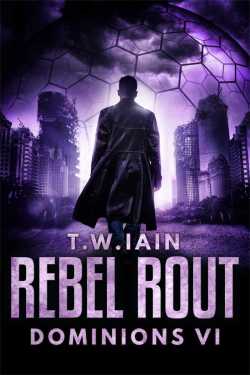
Rogue Wolf continues the dark Dystopian Dominions series, as Authority’s hold over the Dome and the districts grows ever-stronger.

Get Rogue Wolf now, from all the usual ebook stores.

New short story ‘Ties Of Love’

Sometimes, I’ll get a short section of dialogue stuck in my head, with only a vague idea where it will lead, or even who is speaking.

My latest short story, Ties Of Love, started this way. I had the first few lines, and I had a sense that not everything was as it appeared. Is was only as I wrote that I discovered the whole back-story, with the warring families and the various underhand dealings.

I’m pleased with how Ties Of Love ended up, and it’s been fun to write another story purely in dialogue. I hope you enjoy reading it‌—‌and, as always, I’m open to any comments.

You can read Ties Of Love here.

Writing as its own reward (a few thoughts on NaNoWriMo)

It’s November, so it’s time for NaNoWriMo.

NaNoIf this means nothing to you, let me explain. National Novel Writing Month is basically a challenge to write 50,000 words over the month of November. Anyone can sign up, regardless of what they write or their previous writing experience. As well as world-wide forums and support groups, there are local communities, along with physical meet-ups for real-world encouragement. There are badges that can be earned, for all kinds of things‌—‌seven days of consecutive writing, reaching 10,000 words, attending a meet-up, and so on.

When NaNoWriMo started, back in 1999, there were 21 participants. Last year, over 400,000 took part‌—‌and I wouldn’t be surprised if there are even more people ‘doing NaNo’ this year.

Of course, not everyone reaches that 50,000 word goal. The stats show yearly success rates between 10 and 15 percent. But that doesn’t matter. Some people who take part year after year never reach 50,000, and many never finishing their novel over November. Some of them probably work on the same novel each year.

And this doesn’t matter because, at its heart, NaNo is not about producing finished novels. Its aim isn’t to help create thousands (millions?) of new books for people to buy. It’s not about commercial success.

NaNoWriMo is all about writing.

Yes, those of us who write want to finish our stories. We want them to be the best they can, and we want others to read them. We want to earn money from our writing, too.

But it all starts with the actual writing. People who write purely to make money generally don’t last very long before trying another route to financial success. And those who earn a decent living from their writing usually only do so after many years of struggling at the keyboard. Every ‘overnight’ success comes on the back of countless abandoned projects, the novels that should never see the light of day, the millions of words of practice.

See, writing is both easy and hard. All it consists of is placing one word after another‌—‌but there’s an art to this placement. There’s a skill in selecting the perfect word.

writing-427527_640Writing takes time and effort, and the process is punctuated by moments of doubt‌—‌the story doesn’t work, the characters feel flat, the dialogue is stilted. We don’t know where the story’s going, or how to fix all the oh-so-apparent problems in the earlier parts of the draft.

But we persevere‌—‌not because of the possible rewards at the end, but because the act of writing is a reward in itself.

In a world where we are encouraged to consume so much media, it’s vitally important that we also create. Creation is a part of what makes us human. For some, this means learning an instrument. Others take up painting, or sculpture, or flower arranging. Some get their creative fix through gardening or cooking, through fixing cars or mending furniture.

And then there are the writers. We don’t need to learn an instrument. We don’t need a workshop, or a kitchen. All we need is a laptop, or a notepad and pen, or a smartphone. We can write anywhere, at any time of the day. We can even dictate our stories now, writing while walking or driving or doing the ironing.

In writing, we create whole worlds. We develop characters, and throw them into confounding situations. In writing, we let our imaginations flow free. And when it all comes together, when the words flow, there’s nothing like it. There are times my fingers can’t move fast enough as the descriptions, the dialogue and the interplay between characters surges forth. There’s an excitement about discovering what happens next, even when the story has already been planned‌—‌because the characters always take on a life of their own, or a phrase comes to mind that casts things in a brand-new light.

Writing is a journey of discovery, whether the story has been previously plotted in detail or is being created on the fly. Writing is transportation to other places. It is the opportunity to live other lives, to be who we want to be, or to experience those we’d detest in real life. In writing we get to play the hero and the villain, and everything in between. We get to sit back and see where things lead, and to be the master of our own domain.

Terry Pratchett once said that writing is the most fun it’s possible to have on your own. There’s a great deal of truth in this. Writing is a special form of creation.

And it’s this that NaNoWriMo encourages. It’s not about writing ‘a book’. It’s not even about beating a certain word-count. It’s about writing. NaNo aims to help people discover the joys that come from writing. It aims to instill a writing habit that enables those who have previously struggled to find the time to enjoy the activity.

NaNoWriMo is to be celebrated and encouraged, for helping so many people see how writing can be its own reward.


To find out more, visit nanowrimo.org. It’s never too late to start!

New short story – ‘To Serve’

This story I originally wrote some years ago, before I wrote my first Dominions novel. I’ve improved a lot since then, so that original 5000 word story was pretty poor‌—‌sentences that I probably thought sounded good at the time, lots of superfluous information, and nowhere near as much subtlety as I imagined.

But I liked the general idea, so I reworked it‌—‌tightened the writing, made the back-story less obvious, and cut a whole section concerning a dog (an often-repeated piece of writing advice‌—‌never have a main character harming a dog. They can to whatever they want to people, but very few readers will forgive violence towards dogs).

I also shortened the title (it was originally To Serve The Community). I’m pleased with this new version.

You can read To Serve by clicking here. I’d love to hear what you think‌—‌just add a comment below the story.

Rogue Wolf now available for pre-order

It feels like this book has taken ages to write (can’t remember how many times I re-wrote the first draft), but it’s finally finished, and is now up for pre-order on all the usual ebook stores, at a limited low price of 99p/99c.

Dom5_small(Hi_res)He does what needs to be done. He’s cheated death a hundred times, and he has the scars to prove it.

But Rodin’s put all that behind him. He’s no longer an assassin for hire, or a pawn in the fight against Authority.

At least, that’s what he tells himself. But when a favour brings him close to the infamous Factory‌—‌a prison in all but name‌—‌and a chance encounter forces him to rethink, can he still do what needs to be done?

Facing death is one thing, but can Rodin face a life of imprisonment in the Factory?

Click here to see where you can pre-order Rogue Wolf.

New novella now available

Errant (A Dominions Story)Errant (A Dominions Story) has been available for free to newsletter subscribers for some time, but it’s now available to buy from all the usual ebook stores too.

(If you still want a free copy, it’s still for download through the mailing list for a few more weeks, so sign up now.)

This novella (about 80 pages) is a bit of a departure from the usual Dominions stories, with a more gentle approach (although the darkness is still there!) If this sounds intriguing, read more here, or click here to see where it can be purchased.

(Alternatively, join my mailing list to get the book for free, along with another couple of exclusive novellas)

Books in a changing media landscape

Amongst all the rides, attractions and eateries in Disneyland Paris, there are many, many stores. They sell all kinds of merchandising‌—‌toys, clothing, bags, jewelry, and so on. But one thing struck me by its absence.

Media.

There were no Disney DVDs for sale, no CDs of film soundtracks, and no books. In short, there was nothing for sale that actually told any kind of story‌—‌and this seemed strange for a company that had built itself up on story, from simple five-minute Mickey Mouse cartoons through retellings of classic fairy tales to their own original stories.

It’s not as if there were no opportunities to incorporate books into the park. In Beauty And The Beast, Belle loves reading, so why not have a Belle-themed bookshop, with library ladders and dusty hidden corners?

Admittedly, Disneyland Paris have to cope with visitors from a wide range of countries, and although French and English seem to be the predominant languages utilised in the park, each title would need to be stocked in different languages, with different covers and so on. And why stock music and film anyway, when the trend is now for streaming?

This (like so much in the park) got me thinking.

children-403582_640There are always stories about the death of reading, and how nobody reads anymore. Why read, when it’s easier to turn on the TV or switch on Netflix or pop onto YouTube? There are figures suggesting that cinema is struggling, as home viewing utilises ever-growing size of screens, in increasing resolution, with high-quality sound-systems. Why bother leaving the house, queueing, paying for over-priced snacks and drinks, and having to cope with other people, when high-quality entertainment can be enjoyed in comfort at home?

And how can books‌—‌simple text on a flat, unmoving surface‌—‌compete with such incredibly immersive effects on the big screen (be that in a cinema or at home), or with the snappy dialogue and surrounding sound design?

Some people argue that they can’t. They point to the collapse of Borders and the struggles of Barnes & Noble. They talk of dwindling revenue for those who write‌—‌while big-name authors (King, Rowling, Patterson and so on) still earn fortunes, mid-list authors are forced to take on other work to supplement their writing careers.

Yet still, people read.

There’s a good chance that you’re one of those people who enjoy books, so you’ll instinctively know some of the reasons for this. You know the pleasure that comes from sinking into a story. You’ve experienced the transformation of words on a page into living images within your own imagination. You’ve felt the pull of a book, the yearning to get back to the story, and the way a tale lives on long after you’ve turned over the final page.

Maybe you value the solitude of reading, or how time can fly by when you’re deep in a great story. Maybe you love how reading can be done anywhere‌—‌on a chair, in bed, in the bath, on an exercise bike, on a bus, or how it can take over hours in an evening or be squeezed into a few minutes in a supermarket queue.

With technology, ways of reading are growing. Twenty years ago there were books. You either bought them or borrowed them from a library (or from friends). Sometimes it was hard to find the book you wanted‌—‌either it was too popular at the library, or too obscure for book stores to stock. You had to order the book, and wait weeks for it to be delivered to the book-store. But now, we have ebooks and print-on-demand. We might wait a couple of days for a physical book to arrive, but an ebook can be delivered within minutes.

And with ebooks, we’re no longer tied to a physical book. We have the ability to carry a whole library in an e-reader, or on a smart-phone. We need never be without a collection of books.

Technology increases the potential for inclusion, too. On-screen text size can be altered to suit individual needs and preferences, as can colour and brightness. Different interface systems‌—‌switches, voice control and even eye tracking‌—‌allow those with reduced physical ability to turn pages.

audiobook-3106985_640Then there are audiobooks. Yes, they’ve been around for years, first on cassettes and then on CDs‌—‌but with mp3, fast downloading and now streaming, audiobooks don’t require us to buy bulky physical copies. We’re not tied to large hi-fi equipment either. With our smart-phones, we can enjoy audiobooks wherever we are, whatever we are doing‌—‌driving, exercising, cleaning, gardening, resting. No longer are audiobooks only for those who struggle with physical reading, or those with long drives ahead of them. Now, they are open to anyone.

So is reading losing out to films and TV? I don’t think so. Film companies seem to rely on a small number of big-budget movies each year, so going to the cinema is becoming an occasional treat for many (and maybe it always was). And while TV shows increase in both number and (according to many) quality, with streaming this is becoming a more personal activity‌—‌we can watch on a big screen, or on a laptop or phone, with headphones plugged in.

If entertainment is becoming more personal, and more solitary, then why not reading? It is easier than ever to access book, and with the growth of independent publishing there are more books available than ever. And while the increase in ‘readers’ might not be huge, many of us who already read are doing so more often. I know that my reading has increased since getting an e-reader.

It’s worth considering the origins of film and TV stories, too. Many of these come from pre-existing stories in the form of books‌—‌and for the film and TV companies, this makes sense. If a story proves popular as a book, then it must ‘work’, and it’s arguably easier to adapt a pre-existing idea (that has shown itself to be popular) than to risk developing something new.

Think Harry Potter, or Twilight, or Lord Of The Rings/The Hobbit. Think Birdbox, or The Martian. So many good films come from books.

Also, consider franchises. Star Wars might have started with one film, but as the franchise grew, fans demanded more stories. Yes, there were more films, but they take a long time to develop. It’s quicker to produce books, and there are close to four hundred novels related to the Star Wars universe. And as more stories are developed, the fans become increasingly immersed in the whole franchise, and then demand even more stories.

Times change, and technology advances. People have more access to all kinds of media, and this is only going to increase. But there will always be readers, and there will always be books in one form or another.

Reading isn’t going away.