I recently visited Beamish, a ‘living museum’ in the north of England. Set in rural land, it has different areas depicting life at certain times in history—a 1940s wartime farm, an 1900s town and pit village, and so on). Many of the buildings are genuine period properties, transported to Beamish and rebuilt brick by brick. Staff all wear period costumes, and play the parts of everyday people in these different areas—in the bakery, they make the bread and cakes using 1900s methods (and then sell them to visitors), and the guard at the wartime farm asked our children for their ID cards (and happened to have a couple they could take). Transport between the different areas is either by walking, or on restored buses and trams, complete with uniformed staff playing their parts.
 Rather than giving loads of information, it goes for an immersive experience. This approach allows visitors to experience these times and places, giving a more ‘real’ understanding of day-to-day life as it once was.
But, as we explored the place, one thought kept on coming back to me—it could never be totally realistic, because I was seeing all this through modern-day sensibilities. I couldn’t forget the ‘real world’, with all its tech and modern societal issues and so on. No matter how accurate the costumes and the settings and the acting, it was not my own reality.
And that got me thinking about fiction, especially any story that is not based in the here and now. It reminded me of the difficulties involved in making a story-world realistic in a genuine way.
 Take historical fiction. The characters in the story should be used to the time period they are in, but as readers we might not be familiar with, for example, some of the social ‘rules’. So when, for example, a character removes their hat, this might mean nothing to us, but to the characters in the story it could be a sign of disrespect, and will colour their actions toward this character.
Then there is science fiction. We might take mobile phone technology for granted, and think nothing of texting or Tweeting or updating a profile, but these simple actions would be alien to someone from a hundred years ago. Now imagine how things might change in another century’s time—what will people then do that is normal to them, but unheard of to us?
So what’s the problem? Why not give us a bit of background info in the story so that we understand?
But that’s where the problem lies. How does a writer do this, without it coming across as a clunky explanation? How does a writer get this information across without shooting off on a tangent, or interrupting the flow of the story?
Surely, if the story concerns the characters, we need to remain with them as much as possible. We need to see both the story events and the story-world through their eyes, and experience it through their senses.
There are a few ways to solve this issue.
One that is possibly the easiest to pull off (and, unsurprisingly, one that is used a great deal, especially in fantasy stories) is to make the main character an outsider, someone who doesn’t initially know about the world.
The Harry Potter books are a great example of this. Yes, Harry is a wizard, but at the start of the series he doesn’t know this. He discovers this whole other reality, and has to learn how it works—and that allows us to learn through his story. It’s even pointed out in the books, most often by a frustrated Hermionie bemoaning Harry’s lack of knowledge.
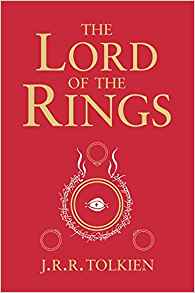 The Lord Of The Rings does something similar, through having hobbits as the central viewpoint characters. Although they are different to us, their world is similar to a kind of rural idyll we can relate to. This allows Tolkien to teach us, the reader, about the world beyond the Shire as the hobbits experience it.
Another example is Umberto Eco’s The Name Of The Rose. By having one of the main characters as an apprentice, Eco is able to have the master giving information in a natural way, helping us, the reader, make sense of what is happening. Similarly, in Conan-Doyle’s Sherlock Holmes stories, Holmes has to explain himself to the less quick Watson, allowing us (the even slower readers?) to keep up too.
But what if there are no characters close to ‘us’? What if there is no in-story novice who requires explanation?
There’s a thing called ‘maid and butler’, from stage-plays. Two servants appear, cleaning or whatever, and they talk about the current situation of the main characters—but often, it comes over extremely false. “As you know, Ethel, the master is due to return from his recent sojourn to the south of France, where he has been wooing young Miss Forester.” Yes, it gives us information, but it sounds unnatural—both characters know these facts, so why are they talking in this manner?
So, how do authors avoid this?
One way is simply through good writing craft.
 An example of this is in Iain M Banks’ Culture books. The main characters are not human, and so they have alien (to us) ways of doing things. There are many references to characters glanding various compounds, but I don’t believe this is ever overtly explained, but context makes it clear that Culture residents can artificially introduce various drugs into their bodies by manipulating internal reservoirs. In a short phrase like ‘she glanded Bliss’, Banks leads us to understand that this character is giving herself some kind of euphoric ‘high’ as a way of coping with her situation.
Sometimes, an author will throw the reader in at the deep end, and force the reader to think. Michael John Grist does this in his Ruins War trilogy (beginning with Mr Ruin). Right from the start, we’re diving minds, and fighting the Lag in sublavic ships. There’s very little to explain these terms, but as a reader it is clear that these things all mean something, so we go along with it, trusting that things will become clear eventually.
Books like this aren’t necessarily light reads, but good ones (like Mr Ruin) are worth the effort, because our perseverance is rewarded. Also, we are in the characters’ world from the start, totally immersed.
But sometimes there is need for explanation. There are books where a little up-front understanding will help the reader appreciate the story far more. And there are a few ways an author can do this.
Isaac Asimov uses one common method in his Foundation books. He starts each chapter with an excerpt from a fictional encyclopeida, giving some background information while still leaving questions, and all without disrupting the flow of the story. Other authors include extracts from ‘historical’ documents.
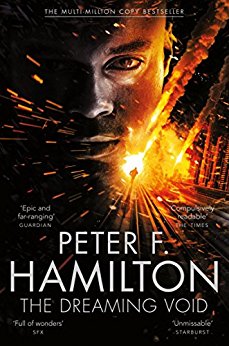 Some authors delve into the details, but turn a possible distraction into an effective part of their writing. I’ve recently read The Dreaming Void by Peter F Hamilton, and there are long passages of explanation, far more than the story actually needs. But it adds to the whole world, and in a genre like hard sci-fi, many readers actively want these details. Similarly, Neal Stephenson, in Seveneves, provides so much technical information that at times it reads like a manual—but that is one aspect of his writing that his readers like. In the wide realm of science-fiction, some readers are drawn to the ‘fiction’ side, while others thrive on the ‘science’.
Of course, JRR Tolkien did this too, but on a far larger scale. The Hobbit and The Lord Of The Rings are the ‘stories’, but the details of the world he created fill up not only a lengthy appendix, but also many more books. And this is another way of doing things—write the stories so that the average reader can appreciate the story, even if they don’t quite get all the references, but provide additional writings for those who want to dive deeper.
Ultimately, though, the method used is not as important as the end results—to allow the reader to experience as fully as possible the characters’ world. Maybe, as with the Beamish museum, total immersion is not possible, but that doesn’t mean we stop trying. It’s one of the joys of reading fiction set in different places and different times, filled with characters who are different to us—it gives us an experience we cannot get in our normal lives. It helps us see a world, be it real or imaginary, in a new way.
I don’t know who said it, but this quote is perfect:
I read books not because I don’t have a life, but because I choose to have many.
 It’s always interesting to see what books others read. As a reader yourself, I’m sure that, when you first walk into someone’s home, your eyes are drawn to their bookshelves. When you see someone reading on a train, or in a cafe, or on a park bench, it’s hard to resist turning your head to catch sight of the book cover.
 I think this is a fairly common mindset—writing (and reading) is seen as an intellectual activity, and books should be literary art. Yet we are drawn to stories and interesting characters. Art-house cinema and ‘serious’ films win praise, but most of us would prefer a couple of hours of escapism, with snappy dialogue, chases and explosions (or whatever flavour of ‘popcorn entertainment’ is your bag). And this carried over to our reading. We’d rather be seen with a ‘serious’ book than something frivolous, even if we’d rather be reading some pulpy sci-fi.

 We are always looking for something new.
 Before e-books took off, the main way of getting a new book (new to you as a reader, not a new release) was to visit a bricks-and-mortar store. And these stores wanted to stock what was more likely to sell, so of course they pushed ‘new releases’. They also stocked back-catalogue titles from big-name authors, and a selection of ‘classics’, but it was the new releases that they focused on.
 Both writing and reading are solitary activities—the writer hidden away in a dark room, tapping away at a keyboard as their imagined worlds pour out; and the reader in a secluded space, diving into those created worlds. Both are ‘introvert’ activities, forgoing any need for social interaction.
 There is also the desire to improve as a writer. I am determined to make the books I write in the future better than the ones I have already written. I want to be embarrassed by my writing from a few years ago. For that to come about, I have to develop, and one important way of developing is to receive feedback. This could be positive, so that I can replicate what’s working well, or it could be constructive criticism, so that I am made aware of weak areas.
 Sometimes, books can open up conversations with others—similar reading tastes gives common ground, helping us (especially those of us on the introverted end of the spectrum) overcome any hesitancy in social communication. We can also use quotes—If I were to quote a line from Douglas Adams or Terry Pratchett, and someone else were to come back with another quote, we instantly have a connection. Sometimes, that can be like being in a secret club, especially if our comments back and forth bring bemused looks from others.
 When I learnt about using in-file links in e-books (where clicking on a word or passage takes the reader to another section of the book), I immediately recalled the choose-your-own-adventure books I used to play/read as a teenager (I’ve still got a collection of the Fighting Fantasy books somewhere). But with e-books, there is no need to physically turn the pages—simply click, and you’re at the next section. And you’re not limited to a book you can hold comfortably—with e-books, there’s scope for longer adventures, with far more choices.
 Amazon have a feature called X-Ray. They pushed this a few months ago, but it’s actually been around since 2011. When this is turned on, the reader can highlight a word or a passage to gain more information—similar to the dictionary functionality, but with far more detail. With X-Ray, it could be possible to call up information on a town mentioned in the text, or a character summary when clicking on a name. Readers can use this to gain more insight into the story, or to read ‘footnote material’ that may interest them.
 Amazon have their WhisperSync system, synchronising text and audiobook versions—if a reader stops at a certain point and goes over to the audiobook, it will pick up where they left off with the text, and visa versa. But there is far more potential here. There is a company called
  When most people read, that is what they want to do—read. They want to absorb the text. They want to be immersed in the story through the medium of words alone.
