Free novellas and short stories

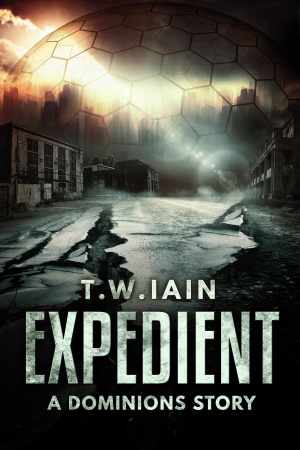
After writing about the benefits of shorter fiction for a quick burst of entertainment (which you can read here), I’ve put the novellas and short stories in my Dominions series down to free (for a couple of weeks at least, possibly longer). Click on the images below to go to available stores, or visit this page for more details.

(Note: If for any reason the retailer of your choice, I’ve added all the books to BookFunnel, where you can download for free in various formats (epub, mobi and pdf). BookFunnel also have great customer service, should you have any difficulties getting the files onto your reading device. These links are further down this post, under the book covers)

Novellas

Errant (A Dominions Story) Expedient (A Dominions Story)

Short stories

Animus (A Dominions Story) Gatekeeper (A Dominions Prologue)

(please note that BookFunnel links are now inactive)

In praise of the novella

Much as I enjoy reading novels, there are times when I want something else. Maybe I want to read a complete story in one sitting, or I’m just not in the right frame of mind to follow a novel over different sessions. Sometimes, when I finish a novel, I need something as a kind of mental palate-cleanser before diving into the next one.

stay-at-home-5094608_640

It’s times like these I’ll turn to short stories and novellas.

There are other lengths of story, of course. Flash fiction can sometimes be told in a single sentence. Vignettes are usually short, too, but are more a single scene than a complete story. Novelettes sit between short stories and novellas. But for most readers there are novels, novellas and short stories.

I like to think of the different story lengths in terms of TV shows and films. A novel is akin to watching a limited-run series, those shows that play out over a few episodes (and, by extension, a series of novels can be compared to a show that runs over more than one season). A short story is like a short film or a half-hour TV show, easy to consume while taking a quick break, sometimes pure entertainment, sometimes thought-provoking and deep.

Novellas are closer to films, taking a couple of hours to devour. They give a satisfying story, complex enough to keep us engaged but not so complicated that it feels rushed. Where a novel often has sub-plots or a number of side-quests for the protagonist, a novella often concentrates on a single story arc.

It’s no surprise that many films are based on novellas. Take Stephen King adaptations, for example‌—‌The Shawshank Redemption, Stand By Me, Maximum Overdrive, The Lawnmower Man and The Running Man all started life as novellas. Then there are classics like A Christmas Carol, Of Mice And Men, Animal Farm, The Stepford Wives, The Time Machine, The Strange Case Of Dr Jekyll And Mr Hyde, I Am Legend, The War Of The Worlds, Minority Report, and so many more. Stories to be devoured in one sitting, an escape from our daily reality for a couple of hours. No need to break off to sleep or eat or work, no need to remember what’s already happened when you pick the book up again.

Novellas fell out of favour for a while, mainly for financial reasons‌—‌there’s very little cost difference between producing a novel and a novella, but people would feel cheated paying £10 or $15 for a little over 100 pages. The classics continued to be produced because there was already an audience for those stories, but newer authors had to do with anthologies. Again, Stephen King is a good example, with novellas collections such as Different Seasons, Four Past Midnight and Full Dark, No Stars.

But ebooks have changed this. Producing ebook files is very cheap, so novellas and short stories can be priced more realistically. The e-reader (or smartphone) doesn’t change size with what is being read, so a novella feels no different to an epic novel. And with free-flowing text, there are no fixed pages‌—‌the story continues for as long as it needs.

It’s also worth considering attention span. A potential reader might not have the concentration required for a novel, but with novellas they can still enjoy reading complete stories.

And novellas can work as great introductions to new writers‌—‌they show the writer’s individual style, and if they can pull off a successful story arc in a novella, there’s a good chance they can manage the same in a longer novel too.

Novellas also provide a great opportunity for expanding a series. With novels concentrating on the main story arc, novellas can tell side-stories or explore events from characters’ past.
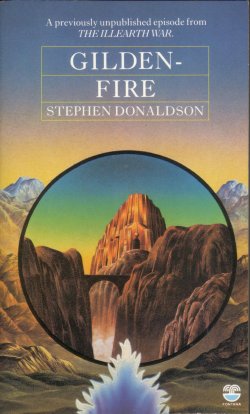
Gilden-Fire_StephenDonaldsonI first became aware of this idea when I stumbled upon Gilden Fire by Stephen Donaldson. Having recently read his original Thomas Covenant trilogy, I was intrigued by this slim volume. In the introduction, Donaldson explained that Gilden Fire was originally going to be a chapter in The Illearth War. But while he was pleased with the writing, the story in the chapter didn’t involve the main character himself. Donaldson thought it would break the flow of the book, and so it was cut. It was only later that he revised it and released it as its own story.

In indie-publishing circles it’s quite common for a series to have a prologue novella, often available for a low price or as an exclusive offer for joining a mailing list (something commonly referred to as a ‘reader magnet’). But writers (especially those publishing independently) have told stories over a series of novellas.

Hugh Howey did this with Beacon 32, eventually combining the five shorter works into a single novel. The Sterling & Stone team (Sean Platt, David W Wright and Johnny Truant) experimented with similar ideas in their serialised fiction, releasing novella-length episodes that built to form complete seasons. Their most popular is probably Tomorrow’s Gone, but I have to say I preferred their nine-novella series Unicorn Western and Truant’s Fat Vampire series.

So, novellas are incredibly versatile. They can provide a short, complete story experience. They can expand a series for avid readers. They can also create their own series. They might not have the same standing as novels, or the literary cache of short stories, but the humble novella has a lot to offer.

New short story – ‘Trophy Hunters’

Since the start of this year, I’ve been listening to the fiction short-story podcast The Other Stories. The team behind it (Hawk & Cleaver) describe the stories as ‘A modern take on The Twilight Zone, Tales From The Crypt, or The Outer Limits. Sci-Fi, Horror, Thriller, WTF stories’, which is what I aim for with quite a few of my stories.

Their stories are arranged in short seasons, each with a separate theme, and I’ve considered submitting stories a few times. But with everything else I’m working on, I haven’t completed one in time.

I have the start of a few stories, though, and I’ve gone back to one of these, based on the theme of ‘trophy hunters’. That story might have missed the podcast deadline, but you can read the finished Trophy Hunters here.

And if listening to a new creepy short story each week appeals, check out The Other Stories.

What to do about a 1-star review

It had to happen‌—‌after writing about a great 5-star review for Shadowfall (you can read that post here), I end up with a 1-star reviews for Dark Glass.

This isn’t the first 1-star I’ve had, and I know it won’t be the last. Every reader is different, and I’m never going to satisfy everyone.

samuel-3898008_640It’s still a little frustrating, though. I don’t have many reviews, so any new review can make a big difference to the average, either positively or negatively.
A lot of writers say it’s a bad idea to look at reviews, but at the moment I’m willing to take any comments, either praise or constructive criticism. I want to improve in my writing, so it is useful to know what readers don’t appreciate as much as what they enjoy.

But this review puzzled me. It doesn’t comment on the story, but does say that the book is ‘rife with grammatical errors’, making it ‘unreadable’. Yet I spent a long time editing this book, and it also went through a professional proof-read. No book is immune to a few errors slipping through, but I felt sure there were not so many problems that the book was ‘unreadable’.

So I checked my original files, running the first couple of chapters through Hemingway and Grammarly. I checked the Look Inside on Amazon too.

I probably used a few too many adverbs, and Grammarly pointed to a few ‘complicated’ sentences‌—‌but nothing grammatically wrong.

I wondered if the reviewer was posting this for a different book, clicking on Dark Glass by accident, but he mentions me in the review, so I don’t believe this is the case. I also wondered if the reviewer’s copy of the book was corrupted (and if they’re reading this, contact me and I’ll send you another copy), or if they simply didn’t like my style of writing.

What can I do about this review? I could respond, asking the reviewer to point out these errors so that I can correct them (and thanking them for their time), or I could contact Amazon and ask about having the review pulled if I believe it to be factually inaccurate.

But what would happen if I took either of these options? Amazon might take down the review, but there’s no guarantee of this, and I’d no doubt spend far too much time trying to convince them. And if I contact the reviewer, things could get messy. Comments can easily be taken the wrong way, upsetting people unduly.

It would be better to ask not ‘what can I do?’ but ‘what should I do?’ Reviews are readers’ personal thoughts on the book, and I have to respect that, even if I personally don’t agree with their thoughts. Also, reviews are not for the writer but for potential readers.

And here, I need to consider my own behaviours when choosing new books. If the cover draws me in and the description sounds interesting, I’ll check out the reviews. I’ll often scan negative reviews, but comments here don’t always put me off. A complaint about bad language won’t bother me, and I don’t mind violence and sex in the books I read.

If I thought a book looked interesting but then saw a review complaining about poor grammar or too many typos, I’d check out the Look Inside (or download a sample). Maybe the book is written in a different English than the reviewer expected (because there are so many different varieties‌—‌UK, US, Australian and so on). If there are some errors (or examples of clumsy writing), I might still be tempted by the book if the story looks good enough to enjoy despite this. Or possibly the book has a style of writing that is similar to the spoken word (and is therefore not perfectly grammatically correct), but this suits the way the story is being told.

And, as I mentioned above, this won’t be the last 1-star review I get.

So the best thing I can do is ignore the review. I’ll continue using tools such as Hemingway and Grammarly to make my writing as polished as I can, and then I’ll use professional editors/proofreaders to remove even more errors. I’ll continue learning more about writing. None of my stories will ever be perfect, but as long as I keep learning and working hard, I can keep improving.

And that’s the positives I’m taking from this review‌—‌I can’t please everyone, but I can keep striving to get better.

Dominions VI is now out

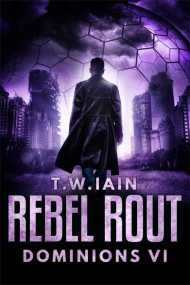
Rebel Rout (Dominions VI) is now out, on all major ebook sites.

Dom6_smallRodin might have liberated the Factory, but it’s still a prison to him. So an order from Authority is the excuse he’s been seeking, an opportunity to escape the meetings and the drudgery, a chance to get outside once more.

But he’s heading into a war zone, on a mission of deception. Those he travels with might be friends at the moment, but Rodin knows how easily allegiances can change.

That’s a problem Genna must face, too. Forced underground, her district in the hands of another, she’s determined to fight back. But Garrick’s always one step ahead, and that can only mean one thing‌—‌she’s being betrayed by someone close, someone she needs to trust.

And behind everything lies the invisible, powerful Authority, working toward their own ends, playing enemies and allies off each other. How can Rodin and Genna possibly win against Authority?

In the sixth book of the Dominions series, loyalties are tested, hope is pushed to breaking point, and nothing can be the same again.

Click here to get Rebel Rout now for only 99c.

(And if you haven’t started the Dominion series yet, I still have the box-set of the first three novels on offer for 99c. Click here for all the places this collection is available.

A box-set for under $1

2017-1326 TW Iain 3D Box Set on white on transparentWith the next Dominions novel due for release soon, I’ve cut the price of the Dominions Box Set: Books I-III to 99c (or your local equivalent). Three novels, a short-story prologue, and a few extras, all for under $1. And this set is available on all major ebook retailers (and quite a few smaller ones).

Click here to dive into the dark Dystopian world of Dominions.

In times like these, why read?

These are strange, confusing, scary times. We’re being asked to change the way we live our lives, with no clear notion of when normality will return (if ever). Stories abound in the media, both mainstream and social, and it can be hard to separate myth from fact.

And it’s the ideal time to read a book.

That might sound flippant, but I believe reading can help us all, in many different ways

Escapism & distraction

octopus-1235006_1280There’s little we can do about the current situation, beyond following whatever those in charge are suggesting (or ordering). But that doesn’t stop us worrying. It’s natural, in any strange situation, to hunt for a solution, even when there is nothing within our own reach. And this can increase our anxiety‌—‌which leads to all sorts of health issues, both mental and physical.

So we need to step away. We need to let our minds escape from what we can’t control. We need entertainment.

Reading has a few advantages over other forms of entertainment. Reading a novel takes many hours, often over many sessions. And between these sessions, a good story will still be running through our minds‌—‌we’ll be anticipating the characters’ next moves, or trying to solve the plot’s mystery.

Reading isn’t a passive activity, at least not as far as the brain’s concerned. The logical parts of our mind deal with deciphering the words, of making sense of the text. And then these words stimulate our creative, imaginative minds. From a few sparse sentences, our imagination conjures up believable characters and settings. The mention of sounds and smells in a book can trigger those parts of the brain associated with hearing and smell.

Reading can give us a whole-mind work-out. This keeps us occupied, helps distract us from things we have no control over, and ultimately is beneficial for our mental health.

These are immediate benefits of reading. There are benefits from long-term reading, too.

Instruction

knowledge-4171793_640Throughout history, stories have been used to educate. The tale of a successful hunt helps others develop and refine their own hunting skills. The sad story of a villager who ate the wrong kind of berry acts as a warning. The stories we read to our children help them make sense of the world.

Some of this instruction is practical‌—‌approach an animal you’re hunting from down-wind, be careful what kind of berries you eat, if you’re nasty to others they won’t be your friends‌—‌but stories also help us think. Characters face tough situations, and a well-written book will draw us into their internal dilemmas. As we read, a part of our mind is working out what we’d do in the same situation (or, more usually, what we’d like to do). As the character in the story uncovers more information, we adapt our thoughts, amending our personal solutions.

This make-believe decision making can help in real life. If we’re used to thinking things through, we’re less likely to panic. We know that we need to take a step back before we react.

Empathy

book-2135815_640It’s often said that to truly understand someone, you need to walk in their shoes‌—‌and stories are a powerful way of doing this. Vicariously, we can live through the pressures of a high-powered job, or the daily grind of raising a family on a meagre wage. We can experience being lost in an alien environment, or living amongst those different to ourselves, or coping in a world where our beliefs are not shared by the majority. We can get a glimmer of understanding into why someone may turn to crime, or shut themselves off emotionally from others, or desperately seek acceptance.
The empathy we can develop through reading can help is in real life. The better we understand how everyone sees the world through their own eyes, filtered through their personal experiences, the less likely we are to make snap judgements. And then we’re in the middle of confusing, worrying situations, the last thing we need is finger-pointing and rash decisions. When people are struggling, a little empathy can go a long way.


Reading is good for us. It gives us a break from our troubles, it exercises our minds, it helps us solve problems, and it develops our empathy. So stay safe, stay calm, and continue reading.

Special offer on Dead Flesh (Dominions II)

DeadFlesh_smallIn light of the upcoming release of Rebel Rout (Dominions VI), I’ve knocked the price of the second book in the Dominions series, Dead Flesh, down to 99p/99c (or your local equivalent‌—‌basically the lowest price Amazon will allow me to enter).

With Dark Glass (Dominions I) free everywhere, this makes it even easier to get immersed in this dark Dystopian thriller series‌—‌perfect if you’ve got a bit more time on your hands at the moment.

Dead Flesh will only stay at this price for about a week, but I might have another offer for you in early April.

Dark Glass (Dominions I)‌—‌free

Dead Flesh (Dominions II)‌—‌99c/99p

Rebel Rout (Dominions VI)‌—‌pre-order only 99c/99p

Final part of ‘What Goes Around’ now available to read for free

The fourth and final part of the short-story sequence What Goes Around is now out.

It’s called It Takes A Steady Hand, and probably works best if you’ve read the previous three parts (Get The Right OneAlways A Silver Lining, and No Return). It also features the first appearance of a character who has been mentioned a great deal in the Dominions novels and stories (including the first of these short stories, The Job.)

It almost feels like I’ve had a plan for Dominions right from the start!

Anyway, you can read It Takes A Steady Hand here (and the previous parts of What Goes Around by clicking on the titles above). As always, I’d love to hear your thoughts on it.