I’ve got an idea for a story. It’s great. It’s got this wonderful twist, one that turns everything on it’s head. See, what happens is….
But I don’t want to tell you. Not yet. See, you might take it and use it yourself. Then it wouldn’t be anything special when I write it. I don’t want to let this idea go. It’s that good.
Okay. I’m excited. I’ll tell you. See, it’s set in our world, but there’s an alien race living amongst us. They have been for years.
What do you mean, it’s been done before? I haven’t got to the good bit yet. See, this hero character stumbles upon the truth, and it looks like this alien race are trying to take us over. They do stuff like rig elections, and make sure there are all these dodgy additives in food.
Okay, okay, so that’s been done before. But you still haven’t let me get to the proper bit yet. There’s this twist.
You going to shut up and let me finish?
Thank you.
So this hero’s being guided by some secret organisation, and they’re trying to fight these aliens. They don’t want to be taken over. But our hero, he stumbles upon something. And it changes everything.
See, these aliens know that humans are dying out. They’ve known for years. And they came down, not to take us over, but to help us. Instead of wanting to destroy us, they are trying to save us.
Neat twist, right?
 Maybe. But the idea doesn’t make the story. It could be turned into something amazing, or end up run-of-the-mill, or even terrible. It could be a success, but it could just as easily be a failure.
Why? Because ideas are not important.
Okay, that’s an over-generalisation. Obviously, it is important to have an idea before writing, or before creating anything. You need to know, or at least have an inkling, where the story is going. You need to have a starting point, be that an interesting character, some event, or simply a concept (what if we used scent as our main means of communication? Oh, The Simpsons got there first – ‘Smell ya later!’).
But the idea in itself is nowhere near as important as the execution.
Don’t believe me? Think of any story you like — book, film, TV show, doesn’t matter. Now boil the story down to a single sentence, the idea around which everything else hangs.
Here’s one. Young person forced to leave home and fight, eventually triumphing over evil.
Sound familiar? It’s Star Wars, right? Or maybe (if you take ‘person’ to mean ‘person-like being’) it’s Lord Of The Rings. Or countless other stories.
Now think of a concept for a story. Try this one. The world is an illusion.
Cool-sounding concept. It’s The Matrix.
Or is it The Wizard Of Oz, where everything turns out to be a dream? Maybe it’s The Truman Show.
Three very different stories, but they could have come from the same initial idea.
The initial idea isn’t that important. It’s what you do with it that matters.
 But even that only goes so far. Imagine two writers have the same initial idea, and map out identical story outlines. They have the same characters and settings. But the finished stories would be different. One might be heavy on poetic descriptions, where the other is filled with fast-paced dialogue. One might have a gritty edge, and the other might go for a softer, more family-friendly approach. One might stress the outer struggle of the characters while the other focused on their internal dilemmas.
Same ideas, different outcomes.
There is something else to consider when thinking about ideas. And that is the sheer abundance of them.
Don’t believe me? Coming up with ideas is easy. Look around yourself, or think about the things around you. Pick two different objects. Now combine them.
I’m going to pick a train set and an exercise bike for this example, as they are both things that are (sometimes) in our conservatory. My first thought on combining these is this; the power from the exercise bike is fed to the train set. While I pedal, the train runs. When I stop, the train stops.
Not a great idea, but let’s run with it. Imagine this train set is somehow a real railway system. When I pedal, I enable real trains to run. Obviously, that would take more than one person using an exercise bike. So there’s a whole bank of us, all pedalling furiously, so that the trains run on time. Our hard work enables all those business bods to get to work.
We can’t afford to stop, because then the transport network grinds to a halt. It’s not only about commuters. There are goods to transport as well. And, in this imaginary world, rail is the major transportation system. So those of us pedalling like mad are truly keeping the world running.
It’s a sweatshop.
This idea has legs (like the ones pedalling round and round). It raised so many questions. Are we pedalling through choice, or because we are forced to? Who is overseeing the pedal stations? What happens when the cyclists revolt? What happens when someone realises that pedal power could be used for other purposes?
Another example, again from our conservatory. There’s a plant in a pot on a table, and another in a pot on the floor. Which one is superior? The one on the table possibly has a ‘higher’ starting position, but the one on the floor is larger, and takes up more overall space. They are at different sides of the room. Is this because they can’t stand to be near each other?
So now my mind’s going off in all kinds of directions. Plants are intelligent. Maybe they have the ability to move themselves. Maybe the plants have been planning a takeover, rebelling against their treatment at the hands of humans. Eventually, they will start selective breeding programs, producing humans with more pleasing features, or ones that grow quicker. Maybe they will find a way of breeding humans through budding. Then some mad plant scientist will create a hybrid, part plant and part human. Fauna sapiens or something.
Sounds like it might end up as a comedy, but again that depends on the execution. Compare Day of the Triffids to Little Shop of Horrors.
See? I came up with a cool idea, and others have already beaten me to it. But that doesn’t matter, because the idea is only the starting point.
It’s what I do with it that is important. And that’s when the real work starts.
 TW Iain is not my real name.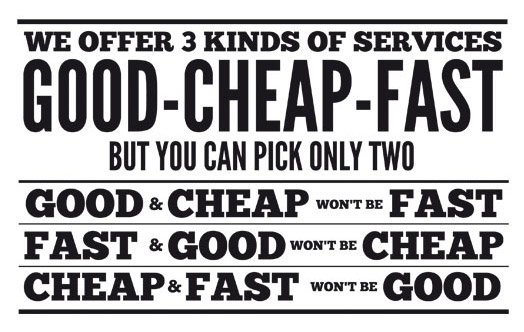
 Everyone is different. Every writer works in their own way. Some are able to achieve a flow state, and the words fly from their fingers. Some use dictation to work at 5000 words per hour on their first drafts. There are those who plan meticulously before they start writing, and so there is not as much structural work required later (and I believe this is Lee Child’s method). And others are simply capable of putting in ten hours of work on their books every single day.
 But in books (in fact, in any art), this becomes problematic. Good art has a long-lasting appeal. Well-written books can be re-read countless times and still feel fresh. Classics last forever.
 So, there you have a few of the things I picked up on while reading the Tube Riders trilogy. As you can no doubt tell, I was impressed. I’m going to be following Chris Ward from now on, reading more of his books (and his newsletters — he asks some interesting questions). He’s my kind of author—exciting, entertaining, and instructive.
 It’s interesting how different arts view the development of talent. In the visual arts, it is common for a painter’s early years to be regarded as training, or as an apprenticeship period. It is often later works that are more highly valued. Then there are actors who mature with age, performing with more gravitas and filling larger roles. The ones who relied on their looks fall by the wayside, but the ones who worked at their craft and developed their acting skills earn increasing respect.
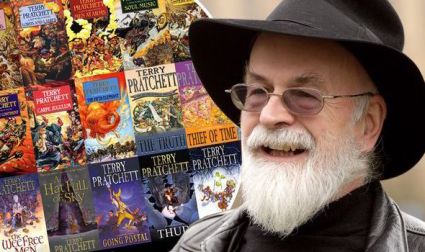 Terry Pratchett is a case in point. He wrote a few books before starting on the Discworld series, but they are not a patch on his later works. Even with the Discworld series itself, it took him quite a few books before he got into his stride. The Colour Of Magic and The Light Fantastic are still Pratchett, but nowhere near as good as many of the later ones.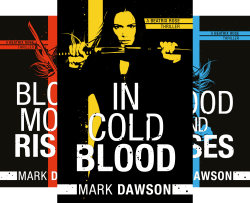
 Recently I formatted a PDF version of my first
  Write To Market. This book details how he wrote his Void Wraith trilogy with the aim of hitting as many popular space opera tropes as he could, writing a book that would appeal to as many fans of that particular genre as possible. He initially wanted a powerful female lead, but his research indicated that most successful space opera books had a jaded, slightly older male as the main character. So he altered his character to conform to the popular trope.
 There are many who argue that there is a link between violence in the arts and violence in real life. There are those who argue that what you see leads you to think and act in a certain way. There are those who feel that erotica and pornography (and yes, I do realise there is a distinction between these two) are unhealthy because of how they change the viewer/reader’s viewpoint and attitudes.
 So are tropes bad? Should writers avoid them?
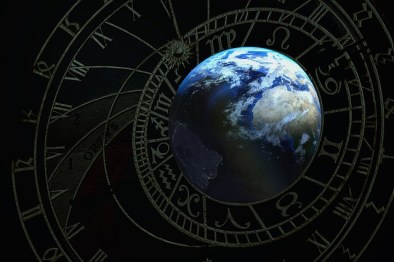 These three books are connected by the fact that they all deal with topics that could be considered religious conspiracy theories. They all use biblical passages and other quotes to back up some fairly far-out ideas.
 Of course, once you realise this, it’s easy to question everyone—especially those who talk or write well. So maybe that poorly written book with the wild theories is closer to the truth, and Umberto Eco is simply having a clever laugh at the gullible masses. Maybe we should trust those who come across as less skilled or less intelligent, because they can’t lie as subtly or be as creative with their words.
 My Aims For 2017
 At the start of November, I posted about how I wasn’t taking part in
 Constant pushing is not good.
 Speed does not necessarily mean good writing.
 Focusing on one thing means ignoring others.
 TW Iain