Story is character


Douglas Adams has many great characters in Hitch-Hiker’s Guide To The Galaxy, but one of my favourites only exists for about a page‌—‌the sperm whale that is suddenly called into existence a few miles above the planet of Magrathea. Of course, the ending is fairly predictable.

“Hey! What’s this thing suddenly coming towards me very fast? Very very fast. So big and flat and round, it needs a big wide sounding name like‌…‌ow‌…‌ound‌…‌round‌…‌ground! That’s it! That’s a good name‌—‌ground! I wonder if it will be friends with me?”

I remember reading interviews with Adams where he explained how this whale came about. In cop shows on TV at that time there would often be chase scenes with both heroes and villains firing guns. Naturally, the villains were never the best of shots, and innocent bystanders would end up dying. What annoyed Adams about this was how nobody on-screen appeared to care‌—‌there was nobody to cry over this loss of life, or even say ‘Hey! I was going to play tennis with that guy this afternoon!’ (apologies if I’ve got the quote wrong‌—‌I’m going from memory here). In short, these characters were only there for one purpose‌—‌to be killed.

So Adams decided to write a character whose only role was to die, and make sure the reader cared about them.

I think it’s safe to say he achieved this.

But this points to the importance of characters in stories. Often, stories are viewed as primarily plots (the stuff that happens), with characters simply being the ones this stuff happens to. But in a good story, the plot is driven by the characters‌—‌initially through their reactions to events (like the thoughts going through Adams’ whale’s head), and then through their actions (although the whale’s meeting with the ground prevents anything in this example). Story is not so much the events as the characters’ reactions and actions. In fact, I believe we can go a stage further‌—‌characters are story.

play-stone-1744790_1280To illustrate this, I want to compare a couple of books‌—‌Arthur C Clarke’s Rendezvous With Rama and Andy Weir’s The Martian. Both are hard sci-fi, and as such both dive into scientific details. Both give the reader a sense of place through their scientific world-building.
Rendezvous… is about a team of astronauts investigating a huge alien artifact that has entered the solar system. We follow this team as they uncover various mysteries, learning more and more. Occasionally, things go wrong, but the team are professionally competent, and they soon solve any issues.

This is one problem I had with the book‌—‌there’s very little tension. Yes, there are the constant questions about Rama, but the whole ‘story’ is more like a narrative documentary than an adventure into the unknown. The characters (and I can’t remember their names, nor anything distinguishing about any of them) are simply tools through which Clarke can describe this fantastic world he has created.

Now compare this with The Martian. Mark Watney is stranded on Mars, and right from the start we’re with him as he struggles to survive. We ride with his ups and downs, feeling the tension of his struggles and the release as he solves problems. Yes, there’s science and maths in his solutions, and he’s competent and professional, but we relate to him as a person. What might have been a guide to survival on Mars becomes, through the character of Watney, a story of survival in a hostile environment.

Story comes to us through character, not through situations or environments.

Think of any successful book, and chances are you think of the characters driving the story.

The battle for Middle Earth is huge, too big for the average person to hold, and so Tolkien tells his story through the struggles of a few characters, primarily the hobbits. The fight between good and evil is made personal in Frodo’s struggle with the power of the Ring. Sam, his stout friend, gives us hope because he’s someone we can relate to‌—‌not particularly skilled, terrified much of the time, but with a firm belief in what is right, and a drive to do what he can to help Frodo. The story exists not in the vast sweeping history but in the struggles of these characters.

There are many other examples, of course. The conflict in JK Rowling’s wizarding world is brought to us initially through a young boy’s introduction to his own abilities as a wizard, and continues through his struggles both with his power and his develop into a young man, culminating in his confrontation with Voldemort. In the Hunger Games books, a whole world’s struggles are made real through the constant battling of Katniss Evergreen. Dune’s political intrigues are grounded in Paul Artreides, and his understanding of exactly who (what) he is. The battle against the Empire is shown through Luke Skywalker. The wonders of Douglas Adams’ bizarre universe are shown through the hapless character of Arthur Dent, confused and often wanting to simply have a lie down and a nice cup of tea. The fight against thieves in an office block is made personal through the character of John Mclane (and, to a certain extend, through Alan Rickman’s character‌—‌not a common thief but an exceptional one).

Without these characters, would these stories be the same? Would the stories really exist? Maybe they could be told in other ways, but they’d still need engaging characters. Maybe without Harry Potter, we’d have Neville Longbottom’s fight with Voldemort. Without Arthur Dent, maybe Hitch-Hiker’s Guide To The Galaxy would be Trillian’s story. We can’t know for sure. But we can say that, without characters, these stories would simply be stuff that happens.

Because characters don’t inhabit stories, they are stories.

How was 2018 for me?


Another year over, another opportunity to look back at what I’ve achieved (or otherwise). Like any year, things haven’t always gone to plan.

Shadows

My aim for 2018: to release the third book in the trilogy in the first quarter of the year.

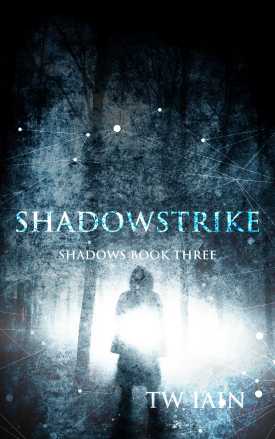
Shadowstrike_smallShadows was originally supposed to be a short series of ‘easy’ books as a palate-cleanser between writing Dominions stories, but each book required far more work than I’d envisaged. The third book, Shadowstrike, was no exception, and the editing stages involved a great deal of cutting and rewriting to reduce the overblown 160,000 word first draft to something just under 100,000. This took a lot of time, especially as I then had to do another couple of editing passes to improve the language, and I only managed to release the finished book a few months ago.

But I don’t see this as a failure. The book is far stronger for all that work‌—‌in fact, I feel that the Shadows series contains some of my best writing to date. And readers seem to enjoy the books‌—‌I received a cery positive review for Shadowfall, and my Kindle Unlimited page reads suggest that readers who start Book One generally continue on to finish the whole trilogy.

I was going to leave this series as a trilogy, but I’m rethinking this now. I might have more to report on that at a later date.

Dominions

My aim for 2018: to release Dominions IV and V along with a couple of supporting stories, and to start work on Dominions VI.

Well, that never happened.

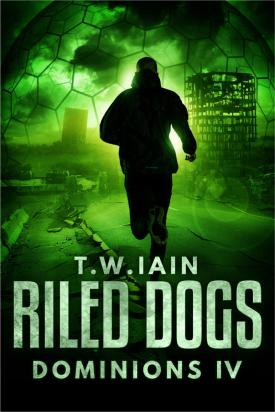
Riled Dogs (Dominions IV)I already had an almost-finished version of Riled Dogs (Dominions IV), although I wasn’t ready to complete it because I planed to release IV and V close together. But with Shadowstrike taking far longer than expected, I knew I wasn’t going to get round to Dominions V before the second half of the year. And Deep Water (Dominions III) came out at the end of 2016‌—‌could I really leave over 2 years between that and the rest of the series?

So between edits on Shadowstrike I worked on Riled Dogs. This didn’t require too much‌—‌a quick polish, an external edit, and then all the formatting and finalising stuff (I already had a cover, and I’d been throwing around ideas for the product description for some time). I published the finished version back in March.

I also had a short that I’d originally written when I started work on Riled Dogs. This took a few more edits to complete, but being a short story, this didn’t take as long, and I was able to release Animus (A Dominions Story) as another free gift to my mailing list (although this will probably go on general release fairly soon).

When I’d completed Shadowstrike, I set to work on Dominions V. But I’d been enveloped in the world of Shadows for too long, and I needed to reacquaint myself with Dominions. I decided to re-read all the older books, and started (where else?) with Dark Glass (Dominions I).

And I wasn’t impressed.

This book came out in the summer of 2016, but was finished back in 2015. Three years further on, any my writing’s improved‌—‌and the state of Dark Glass made this obvious. The main character was passively carried along by the plot for most of the time, the story moved slowly, and the writing was overblown. And this was the first book in what I intend to be a nine-book series. How did I expect readers to pick up the second book if the first wasn’t a good read?

I couldn’t let this stand. I needed to re-write Dark Glass.

This had been my project for the last few months of 2018, and I’m far happier with the new version. It’s almost finished, and should be out early next year.

Marketing

I’m constantly learning in this area, and had some success with KU free days and a Kobo promotion. But paid advertising is becoming more necessary, with Amazon especially leaning towards a ‘pay to play’ environment. Over early December I ran a few Amazon Ads for Shadowfall, but without success. I had quite a few impressions (meaning that the cover showed up when potential readers were searching for what I considered to be similar books), but hardly anyone clicked (under 1%). I believe this is down to the cover, and after a lot of consideration I’ve decided that all the Shadows covers need to change.

Other projects

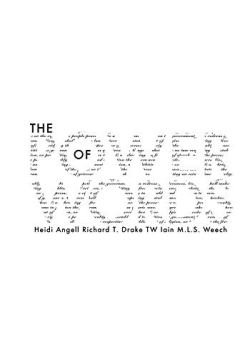
PowerOfWordsCoverBack in 2017, MLS Weech sent out a call for stories inspired by the First Amendment, to be included in an anthology he was putting together. He accepted my story (Ghost Stream), and then started an intense editing process that stretched into 2018. It was a lot of work, but it’s definitely made the story stronger (and I learnt a great deal from the whole process).

The release of The Power Of Words was at the start of October, and we had a Facebook party‌—‌the first time I’ve been involved with one of them. We’ve garnered a few decent reviews, and I’m proud to be a part of this anthology. There’s also an audio version‌—‌and listening to someone else narrate my own story was an eye-opening (ear-opening?) experience. It was like discovering a new story, and it’s pushed me further down the road to getting audio versions of my other stuff.

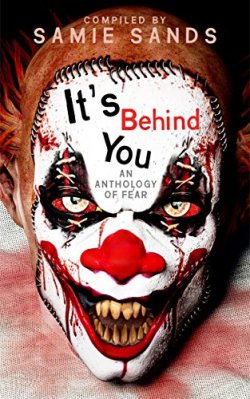
It's Behind YouBack in March, I had a short story (The Reason We Run) included in Samie Sands’ horror collection It’s Behind You.

I’ve continued to post a new story under 1000 words on my website every couple of weeks. I did have a break in the summer (putting out posts connecting the stories by themes instead), but I finished the year with my 60th of these shorts, and have just compiled the last twenty into another collection (Millenary 3). I’ve also continued to post various thoughts/musings on reading and writing, keeping up my schedule of putting something new on the website every week.


So that’s been my year in writing/publishing. Two novels released, a couple of shorts (including a very long one) in anthologies, and more shorts and posts on the website. Not the year I’d envisaged, but I’ve learnt and I’ve developed. I’m a stronger writer now, and I’ve increased my understanding of marketing and the business side of independent publishing. Re-writing Dark Glass, while appearing to be a backward step, will put the series on firmer foundations. It’s also given me the courage to accept that the Shadows covers weren’t helping sales of those books.

And I have plans for 2019, some more formed than others (and some little more than sparks of ideas at the moment). But I’ll tell you about them next time.

Why the indie author community is so special

The indie author community feels very special‌—‌even to someone like me, who is only on the fringes of it. Writers who are publishing themselves are spread across the globe, and their numbers are growing all the time, but still the community feels‌…‌like a community.

It’s supportive, for one thing. As it’s now November, we’re in NANoWriMo‌—‌National Novel Writing Month. The challenge (to write 50,000 words over the month) is really there to help new writers grow a writing habit, but many seasoned authors still take part. And those who don’t still offer encouragement to those who might be struggling. There’s an overall sense that, even if you don’t reach that 50,000 word goal, any words you do get down take you closer to the end of that novel, and are to be celebrated. There are many writers who cite NaNoWriMo as formative in their writing careers, and much of that comes down to the support from the indie author community.

It’s also incredibly generous. People are generally very willing to share both their successes and failures. There’s no sense of hard competition between writers, but rather a feeling that encouraging reading will help everyone (I’ve often heard this spoken of as ‘a rising tide floats all boats’). It’s why writers are willing to recommend books by others in their genres, and also why they provide so much help to newer writers. Yes, some of this costs (in the form of books and courses), but so much is put out there for free. There are blogs, webinars and podcasts. Personally, I’ve learnt so much through listening to the advice, interviews and discussions available from the likes of Joanna Penn, Kevin Tumlinson, Mark Dawson, Mark Leslie Lefebvre, and so many others.

Of course, no community is perfect, and there are those who are not so generous and helpful. There are those who try to cheat the system, or take short-cuts that make things harder for others. There was the whole ‘cockygate’ thing a few months ago (this post provides a pretty good summary for anyone who’s interested to read more). But generally, indie authors see fellow writers not as competition, but as travellers on the same journey‌—‌and, often, this grows into genuine friendship.

One incident recently brought home to me just how caring this community is.

You might have heard of Brandon Barr, but if that name is unfamiliar to you, he writes fantasy and science fiction. Like many writers, he juggles his writing with a day-job and family commitments, but he’s been building up a readership over the years, and has forged bonds with fellow writers. Slowly, he’s becoming ‘successful’, especially with his Song Of The Worlds series.

But his journey hasn’t been plain sailing. A couple of years ago, Brandon was diagnosed with leukaemia, and although the treatment he received appeared to have been successful, the leukaemia has recently returned. This time, doctors can’t offer a good prognosis.

There’s been a surge of support and help from other writers, and although those closer to Brandon have been at the forefront of this, many others have done what they can to help. They’ve set up a GoFundMe page to raise money to support his family. They’ve stepped in to help with the recent re-release of his series, and to take over the running of his newsletter when he’s unable to do this himself. And a couple of authors are currently working on Brandon on the remaining two books in his series.

BrandonBarr_RiseOfTheSeerBut the indie author community is a part of a far larger community‌—‌that of readers. Many writers who have not been in a position to directly help Brandon have done the best they can by asking readers to help. How? There’s also one very simple way for readers to support an author‌—‌buy books. The best place to start with Brandon is Rise of the Seer, the first book in his Songs of the World series. So if you would like to help support Brandon and his family, please consider either buying a book or donating (or both).

And if you want to learn a bit more about Brandon, his recent interview on Kevin Tumlinson’s Wordslinger podcast is a great place to start (click here).

The shadows are growing!

Bit of news about my Shadows series:

Shadowstrike_smallShadowstrike (Shadows Book Three) is now available, through Amazon. I had the pre-order up for 99p/99c, and I’m keeping the book at that price for a while longer. The book’s also in Kindle Unlimited, so if you subscribe to this you can borrow and read for free.

Shadowfall_smallAnd to celebrate the release of this book, I’ve put the first Shadows book, Shadowfall, to free for a few days (until the end of the month). So if you haven’t read any of these sci-fi/horror books, and want something a bit different for Hallowe’en, click here to get this book for free.


The Power Of Words is released, and here’s a free short story to celebrate

PowerOfWordsCoverWords have power. They can be used to cure, and to cut. They can be used to build up and to tear down.

The Power Of Words is an anthology that explored these ideas, taking the First Amendment as inspiration. Four tales by four authors‌—‌M.L.S. Weech, Heidi Angell, Richard T. Drake and me. And it’s out now, on e-book and paperback (with audiobook to follow soon).

This might sound like a sales pitch, but I’ve read all the stories, and highly recommend it. And at the bargain price of 99p/99c for a limited period, you can’t go wrong.

My story in The Power Of Words is called Ghost Stream, and to give you a taste of it, I’ve written a separate short, called Rumours, that you can read here. In this tale, you’ll meet the villain of Ghost Stream, and maybe start to see how manipulative he can be. He might not lie, but his words cannot be trusted!

So check out Rumours here, and The Power Of Words here.

Book recommendations from this summer


Summer holidays are wonderful reading time. When it’s so hot that you don’t feel like moving, what can be better than lounging about with a book is ideal (and with e-readers, you don’t even need to physically turn pages). It’s an opportunity to catch up on some of those ‘must read’ books that have been on the ‘to-be-read’ list for far too long, or to dive into a new read.

A couple of weeks ago, I wrote about how reading was such a popular activity around hotel pools (and you can read that here). This week, I thought I’d share a few of my favourite reads from this summer.

PerdidoStreetStation_ChinaMievillePerdido Street Station‌—‌China Mieville

China Mieville is one of those authors where I’m almost embarrassed by how few of his books I’ve actually read. A couple of years ago I read King Rat (can recall enjoying it a lot), and earlier this year I read his short novel The Last Days Of New Paris (which left me feeling like I wanted to explore the world he created in far more detail).

So I’m long overdue a read of his first New Crobzun novel. I started it expecting to be impressed‌‌—‌‌and I wasn’t disappointed.

The world-building is incredible, not only in the setting but also in the characters‌—‌insect/human hybrids, bird-men and strange mutants. It’s all wonderfully imaginative, but when it’s combined with Mieville’s prose it’s an encompassing experience.

Some of the negative reviews of this book on Amazon complain that the story is slow to start, and while there is some justification in this comment, I think it’s necessary‌—‌to care about characters so strange in such an unfamiliar place, Mieville has to take us in hand and show us these wonders first. And when the story does get going, it’s a roller-coaster of a ride.

I’m not sure how to describe this book‌—‌it’s second-world fantasy, but there are nods towards sci-fi along with strong horror elements‌—‌but I think that’s a good thing. This book feels unique, and while that means it might not be to everybody’s taste, it’s a book I’d highly recommend.

And I really should read more of Mieville’s work before the year is up.

Artemis_AndyWeirArtemis‌—‌Andy Weir

Andy Weir, of course, came to fame with The Martian, which I greatly enjoyed. But I was wary of reading his second novel‌—‌The Martian felt like it could have been a one-off, and I didn’t want my enjoyment to be tainted by a disappointing follow-up.

I needn’t have bothered, because Artemis is just as good as The Martian. It’s not a sequel‌—‌it’s not even the same kind of book. Artemis is a fast-paced thriller set on a colonised base on the moon, with a spiky, sassy main character, gangsters, smuggling, and a bit of politics and business intrigue. There’s murder and fights too.

But what it does share with The Martian is science. I can’t comment on the accuracy of it, but it all sounds plausible‌—‌and in a novel, that’s good enough for me. The characters solve problems using physics, but science also causes many of their problems.

Oh, and like his protagonist in The Martian, the characters in Artemis do tend to swear quite a bit. Don’t know if Weir’s going to release a ‘child-friendly’ version of this, like he did with The Martian (personally I don’t see why he should), but unless you’re put off by ‘bad language’, this is another book I’d recommend‌—‌exciting and intelligent.

I’m already looking forward to whatever Weir comes out with next.

Obscura_JoeHartObscura‌—‌Joe Hart

I first heard of Joe Hart when I was writing Dark Glass. At the time, I was toying with calling my series Dominion, but when I did a search in Amazon I noticed a book called The Last Girl, a Dystopian story with the subtitle The Dominion Trilogy, Book 1. I checked out the author name, and discovered that Joe Hart had beaten me to my preferred series name.

His is a trilogy, though, whereas mine is longer. I added an ‘s’, and branded my books as Dominions. I’m sure he doesn’t mind‌—‌especially as his trilogy has done very well.

That’s not surprising, because they are good reads. So when I saw his new one on Amazon, I bought it.

Obscura isn’t Dystopian. In fact, it’s hard to describe. We have a protagonist who is searching for a cure to the version of dementia that destroyed her husband and now affects their daughter, so there are elements of medical thriller. But she’d addicted to painkillers, and as the book progresses it becomes a psychological thriller. Oh, and much of it happens in the near future, in space, so it’s also a sci-fi adventure.

If that sounds like it should be a mess, it isn’t. Hart weaves the story together brilliantly‌—‌a plot filled with misdirection and intrigue, but always remaining focused on the characters, especially the protagonist’s inner turmoil. It’s the kind of book where anything could happen, and I highly recommend it.

So another author goes on the ‘must read more’ list.


There were other books I enjoyed (the first three John Milton thrillers by Mark Dawson were fast-paced, enjoyable reads, and The King Of Space Must Die by Barry J Hutchison kept to the same high standards as the rest of the Space Team series but brought it all to a satisfying close), but I don’t have time to go into details here.

My ‘to-be-read’ list is still as long as ever, but I’m always on the lookout for more titles to add to it‌‌—‌‌any suggestions greatly appreciated.


The Power Of Words now on pre-release

PowerOfWordsCoverThe Power Of Words, an anthology of stories centred on the First Amendment, is now available for pre-order at 99c/99p. Four futuristic, apocalyptic and fantasy stories by four authors‌—‌myself, Richard T. Drake, Heidi Angell and M.L.S. Weech.

The e-book will be released on 1st October, with paperback and audio versions also available around that time.

Pre-order The Power Of Words from Amazon (.com/.uk /.au)

What makes a book ‘new’?

book-1738609_1280We are always looking for something new.

Visit just about any bookstore, and you will be confronted by shelves and displays of new books, by big-name or debut authors. Even on the digital bookstores, there are ‘new and noteworthy’ banners.

Sometimes, the new titles take us by surprise‌—‌we see a book that catches our eye, even though we were not previously aware of it. At other times, we eagerly await the new release from a favourite author. Just think how long fans have been anticipating the new George RR Martin title. Think back to the queues at bookstores in the middle of the night when the newest Harry Potter book was released.

But what does ‘new’ really mean?

I recently read Stephen King’s 11/22/63. The book was released in 2011, so it’s not a ‘new’ title. But I hadn’t read the book until now. As I read it, I was absorbing the story for the first time. It might not have been a new release, but it was a new book to me.

The same could be said for many books. I wasn’t born when Tolkien’s Lord Of The Rings was published, but when I read it as a teenager, the book was new to me. And somewhere, someone else is experiencing Tolkien’s book for the first time. Elsewhere, another reader is discovering Isaac Asimov or Robert Heinlein. Someone has just picked up their newly-acquired copy of Mary Shelley’s Frankenstein. Another reader has now reached the end of Tolstoy’s War And Peace, and someone else is looking with interest at a writer they have not yet tried called Jules Verne.

Books written over a hundred years ago, yet they are still being discovered today. Old book, but also new. And now, we have access to so many more old books that can be new to us.

A bit of history that will probably already be known to you:

bookstore-1315560_1280Before e-books took off, the main way of getting a new book (new to you as a reader, not a new release) was to visit a bricks-and-mortar store. And these stores wanted to stock what was more likely to sell, so of course they pushed ‘new releases’. They also stocked back-catalogue titles from big-name authors, and a selection of ‘classics’, but it was the new releases that they focused on.

Of course, not every new release sold well. Many titles had their few weeks being touted as the next must-read before all the unsold copies were returned to the publisher. Some of these turned up in ‘remainder’ stores, and some copies found their way into second-hand stores, but many were pulped.

And they still are. In the high-street physical books game, new release periods are vitally important. A book that doesn’t ‘make it’ in those first couple of weeks has failed.

But it’s different on e-book stores. There is no limited shelf space, and these stores can happily stock millions of titles. They use search engine AI to show titles that might be of interest, so the potential reader doesn’t have to walk up and down shelving.

And that changes things. Now, an old title can become ‘new’ for a second, or even third time.

This happened with Hugh Howey’s Wool series. It became one of those overnight-success novels, even though it had started as a fairly low-key short story, and had grown over time. Andy Weir managed something similar with The Martian‌—‌a story serialised on his web-site, then an independently-published e-book, it only started getting a large audience when he released the audio book. It got noticed by people involved in the film industry, and suddenly it was a big-budget film based on a ‘new’ book by a debut author.

And, of course, it was a new book to everyone who had not yet read it.

There are millions of books out there. And that means there are millions of new reads, just waiting to be discovered. They might have been written this year, or a couple of hundred years ago. But that doesn’t matter. They can still be discovered. And as readers, we can enjoy new stories for as long as we desire.


E-books – unrealised potential or just right?

Last year, it was reported that someone high up in Barnes and Noble had railed against e-books, calling them something like a wasted opportunity. Apparently (and I can’t find any links to this, so I may be wrong) he said they were a failure, because they didn’t do anything different to physical books.

In a way, he has a point. There is a great deal of potential in the technology behind e-books. They are based on html, and if you imagine how much is possible through web pages, you can start to see the potential for e-books.

maze-1804499_1280When I learnt about using in-file links in e-books (where clicking on a word or passage takes the reader to another section of the book), I immediately recalled the choose-your-own-adventure books I used to play/read as a teenager (I’ve still got a collection of the Fighting Fantasy books somewhere). But with e-books, there is no need to physically turn the pages‌—‌simply click, and you’re at the next section. And you’re not limited to a book you can hold comfortably‌—‌with e-books, there’s scope for longer adventures, with far more choices.

And there are e-book choose-your-own-adventures‌—‌a quick browse on Amazon brings up quite a few (and they seem to be either aimed at children or at the erotica market). But they haven’t caught on.

x-ray-1704855_1280Amazon have a feature called X-Ray. They pushed this a few months ago, but it’s actually been around since 2011. When this is turned on, the reader can highlight a word or a passage to gain more information‌—‌similar to the dictionary functionality, but with far more detail. With X-Ray, it could be possible to call up information on a town mentioned in the text, or a character summary when clicking on a name. Readers can use this to gain more insight into the story, or to read ‘footnote material’ that may interest them.

But it hasn’t caught on.

Then there are the multi-media potentialities of e-books.

hands-3236059_1280Amazon have their WhisperSync system, synchronising text and audiobook versions‌—‌if a reader stops at a certain point and goes over to the audiobook, it will pick up where they left off with the text, and visa versa. But there is far more potential here. There is a company called Booktrack that provides what they refer to as ‘movie-style soundtracks’ to books. From what I understand, the reader uses a dedicated app, where the soundtrack is linked to locations within the text, and includes things like gunshots and door slams in the appropriate places.

But this hybrid reading/listening model is nowhere near as popular as either reading or listening to audiobooks as separate activities. And even with audiobooks, many listeners say they prefer the words alone rather than words enhanced with music and sound effects. There are some dramatised audiobooks, but the vast majority are still well-narrated versions of the text book.

It is interesting that Booktrack, on their website, put more emphasis on ‘audiobooks with movie-style soundtracks’ than audio as an accompaniment to reading.

But what about visuals? Imagine having the ability to stop the text and watch certain sections as video. Or how about a page that ‘comes to life’, with characters moving and interacting with the reader.

It could be good, but I haven’t heard of any major developments combining e-books with video.

So it appears that, beyond certain niche markets, there is little call for e-books to be anything more than text.I think there’s one very good reason for this, and it goes back to why people love books.

reading-1249273_1280When most people read, that is what they want to do‌—‌read. They want to absorb the text. They want to be immersed in the story through the medium of words alone.

It is sometimes said that pictures are better in books, and that imagination is better than special effects. A well-written book, to many readers, is the best way to experience a story. Becoming absorbed in the text can be more immersive, with a greater emotional resonance, than staring at a screen. Allowing the writer to lead you can be more satisfying than making your own choices about what the characters do. Allowing the author to feed you information when it is relevant (and leaving you in the dark about certain things) gives more mystery than if you could learn everything about a story world instantly.

Just as a great painting doesn’t need a soundtrack to absorb us, or a fantastic piece of music doesn’t need a magnificent video to touch us, so a well-written book only needs the words to draw us in.

And this is why e-books, far from being a failure, are a success‌—‌they give us the reading experience we want, without demanding the use of gimmicks. They transfer words from printed page to screen. Yes, they allow us to alter certain factors (font, size, page layout), but that is formatting‌—‌it doesn’t alter the simplicity of reading words.

Is there room for improvement? Of course there is. Maybe voice control will change the way readers search their device libraries for a particular book (‘Kobo, I want to read Neal Stephenson’s new book.’) Maybe there should be ways to have two or more e-books open at the same time, so that researchers can compare and contrast different sources. And maybe scrolling text, combined with eye tracking technology, would assist those with physical issues (or those doing something else with their hands) to read with greater ease.

But these ideas don’t change the simplicity of the e-book idea‌—‌electronic versions of physical books. And that simplicity of concept, far from making e-books a lost potential, makes them a great success.

Why Amazon bookstores are not traditional bookstores

It seems like every month another retail outlet closes down. The big one recently has been Toys R Us, but there have been so many over the past few years. Initially, people blamed out-of-town shopping centres for the demise of the high street, but now even those places are no longer secure.

Things change. It is more convenient to buy over the internet, in the comfort of our own homes. With mobile devices, we can now shop wherever we are, and get things delivered to our doors, or even elsewhere. If we want to buy a gift for someone, we can have it sent directly to them. And on-line stores have limitless shelf-space, so there’s far less chance of hearing ‘sorry, we don’t have that at the moment’.

The major player in this is, of course, Amazon. Love them or loathe them, they have changed our shopping behavious, and in doing so have changed both high streets and out-of-town shopping areas.

And yet, back in 2015, Amazon opened a physical bookstore, with more following over the next couple of years. On the face of it, this makes no sense‌—‌the bricks-and-mortar stores of their competitors have been struggling (Barnes & Noble), or have gone under (Borders).

Yet Amazon doesn’t do anything unless the company is likely to gain. And I believe their intention with these physical bookstores is different to their competitors. I don’t believe they see the primary goal of these stores to be selling physical books.

A book store that doesn’t want to shift its stock? That appears to make even less sense‌—‌until you take a step back and look at things in a different light.


Consider, to start with, how the books are displayed in these Amazon stores.

bookstore-1315560_1280Your average bookstore will have tables filled with displays of books on promotion, or new titles. These are to tempt potential customers in. There will probably be a chart rack somewhere, clearly displaying which books are popular‌—‌because people like to read what others are reading. And then there are the other shelves, the ones further back that are only browsed by the die-hard readers, or those seeking something particular. Here, most of the books are presented spine-out, with only the occasional book face-out. Why? Because more different titles can be shown that way. The only problem is, covers catch the eye far better than book spines.

Amazon stores have the display tables, and popular titles are clearly displayed. There are also racks of other books, only no book is spine-out. Every single book shows its cover.

This means that an Amazon store will probably have less stock on the shop floor than a traditional bookstore of the same size. And from Amazon’s perspective, there is a very good reason for this.

The main purpose of an Amazon bookstore is to display books.

It wants to draw in browsers. The Amazon bookstores are less interested in someone seeking a particular book, and more interested in pulling in new potential customers. In effect, the whole of an Amazon bookstore is a store-front.


So does this mean that Amazon are losing those bookworms who scour the shelves for something different, or those who have already read the popular titles, and are looking for more by the same authors?

In the physical world, yes. But think again about people’s shopping habits.

reading-1249273_1280

You’ve probably heard about this behaviour, even if you don’t do it yourself. A reader goes into a book stores and browses the displays and the shelves. A title catches their eye, and they look further‌—‌read the back cover, maybe flick through a few pages. They check out the price. Then they pull out their phone and see if it’s cheaper elsewhere. Maybe, even while they’re in one store, they order the book from somewhere else, to be delivered.

It’s not good for the store they’re in, but it’s understandable. They get the book they want, for the best price they can find, and they don’t have to carry it home.

Of course, if they want the book there and then, they would have to buy it. Or get a digital copy, and start reading on their phone.

Chances are, these behaviours will involve Amazon, at least in the UK and USA.

Buying books on-line, both physical and digital copies, has become the norm for a lot of people. So Amazon’s bookstores don’t need to cater to people who read a lot. Instead, these stores are advertising, a marketing strategy to tempt more customers to join Amazon. Even if their physical stores don’t make any profit, the company overall makes enough sales to cover this loss.

If the whole store is advertising, the staff have to play a part in this, and everything has to work together. And, from what I understand (living in the UK, I have not been inside an Amazon store yet), Amazon have this cracked. The store staff all have tablets, and can call up information on any book in Amazon’s catalogue (which is close to any book available). They can assist customers in making choices, and if the title is not in the store itself, the staff can order it, even set it up to be delivered to the customer, and all without the customer having to wait at a till. So the customer gets great service, which tempts them back to Amazon the next time they want a book. They might go to the store, or they might go on-line, but Amazon wins either way.

man-2140606_1280


There’s one more thing that needs noting about Amazon’s book stores, and that’s to do with Amazon Prime.

For those of you who are not familiar with Prime, it’s a subscription service that gives loads of benefits to the customer‌—‌video and music streaming, unlimited access to various books through Prime Reading, free two-day delivery on items ordered, and more. Amazon are constantly expanding the benefits, and one benefit is cheaper prices in their physical bookstores.

Maybe that seems unfair to non-Prime members, but look at it from Amazon’s perspective. Prime members generally spend more on Amazon than non-Prime members. They’re Amazon’s super-customers. They make more money for the company, and so Amazon want to encourage more people to join the scheme — through better deals. If a reader learns about cheaper prices through Amazon Prime, maybe they will sign up in the store.

It also encourages loyalty. Imagine you’re a Prime member, and you want a particular book. You could get it at any other book store, but you know you can get a discount at the Amazon store. Where are you going to shop? The answer’s obvious.

This is why Amazon’s move into physical bookstores is not a straight competition with existing stores. Their stores are giant displays, with helpful staff, and are designed to make money for the business as a whole rather than as a single store. And they are designed to increase customers’ loyalty and reliance on Amazon.


So where does this leave existing stores? We’ve seen Borders disappear, and Barnes & Noble are struggling. Supermarkets in the UK now stock chart titles at low prices in an attempt to have a slice of the pie for themselves, but Amazon are the largest book-seller in the world. How can others compete with that? Is there any space for the independent high-street bookstore?

I’ve got a few thoughts on this, but I’ll save them for next time.