A box-set for under $1

2017-1326 TW Iain 3D Box Set on white on transparentWith the next Dominions novel due for release soon, I’ve cut the price of the Dominions Box Set: Books I-III to 99c (or your local equivalent). Three novels, a short-story prologue, and a few extras, all for under $1. And this set is available on all major ebook retailers (and quite a few smaller ones).

Click here to dive into the dark Dystopian world of Dominions.

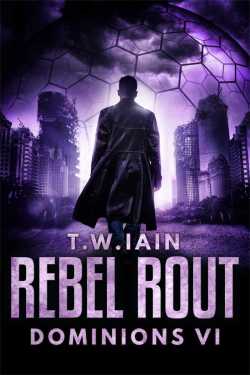
Rebel Rout (Dominions VI) now available for pre-order

The next Dominions novel, Rebel Rout, will be released on 6th April, but is now up for pre-order at the bargain price of 99c/99p (or your local equivalent).

Dom6_small

Rodin might have liberated the Factory, but it’s still a prison to him. So an order from Authority is the excuse he’s been seeking, an opportunity to escape the meetings and the drudgery, a chance to get outside once more.

But he’s heading into a war zone, on a mission of deception. Those he travels with might be friends at the moment, but Rodin knows how easily allegiances can change.

That’s a problem Genna must face, too. Forced underground, her district in the hands of another, she’s determined to fight back. But Garrick’s always one step ahead, and that can only mean one thing‌—‌she’s being betrayed by someone close, someone she needs to trust.

And behind everything lies the invisible, powerful Authority, working toward their own ends, playing enemies and allies off each other. How can Rodin and Genna possibly win against Authority?

In the sixth book of the Dominions series, loyalties are tested, hope is pushed to breaking point, and nothing can be the same again.

Click here to pre-order Rebel Rout (Dominions VI)

An offer for Kobo readers

I’ve got a lot of time for Kobo‌—‌not only are they a serious competitor to Amazon/Kindle in many places, but they are also incredibly focused on books and writers. They run a great deal of promotions, and their latest gives readers 40% off certain books.

I’m mentioning this because they’ve accepted two of my books for inclusion in this offer, Shadowfall and the Dominions Box Set. The offer runs until the 24th February, and to get the 40% discount simply use the promo code FEBSALE at checkout.

Shad1_lowShadowfall (Shadows Book One)

The company enhanced Brice. They promised him action and adventure. But he’s stuck on a malfunctioning craft, with a crew who treat him like a child. He’s miles from home, in the worst storm of the season, and night is falling.
And in the shadows the creatures wait, their hunger growing.
The company prepared Brice for many things, but nothing can prepare him for what he must face when the shadows fall.

2017-1326 TW Iain 3D Box Set on white on transparentDominions Box Set

When Rodin, professional assassin, is forced to take a contract in the perfect society of the Dome, he expects enemies. But he doesn’t expect to start questioning his own motivations, or the deadly threats from a past he no longer remembers.
Dive into the dark Dystopian world of Dominions with this collection of three novels and one novella, and begin to uncover the secrets buried beneath the glass.

Don’t forget, use the promo code FEBSALE on Kobo to get 40% off‌—‌that’s almost half price.

And to check out more books in the sale, click on the following links for specific Kobo stores: UK, US, Canada, Australia, Ireland, Germany

How Neil Peart is pushing my reading into new areas


The musicians I grew up listening to are getting older, and many are no longer around. Of course, it happens to everyone eventually, and in large part I’m pretty philosophical about this. Yes, it’s sad that they’re gone, but they’ve left behind a great legacy in their music, and in that a part of them will live on.

But when I heard of Neil Peart’s passing, earlier this year, I felt sadder than I expected. Maybe it was because I’d been listening to Rush for so many years. Or maybe it was because they’d had the same line-up for so long that there was something permanent about them. Even though there was unlikely to be any new music from the trio anyway, it felt somehow wrong that he’d died.

Rush in concert at MGM Grand, Las Vegas, America - 25 Jul 2015

In case you’re unfamiliar with the name, Neil Peart was the drummer and lyricist with Canadian band Rush. Their music didn’t bother the charts much, but they could sell out arena and stadium tours around the world, and had an incredibly loyal fan-base.

I saw Rush on tour back in the eighties, at a time when just about every band would thrown in solo spots for different musicians, mainly guitarists and drummers. These solos bored me. If there were seats at the venue, I’d have a rest while the guitarist tapped away, or while the drummer hit everything within range as fast as possible.

But Peart’s solo was different. It felt like a structured piece of music, with peaks and troughs, passing through different ways of playing, drawing on different emotions. Rather than a way of showing off, the solo was an exploration into what a drum kit was capable of. And even though the band played rock, it was clear that Peart drew from many different styles.

He wasn’t content to sit still as a musician. He took his playing very seriously. He’d practice for an hour before each concert. And he continually sought to improve‌—‌listening to other styles of music, seeking other techniques, taking lessons from drummers who might not have been technically as proficient as him, but who still had something he could learn from, something new he could incorporate into his own playing.

It’s an important attitude for anyone creative, be that in music or sculpture or stories or hanging baskets. There’s always more to learn. To quote one of Peart’s own lyrics (from Mission),

‘the point of the journey is not to arrive’.

It’s impossible to reach the end of knowing, to become perfect. There’s always more to learn, and it’s important to absorb new influences and techniques, to develop, so that the next song, the next model, the next book, the next basket surpasses the previous one.

When I worked in education, I used to tell myself that the moment I felt I knew everything about teaching was the moment I should stop‌—‌not because I would know everything, but because that moment would signal the end of the desire to improve.

In my writing, I feel like I’m only just starting out, and there is so much to learn. One very important way I can widen my knowledge is through reading‌—‌not only in genres I’m naturally drawn to, but also in pushing myself to explore new genres. It’s why I’ll read the occasional romance book, or historical book. It’s why I’ll read books by new and old authors, independently-published and those who work through traditional publishers.

There’s always more to learn, even from books I don’t like. I read the Twilight series and the first couple of Fifty Shades books (haven’t been able to face the third yet) in part because I wanted to understand what made them so popular. And it’s why I very rarely give up on a book. Even books I don’t enjoy, or stories I don’t feel are particularly well told, have things to teach me.

I know some people take a different approach. Some writers dive deep into a particular sub-genre, writing and reading only that one thing, focusing their attention on becoming an expert in it. And that’s fine‌—‌but for me, I’d feel like I was missing so much. When I read books with a strong romantic element, I can garner more insight in evoking believable relationships. When I read literary fiction, I can absorb ideas on how language is used. When I read mysteries and thrillers, I can better understand how to keep the reader guessing. When I read books that evoke different times and locations, I can attempt to unpick how words can be used to give a sense of period and setting without being too on-the-nose.

There’s so much to learn out there, so many lessons that I can use to improve my own writing. But that’s only going to happen if I concentrate.

This, I feel, is something Peart understood. It’s not enough to simply consume. Learning is active. It involves both study and practice. It’s a never-ending cycle that is the only way to improve.

Or, in the words of Peart himself,

What is a master but a master student? And if that’s true, then there’s a responsibility on you to keep getting better and to explore avenues of your profession.

Can’t stand cliffhangers, but love open loops

Cliffhangers annoy me. When I read a book, I expect a full story. If I reach the end, and it stops with the hero in mortal danger, I feel cheated. I feel that either the writer hasn’t figured out the ending yet, or they’re using a very cynical marketing ploy to encourage me to buy more books.

This makes me less likely to continue. Unless the story really grabbed me, I won’t get any more in the series.

But open loops are different. If I reach the end of a complete story, but there’s an odd niggling question that hasn’t been answered, I’m intrigued. I’m satisfied that the story is finished, but I still want to know more. And with books like this, I’m far more likely to continue with the rest of the series.

Star Wars did this. The Death Star was destroyed, but Darth Vader still lived‌—‌the villain had been defeated, but not vanquished. The Empire Strikes Back had a more sombre ending, with more loops left open, but (apart from Han Solo, encased in carbonite), the characters all survived, ready for the next part of their fight against the Empire.
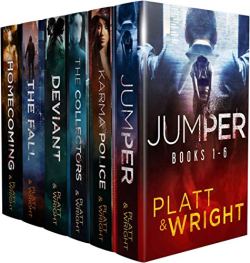
JumperSeries_SeanPlattDavidWrightSean Platt and David Wright’s Jumper series (at least, over the first few books) is another great example of open loops to drive a series. It begins with Jumper, the story of someone who wakes up each day in someone else’s body. They do what they can to minimise harming the people whose bodies they inhabit. But these hosts are all connected, and the main character is forced to make difficult choices to protect his hosts.

It’s an intriguing premise, reminiscent of Quantum Leap without feeling derivative. The book’s an enjoyable read, and tells a complete story‌—‌and then, we get the epilogue.

It feels like it’s going to tie up a few loose ends. But instead, the writers drop their bombshell. [Spoiler alert] There is more than one jumper.

This great little twist immediately builds interest in the second book, Karma Police.

The second book follows a similar pattern‌—‌the main character waking in different host bodies, being forced to solve a particular problem. But again, the writers open another loop. The main character talks to another jumper, and learns things that give rise to more questions than they answer.

It’s only once we’re through the first half of the series that the pattern breaks, and the final three books are more of a continuation of the same story rather than individual stories with hints of a larger overall arc. But by this time, the reader is hooked (at least, I was), invested enough in the overarching story that the individual tales don’t matter as much.

This is a hard trick to pull off, and I’m not convinced that Platt and Wright fully succeed‌—‌the last book felt too rushed, and I would’ve liked them to explore some of the ideas a little more. It was still good, but didn’t quite live up to the promise of earlier books. But, in the authors’ defence, they do push themselves with their writing, and even if the story isn’t totally successful there’s still a great deal to be enjoyed in these books.

And at least this series feels like it was planned out fully, something that unfortunately can’t be said all series.

I used to love watching The X-Files. The stand-alone monster-of-the-week episodes were fun, but the development of the larger story (the ‘mythology’) was what kept me watching‌—‌at least, over the first few series. But by about series four, this larger story became more ridiculous. Rules that had been set up in earlier episodes were ignored, and it felt like the story was being changed as it went along. No, it was worse than that‌—‌it felt like the larger story hadn’t been thought through properly. It felt as if the writers were making it up as they went along.

You might argue that this is what writers do anyway. Fiction is make-believe, so all stories are made up. There are many popular authors, including Stephen King, who start writing with only a vague idea where the story will end up, discovering the details as they write.

But however a story is first written, it is always edited. Things are changed so that the story has a more satisfying arc.

And this is where I feel some series, such as The X-Files, fall down.

Planning a story take time and effort, a good story even more so. To develop a satisfying series, each book has to be planned, but so too does the overall story.

Of course, most series aren’t written in one go (although it is becoming more common, in independent publishing, to hold off releasing books until at least the first three in a series are completed). George RR Martin’s Song Of Ice And Fire is still unfinished, and Robert Jordan’s The Wheel Of Time, initially only conceived as a six-book series, eventually stretched to fourteen, with the final few being written by Brandon Sanderson after Jordan’s death. It’s hard to see how these series could have been planned out in their entirety in any detail.

This can make writing later books in a series harder‌—‌all those open loops have to be closed, and done so in a way that feels natural. Also, stuff in later books shouldn’t contradict what happened earlier. Yes, it is possible to change earlier books and produce new editions (which Tolkien did with The Hobbit, once he understood how it complemented the larger story of The Lord Of The Rings), but this is time-consuming, and disappoints readers of the original versions.
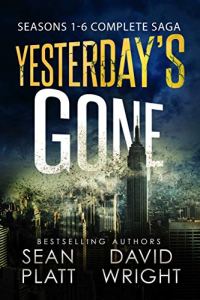
YesterdaysGone_SeanPlattDavidWrightWriting a series is hard‌—‌which makes ones that work even more impressive. So maybe I should be a bit more forgiving about cliff-hangers. After all, I enjoyed Platt & Wright’s first foray into fiction, the serialised Tomorrow’s Gone, where every ‘episode’ ended on a cliffhanger.

But Tomorrow’s Gone was structurally based on old TV shows, with episodes that formed seasons, and the complete story told over six seasons. They started with a very ‘throw everything out there’ idea, trusting themselves to bring the story together later. But (I believe) the final three seasons were planned in advance, so even though each episode ended on a cliffhanger, the writers knew exactly where the story was going.

I didn’t read Tomorrow’s Gone until it was finished, until I could devour the whole thing. I think reading it episode by episode, having to wait to find out what happened next, would’ve frustrated me. And maybe that’s why binge-watching is becoming so popular, and why some people hold off watching a series until at least a couple of seasons are available.

Cliffhangers can work, but the resolution can’t be held off too long. The excitement wears thin, and then we forget what happened, and instead remain with the dissatisfaction of having an unfinished story. I’m wary of reading a first book in any series now, and I’ll often check reviews to discover if it’s a complete story.

So don’t give me cliffhangers. Give me a story that keeps me reading. Show me that you can tell a satisfying tale. But sprinkle in a few open loops. Make me question some of the stuff happening just off the page. That way, you’ll keep me reading and buying more books.

Rogue Wolf out now

It’s been far too long in coming, but, finally, Rogue Wolf (Dominions V) is out, and it’s only 99p/99c for a few days.

Dom5_small(Hi_res)He does what needs to be done. He’s cheated death a hundred times, and he has the scars to prove it.
But Rodin’s put all that behind him. He’s no longer an assassin for hire, or a pawn in the fight against Authority.
At least, that’s what he tells himself. But when a favour brings him close to the infamous Factory‌—‌a prison in all but name‌—‌and a chance encounter forces him to rethink, can he still do what needs to be done?
Facing death is one thing, but can Rodin face a life of imprisonment in the Factory?

Rogue Wolf continues the dark Dystopian Dominions series, as Authority’s hold over the Dome and the districts grows ever-stronger.

Get Rogue Wolf now, from all the usual ebook stores.

Rogue Wolf now available for pre-order

It feels like this book has taken ages to write (can’t remember how many times I re-wrote the first draft), but it’s finally finished, and is now up for pre-order on all the usual ebook stores, at a limited low price of 99p/99c.

Dom5_small(Hi_res)He does what needs to be done. He’s cheated death a hundred times, and he has the scars to prove it.

But Rodin’s put all that behind him. He’s no longer an assassin for hire, or a pawn in the fight against Authority.

At least, that’s what he tells himself. But when a favour brings him close to the infamous Factory‌—‌a prison in all but name‌—‌and a chance encounter forces him to rethink, can he still do what needs to be done?

Facing death is one thing, but can Rodin face a life of imprisonment in the Factory?

Click here to see where you can pre-order Rogue Wolf.

New novella now available

Errant (A Dominions Story)Errant (A Dominions Story) has been available for free to newsletter subscribers for some time, but it’s now available to buy from all the usual ebook stores too.

(If you still want a free copy, it’s still for download through the mailing list for a few more weeks, so sign up now.)

This novella (about 80 pages) is a bit of a departure from the usual Dominions stories, with a more gentle approach (although the darkness is still there!) If this sounds intriguing, read more here, or click here to see where it can be purchased.

(Alternatively, join my mailing list to get the book for free, along with another couple of exclusive novellas)

Books in a changing media landscape

Amongst all the rides, attractions and eateries in Disneyland Paris, there are many, many stores. They sell all kinds of merchandising‌—‌toys, clothing, bags, jewelry, and so on. But one thing struck me by its absence.

Media.

There were no Disney DVDs for sale, no CDs of film soundtracks, and no books. In short, there was nothing for sale that actually told any kind of story‌—‌and this seemed strange for a company that had built itself up on story, from simple five-minute Mickey Mouse cartoons through retellings of classic fairy tales to their own original stories.

It’s not as if there were no opportunities to incorporate books into the park. In Beauty And The Beast, Belle loves reading, so why not have a Belle-themed bookshop, with library ladders and dusty hidden corners?

Admittedly, Disneyland Paris have to cope with visitors from a wide range of countries, and although French and English seem to be the predominant languages utilised in the park, each title would need to be stocked in different languages, with different covers and so on. And why stock music and film anyway, when the trend is now for streaming?

This (like so much in the park) got me thinking.

children-403582_640There are always stories about the death of reading, and how nobody reads anymore. Why read, when it’s easier to turn on the TV or switch on Netflix or pop onto YouTube? There are figures suggesting that cinema is struggling, as home viewing utilises ever-growing size of screens, in increasing resolution, with high-quality sound-systems. Why bother leaving the house, queueing, paying for over-priced snacks and drinks, and having to cope with other people, when high-quality entertainment can be enjoyed in comfort at home?

And how can books‌—‌simple text on a flat, unmoving surface‌—‌compete with such incredibly immersive effects on the big screen (be that in a cinema or at home), or with the snappy dialogue and surrounding sound design?

Some people argue that they can’t. They point to the collapse of Borders and the struggles of Barnes & Noble. They talk of dwindling revenue for those who write‌—‌while big-name authors (King, Rowling, Patterson and so on) still earn fortunes, mid-list authors are forced to take on other work to supplement their writing careers.

Yet still, people read.

There’s a good chance that you’re one of those people who enjoy books, so you’ll instinctively know some of the reasons for this. You know the pleasure that comes from sinking into a story. You’ve experienced the transformation of words on a page into living images within your own imagination. You’ve felt the pull of a book, the yearning to get back to the story, and the way a tale lives on long after you’ve turned over the final page.

Maybe you value the solitude of reading, or how time can fly by when you’re deep in a great story. Maybe you love how reading can be done anywhere‌—‌on a chair, in bed, in the bath, on an exercise bike, on a bus, or how it can take over hours in an evening or be squeezed into a few minutes in a supermarket queue.

With technology, ways of reading are growing. Twenty years ago there were books. You either bought them or borrowed them from a library (or from friends). Sometimes it was hard to find the book you wanted‌—‌either it was too popular at the library, or too obscure for book stores to stock. You had to order the book, and wait weeks for it to be delivered to the book-store. But now, we have ebooks and print-on-demand. We might wait a couple of days for a physical book to arrive, but an ebook can be delivered within minutes.

And with ebooks, we’re no longer tied to a physical book. We have the ability to carry a whole library in an e-reader, or on a smart-phone. We need never be without a collection of books.

Technology increases the potential for inclusion, too. On-screen text size can be altered to suit individual needs and preferences, as can colour and brightness. Different interface systems‌—‌switches, voice control and even eye tracking‌—‌allow those with reduced physical ability to turn pages.

audiobook-3106985_640Then there are audiobooks. Yes, they’ve been around for years, first on cassettes and then on CDs‌—‌but with mp3, fast downloading and now streaming, audiobooks don’t require us to buy bulky physical copies. We’re not tied to large hi-fi equipment either. With our smart-phones, we can enjoy audiobooks wherever we are, whatever we are doing‌—‌driving, exercising, cleaning, gardening, resting. No longer are audiobooks only for those who struggle with physical reading, or those with long drives ahead of them. Now, they are open to anyone.

So is reading losing out to films and TV? I don’t think so. Film companies seem to rely on a small number of big-budget movies each year, so going to the cinema is becoming an occasional treat for many (and maybe it always was). And while TV shows increase in both number and (according to many) quality, with streaming this is becoming a more personal activity‌—‌we can watch on a big screen, or on a laptop or phone, with headphones plugged in.

If entertainment is becoming more personal, and more solitary, then why not reading? It is easier than ever to access book, and with the growth of independent publishing there are more books available than ever. And while the increase in ‘readers’ might not be huge, many of us who already read are doing so more often. I know that my reading has increased since getting an e-reader.

It’s worth considering the origins of film and TV stories, too. Many of these come from pre-existing stories in the form of books‌—‌and for the film and TV companies, this makes sense. If a story proves popular as a book, then it must ‘work’, and it’s arguably easier to adapt a pre-existing idea (that has shown itself to be popular) than to risk developing something new.

Think Harry Potter, or Twilight, or Lord Of The Rings/The Hobbit. Think Birdbox, or The Martian. So many good films come from books.

Also, consider franchises. Star Wars might have started with one film, but as the franchise grew, fans demanded more stories. Yes, there were more films, but they take a long time to develop. It’s quicker to produce books, and there are close to four hundred novels related to the Star Wars universe. And as more stories are developed, the fans become increasingly immersed in the whole franchise, and then demand even more stories.

Times change, and technology advances. People have more access to all kinds of media, and this is only going to increase. But there will always be readers, and there will always be books in one form or another.

Reading isn’t going away.

KU or not KU? (Why I’m going wide)

One of the biggest decisions for an independently-published author, when releasing a book, is choosing between going into KU and going wide.

If you’re unfamiliar with these terms, I’ll explain.

KU, or Kindle Unlimited, is Amazon’s subscription service for ebooks. Subscribers pay a monthly fee, and can then borrow as many books from the KU library as they want. It’s great for readers who devour books, and for a newer writer it can be an excellent way to gain more visibility‌—‌when readers don’t have to pay for each book they download, they’re more willing to take a chance on an unknown writer.

To compensate writers for these ‘free’ downloads, Amazon pay for each page a subscriber reads. While the individual page-read amount is very small (a fraction of a cent), the total can soon add up, often overtaking revenue from book sales.

‘Going wide’ means releasing an ebook through other retailers (although most writers still have their work available through the Kindle Store). While Amazon/Kindle is predominant in some places (particularly the US and UK), other ebook retailers have a larger share of the readership in other territories (such as Kobo in Canada). It’s also worth remembering that there are areas where Amazon does not have an e-book presence, and in these countries readers need to use some of the smaller services.

For a writer/publisher, the ideal situation would be to release books through every platform as well as enrolling these same books in KU‌—‌but Amazon don’t allow this. They have an exclusivity clause (for all but a few big-name authors), which means that a book in KU cannot be available anywhere else. So there’s a choice‌—‌either go into KU, or go wide.

ShadowsSeries(fromAmazon)I’m not a fan of exclusivity, so I released the books in my first series, Dominions, wide. But when I came to write my Shadows series, I decided to try KU, at least for a while. But after ordering new covers some months ago, I took the opportunity to rethink.

Some writers make a significant chunk of their income through KU page-reads, so looked back over my own sales and page-reads. I discovered that, since releasing the first Shadows book in August 2017, I’ve earned twice as much through page-reads as through sales‌—‌for each $10 of sales, I’ve received $20 through KU. If I were to go wide with this series, in purely financial terms I’d need to earn twice as much through other vendors combined as I do through Amazon.

Is this likely? To answer this, I checked the figures for my Dominions books (all of them are wide). Here, I discovered that Amazon brought in slightly more than other sites combined, but only just. The figures were roughly equal, so $10 of sales through Amazon equates to roughly $10 through everywhere else. This is about half of what I’d earn through KU page-reads.

From this, it appears that staying in KU is a better move, and also seems to suggest that putting the Dominions books in KU would be a sensible move.

But this doesn’t give the whole picture. There are other factors I need to take into consideration.

KU is owned by Amazon, and they can do with it whatever they want. Amazon continually tweak, aiming for better customer satisfaction in order to increase profits. There have been instances over the past few years where certain changes have cut some author earnings by 50% or more. It’s a reminder that it’s not usually a sensible move to put all your eggs in one basket. There’s more financial security in earning from multiple sources, so that changes resulting in a loss from one source can be offset by earnings from another. Yes, being in KU might be a good short-term move at the moment, but I’d prefer a steady income over many years rather than a quick spike in earnings.

But what of the readers who use different services and retail sites? In my own experience, and at the risk of making sweeping generalisations, it looks like there are.

One tactic often used by writers is ‘first book free’. The idea behind this is to have the first book in a series as a free download, a way for potential readers to try a new writer without spending any money. Then, if they enjoy that free book, they’ll be more likely to buy subsequent books in the series.

There’s a term for readers moving through books in a series‌—‌read-through. Often, there’s a middling to low read-through from book one to book two (especially with a free book one), but a significantly higher read-through from book two to book three. My own sales and downloads fit this pattern‌—‌but it’s worth noting that the read-through from book one to book two differs on different platforms. I have a far higher read-through on Kobo than I do on Amazon. I’ve also found that Kobo readers are more willing to post a rating, although this might be connected to the fact that Kobo allow ratings without reviews, but Amazon insist on a review.

Why this should be, I’m not sure. Maybe readers who specifically favour non-Amazon sites are less likely to be seeking bargains, or maybe they are more serious or dedicated readers. Again, this is a generalisation, and there might be other possible reasons that escape me at the moment.

But what it does mean is that, proportionally, I get more engaged readers on Kobo than on Amazon. I’ve had positive comments from Amazon readers, as well as from readers who use iBooks and Barnes & Noble.

Then there are those who download my Dominions books in places where Amazon don’t reach. So far, I’ve had downloads through all 13 Amazon stores (.com, .de, .com.br, and so on), but have had downloads through Kobo from 80 different countries. As the e-book markets change, and as mobile technology expands into new places (it’s growing particularly strongly in Africa and Asia), being with e-book retailers who reach these areas puts me in a stronger position for the future.

With all this in mind, I’ve now pulled my Shadows series from KU, and am now in the process of publishing the trilogy wide. The first book, Shadowfall, is in most stores now, and Shadowsiege and Shadowstrike are due to have their wide release over the next couple of weeks. At the end of the month I’ve got a few promotions lined up (in the run-up to Halloween, which seemed appropriate for a sci-fi/horror series), and I intend to explore other advertising options too.

Will this move pay off? Only time will tell, and if things go wrong I can always return to KU. But I’m confident this is the right decision‌—‌not for short-term financial gain, but for reaching new readers who will enjoy these books, and who are more likely to buy more books in the future.