Searching for names

About a month ago I wrote about figuring out names for my new series, something I always struggle with. But these aren’t the only names I need to work on. Stories use names all the time‌—‌for characters, for places, for companies and businesses, and (especially in tales that don’t take place in our contemporary world) for different objects. These names need to work in the story-setting, too. They can’t be so outlandish that they’re hard to read (unless that’s the point of them, in which case the reader will most likely skim over them). But make them too ordinary, too familiar, and there’s the risk of having the setting feel flat.

I try to come up with names when I’m planning. But as I write the first draft I introduce different characters and places, and have characters interacting with devices that need names. I don’t want to stop the writing flow, so I use placeholders, then work on names in the edit. It’s why my first drafts have characters labelled as [**BulkyThug**] and places called [**HomePlanet**]. The symbols around the words? They make it easier to spot what needs changing later.

But how do I come up with names? I use a few different techniques.


I write in Scrivener, and it has a very handy Name Generator. This, as the name suggests, spits out lists of potential character names. The results can be tightened by sex, start and end letters, and first and last name origins. So I can select names for a female character with a French first name and Aboriginal last name, starting with the letter ‘E’.

This Name Generator also has a ‘First Name Meaning’ tool, which I’ve used quite a bit. I’ll type in a characteristic (’strong’, ‘fair’), and it will throw out names that have some connection to the word. For instance, the Indian name ‘Baldev’ means ‘Strong god’. I’ll take this as inspiration‌—‌if I have a strong character, or one others look up to, I might call them something like Badev or Balde.

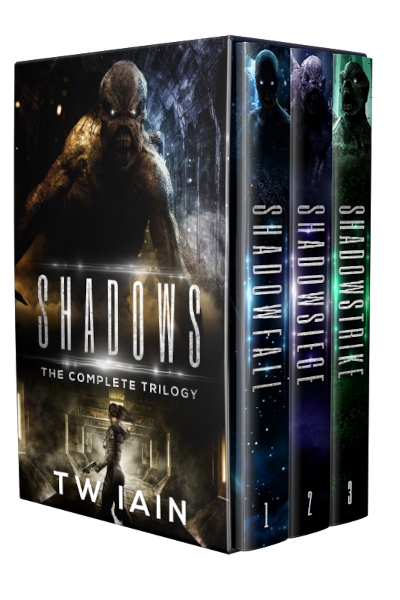
Having a particular group of people with ‘similar’ names can help give the illusion of shared identity, too. In my Shadows and ShadowTech series many of the names came from the Name Generator, and I’d specify Celtic first names and Greek second names. From the list provided I then chose names I didn’t think were too common. So I ended up with names like Piran Remis, Brice Carras and Keelin Ziko.


I sometimes use mythology for inspiration. I’ll search for characters and places related to a particular mythology, then use them as a basis for places or objects. The various craft names in Shadows and ShadowTech all come from Greek mythology. So my bulky cargo craft are Hermes, after the Greek god messenger. I also have the Proteus, named after another Greek god. Weapon names were similarly inspired. The flamethrower weapon in the books is a Charon. Charon transported dead souls into Hades on his ferry, but the word can also mean ‘fierce brightness’.


I’ve started using Google Translate more often now, translating words that have some meaning to the character or place into various languages, and taking inspiration from the resulting words. I find that using less Western European languages gives less familiar words, which adds a certain ‘alien’ feel‌—‌handy when writing sci-fi. And by sticking to one particular language for related names or places helps give a sense of connection‌—‌the names sound less random.

I’ve recently been naming planets and moons in one of the solar systems in my new series. After a bit of playing about I settled on Russian as the language I’d use for these. This star system is the home system to one of the characters, and the Russian for ‘home’ is ‘dom’. But this system is politically divided, with a great deal of friction. The Russian for ‘splintered’ is ‘raskolotyy’. I combined these two words in different ways, and eventually settled on the system being called ‘Raskodom’.

The terraforming of one of the planets in Raskodom has been a great success, and this character enjoys walking in nature, enjoying the open skies, at peace with himself. Russian for ‘open’ is ‘otkryt’, and ‘paradise’ translates as ‘ray’. So this planet is ‘Oktray’.

Are these translations accurate? I’ve got no idea. And it doesn’t matter‌—‌the ‘meanings’ behind these names are purely for me as I write these stories. The translations, accurate or not, are only for inspiration.


In this new series I’m exploring different naming conventions for characters too. I have a natural bias towards ‘first name/middle name/surname’, with the surname being used in more formal settings‌—‌a result of the culture in which I was brought up. But different cultures have different naming conventions. And in the distant future, when humans have spread throughout the galaxy, why would names all revert to ‘first name/middle name/surname’?

One of my characters is normally referred to as Hastaff, but his full name is Ekala Hastaff Bodesa. How did I get this name? Bodesa comes from ‘Boseda’, an African name (meaning ‘child born on Sunday’, although that’s not relevant to the character). Hastaff is an alteration of Harstad, a Norwegian surname (according to Scrivener’s Name Generator). And Ekala comes from ‘kuqala’, a Zulu word meaning ‘first’. Hastaff is the first child of his parents.

I decided that Hastaff is his ‘family name’‌—‌it is his lineage, and in the culture he comes from bloodlines and families are important. Bodesa is his intimate name, used only by those close to him‌—‌it would be an affront if someone were to refer to him as ‘Bodesa’ in a business or professional setting. And ‘Ekala’ is more of a title (remember it means ‘first’, so it is almost a description given by the parents). Most of the time this character is referred to as ‘Hastaff’, although in formal settings, or where there are other Hastaffs, he is Ekala Hastaff.

Having sorted that out, I can then use this naming framework for other characters coming from the same planet or star system.

Let’s have another example. This character is known as Prav, but his full name is Djar-kah Prav Dorsan. All parts of the name were inspired by Hindi words‌—‌Djar from ‘darjee’ (meaning ‘tailor’), kah from ‘kaala’ (meaning black), Prav from ‘parva’ (meaning ‘festival’), and Dorsan from ‘do’ (meaning ‘two’). And the naming convention? The lineage name (family name) is Djar-kah‌—‌black tailors (the ‘black’ part could refer to colour, or possibly means that the family were cast out at one time). Dorsan (from ‘do’, meaning ‘two’) simply says that Prav was his mother’s second child. And Prav was the name his mother chose (because in this culture it is the mother who has ultimate say over the name‌—‌and a great deal more‌—‌of her offspring). In this case, her second child came during a festival (which annoyed her, because she had to miss so many of the festivities!).

This name also fits the character. He’s something of a chameleon, at home in all kinds of situations. People warm to him naturally. You know the phrase ‘the life and soul of the party’? This would be Prav.


So, a few ways I work on names. It takes time and effort, but I enjoy it. And in exploring similar roots for related names, as well as using different naming conventions for different characters, I’m able to build a more cohesive story-world.

Although I wish names came easier to me. Then I wouldn’t have to go through my drafts, changing all those [**FrustratedWriter**] placeholders.


This post is the latest in a series I’m running on Substack, chronicling my work on this new project. If you’d like to read these posts as they appear, please consider subscribing for free.

Back to the beginning (another rotation of the spiral) – my first major edit, and why I’m focusing on the opening

What is editing? Ask someone unfamiliar with writing, and they’ll likely say something about correcting grammar and spelling. But editing is so much more. Grammar and spelling checks come right at the end of the process. Before that, we have developmental editing. This deals with the story, with the pacing and the character arcs. It looks at the big picture. There’s no point worrying about commas if the story itself doesn’t yet ‘work’.

I’ve started this stage of editing on my first draft now (the first draft of the main series novel, not the side-story). I’ve read through the draft, making notes along the way‌—‌what works well, and more importantly what doesn’t.

Even with a plan, the first draft is where the writer finds the story. Characters come alive as words appear on the page, and they do things we don’t always predict. The story can veer from that original plan in all kinds of ways.

There is also a great deal of ‘explaining’. When I write a first draft, I’m discovering my story, my characters and the world they inhabit. To make this all appear realistic, I need to understand this. So, in a first draft, I’ll always have scenes where I’m learning these things. But the reader doesn’t need too much of this, only enough to feel immersed.

This is especially true of the opening. Why? Because a story’s opening has to be strong. An opening has to hook the reader so they can’t wait to read on.

One technique for openings is ‘in medias res’‌—‌starting in the middle of the action. Think of the classic James Bond films. They start with the climax of a mission, full of stunts and excitement. Or the opening to Star Wars, with a large spacecraft being chased and fired on by one even larger. Or the first Indiana Jones film, where Indy’s facing all those traps. Of course, in media res doesn’t have to be physical action. We could open with an argument, or a funeral, or someone being fired from their job.

But there are problems with starting this way. How should the reader feel about this action? Who should they be rooting for? Without knowing anything about the characters, why should they care what happens? Action without some kind of emotional attachment is like a roller-coaster ride‌—‌fun while it lasts, but soon forgotten, and having very little lasting meaning.

I’m writing space-opera, so I could open with a scene focusing on world-building‌—‌maybe have a character introduced to a new environment, and have the reader learn all about this setting through that character’s interactions. It might not get the adrenaline pumping, but it might intrigue enough to encourage further reading. And, in a story with a large scope, a slow build might be more appropriate.

That word‌—‌’appropriate’‌—‌is an important one. The opening has to set the tone for the whole book, even the whole series. It has to set expectations. Opening with a couple of friends enjoying a peaceful day off work might not be suited to a dark tale of galactic pirates. Starting with a character being chased by wild animals won’t necessarily work for a light-hearted cyberpunk story.

I should caveat this by saying there are no hard and fast rules in writing. The above examples could work. It depends on how well the writer drip-feeds enough to hint at the ‘proper’ story. So there might be inconsistencies in that ‘peaceful’ day, things that are said and done which feel slightly off. The character being chased might mutter humorous lines while checking their cyborg abilities.

And there are far more ways to open a story. I don’t have time to explore them all here.

In my novel, I have another complication (because I’m not making things easy for myself with this project!). In this first book I have three very distinct story arcs. They won’t fully come together until later in the series, so I need to ensure that there are enough touch-points between them that readers feel confident that they will eventually resolve in combination. But it also means I have three openings, one for each story arc.

Maybe this is an advantage‌—‌I can use different techniques for each arc. So the arc involving a crew of couriers pulled into a high-risk venture could start with action, allowing the reader to experience the crew in operation, being introduced to their particular skills as well as the interplay between them. The arc focusing on the more political situation in the galaxy might benefit from a world-building focus (through dialogue, enabling me to introduce this arc’s main characters at the same time). And the arc aboard a generation ship, an arc that starts with a mystery, might work best with an opening that makes the reader wonder what’s going on (although not so much that they’re likely to stop reading!).

Whatever opening(s) I use, I’ll need to make sure they introduce characters and the world, while being exciting and interesting enough to keep the reader reading. So, no pressure!

And with that, I should get back to the edit. I have those read-through notes to go through. With the arc I’m working on at the moment, I think I have about 5000 words before a suitable opening, but there are things in those pages that the reader needs to know, things I need to somehow make clear in this revised opening.

The first draft was only the start. In many ways, the first draft is the easy bit. Now I have the start of the hard work. But I can see a way through. Unity is coming together.


This post is the latest in a series I’m running on Substack, chronicling my work on this new project. If you’d like to read these posts as they appear, please consider subscribing for free.

A rose by any other name… (My series needs a decent title!)

I can’t keep referring to this new project as ‘my new project’, or even ‘my space-opera project’. It needs a name. It needs a title.

But titles are tricky.

Okay, it’s easy to come up with titles. It’s coming up with good titles that takes work. A good title has to catch the attention. It helps if it’s memorable. And a good title needs to say what the story might offer, either in plot or tone (or both).

Yes, there are exceptions. Trainspotting is about drug addicts in Scotland, isn’t anything to do with trains. But most titles go a long way towards explaining the story. Think Star Wars, or Star Trek, or Stargate. Fighting in space, travel to distant planets, and portals crossing vast distances.

It helps that these titles have a certain rhythm, too. Two words (or a combination of two), each with four letters. The pattern helps us remember the title. It’s a technique I’ve used in my previous book titles. The first three Dominions books are Dark Glass, Dead Flesh and Deep Water. I like the symmetry‌—‌all starting with the same letter, all having a four-letter word followed by a five-letter word.

Which brings up another point‌—‌consistency across a series. It’s not necessary, but does it help? Possibly. So, what are the options?

One option is to have numbers and subtitles: Star Trek, Star Trek II: The Wrath Of Kahn, Star Trek III: The Search For Spock. I still think the best version of this was used for the Naked Gun films‌—‌Naked Gun, Naked Gun 2½: The Smell of Fear and Naked Gun 33 1⁄3: The Final Insult.

Other series use a common word‌—‌Dune, Dune Messiah, God Emperor Of Dune and so on.

I prefer the series title to be separate to the titles of individual books, though. This is the pattern used in The Expanse. So let’s consider those titles for a moment.

First, the series title. The Expanse. It tells you the story’s going to be epic. It points to vast distances, either in space or in time, or possibly both. With a title like that, you expect a series that starts small and then balloons out (expands). It’s a title that fits the story told across the nine novels.

And what of the individual book titles? They all follow a two-word pattern. Leviathan Wakes, Persepolis Rising, Abaddon’s Gate and so on. There’s an epic quality to them, as well as tension. Words like ‘wakes’ and ‘rising’ automatically prime us for action‌—‌we know these aren’t going to be light-hearted books. And then there are those initial words. Even if we don’t know the actual references (if our knowledge of mythology or history isn’t sufficient) they still sound mythological, so we anticipate stories on a grand scale.


But titles are also important during the writing process. The files on my laptop refer to my new project as ‘Space Opera Series’ (or simply SO), and the spin-off is ‘Space Opera Spin-Off’ (I haven’t shortened that‌—‌don’t know if I’d go with SOS or SOSO). Those work as labels while I get to grips with the stories, but they don’t do anything to describe them. They don’t mean anything. And as I sink deeper into these stories, that becomes a problem.

I need the focus a title can bring. A title turns a bunch of ideas into a cohesive whole, even if there are still gaps, even if the structure needs tightening. A title helps ground a project, helps make it feel real.

Titles also help when thinking about marketing. Writing in a vacuum and thinking about selling the book afterwards is not a realistic option. It’s more sensible to consider marketing while writing, or even before.

By marketing, I don’t mean advertising. That can be a part of marketing, but there’s far more to it. Marketing includes covers, and back-cover copy (or product description or blurb, whichever term you prefer). Marketing involves condensing the whole story, even the whole series, into a punchy paragraph, then further into a tag-line. Marketing means thinking about how to present the books to potential readers. And for this, not having a title is a serious hindrance.

So I need titles. They don’t have to be finalised yet‌—‌writing a book, let alone a series, is a long process, and the end product is rarely close to what is initially envisages‌—‌but I at least need working titles.


So, here goes. My current working titles.

For the main series, I’m going with Unity. In the story, Unity is the name of the organisation that acts as a galactic government. This entity plays an important role in the story, and is home to some of the important characters. The word ‘unity’ also relates to what is becoming a major theme across the series. Humanity will face a major dilemma, and must come together to find a way through. Along the way disparate groups will need to work together, overcoming their differences.

For individual book titles I did consider things like Unity Fractured and Unity Resolving. But while this might be fine for a couple of books I think the titles would eventually sound too forced‌—‌trying to conform to the pattern rather than trying to be proper titles. So I don’t have any book titles yet.

Then there’s this spin-off (read this Substack post for more information). I see this as a series in its own right, but with the books working as stand-alone stories. One of the major story arcs in Unity follows Kane and his crew aboard the spaceship Seraph, and the first spin-off explores Kane’s back-story, focusing on his first contact with Seraph. My plan is for each book in this spin-off series to introduce another member of his eventual crew. While Kane could be seen as the main character, the ship is what binds them all together. For this reason I’m currently calling this spin-off series Chronicles Of Seraph.

I don’t have individual book titles yet. A part of me likes the idea of using character names in the titles, with the final book being something like Seraph Unbound. But I can’t come up with a decent title for a character called Norm. I suppose I could change his name, but ‘Norm’ suits his character. He’s the ‘average one’. He doesn’t think he’s anything special. He’s not the action hero or the smart one, but the one who fixes things on the ship (and cooks the crew’s meals). If I was writing a comedy, he’d probably be the butt of a lot of the jokes, yet take it all in good humour. In my mind he’s Norm, and I’d struggle to change that.

So, no book titles. But I have those series titles now, Unity and Chronicles Of Seraph.

And simply having names makes these series feel real. They’re no longer vague notions but solid projects. I’m no longer tapping away at stories for my own amusement. Instead, I’m creating books.

I still have a long way to go, of course. But every step brings me closer to bringing the project to fruition, closer to having books I can share with others.


This post is the latest in a series I’m running on Substack, chronicling my work on this new project. If you’d like to read these posts as they appear, please consider subscribing for free.
Join the Dark Sci-Fi Book Giveaway Now

They’re not for everyone, but some of us enjoy the darker side of sci-fi. The future might be some kind of utopia, but there are so many great stories where the future isn’t a happy place.

If you enjoy books that explore darkness in sci-fi, then check out the Dark Sci-Fi promotion for free books. Click here to find out more.

This promotion ends at the end of the month, so don’t hang around.

The Uncovered Consequences Of Technology

Revisiting my previous books leads to a range of emotions. There’s pride (’this is something I created!’). There are moments of surprise (’I’d forgotten how well that twist works!’) But there’s also a vague sense of disappointment.

Yes, I may uncover mistakes (proofreading errors always slip through), but that isn’t what I’m getting at here. As I continue to write, my writing and story-telling improves. And there are moments in those older books that now feel clunky. There are passages (some long, some short) that I would now tighten. There is a great deal of room for improvement.

In retrospect, I didn’t use technology to its full in my Shadows and ShadowTech books.

In both series most characters have a lattice. This is a tech layer that sits beneath the skin and interacts with the body and mind. It can speed up healing. It can increase the efficiency of the body. It enables people to interact with different systems without physical connections, too. Pilots fly their craft by the power of thought. Hackers don’t need to rely on keyboards or other interfaces, only their lattices. People can operate machinery without needing to press any buttons.

The lattice also enables a kind of tech-based telepathy. People can ‘talk’ through their lattices, either in tight or wide conversations, without uttering a sound or moving their lips. With the aid of boosters, this communication can happen over vast distances.

Almost everyone has a lattice‌—‌but not everyone. A central character in these books has to cope with being seen as ‘inferior’ because of her lack of functioning lattice. Another character’s lattice starts playing up, leading to various complications.

So, what’s the problem?

Let’s take a step back. Think of mobile phones, and how different things were prior to their existence. Travelling to somewhere new meant using paper maps to plan a route, with no sat-nav to guide every single turn. End up in difficulties in the middle of nowhere, and you’d better hope someone came along, because there was no way to (easily) call for help. And if you came across something amazing you’d be telling people about it later, trying to convince them you didn’t make it up‌—‌no magical device you could pull out to record and transmit images and videos across the world in real-time. Need to know something? You’d have to visit a library instead of doing a quick internet search. Need to sort out your finances? Better make time for a trip to the bank, then wait five working days for any changes to take effect.

And I haven’t even touched on social media. Or QR codes. Or having a complete library of books, music and films on hand wherever we are, all the time.

Having these devices on hand at all times has changed so much of our daily lives that pre-mobile times are like another world.

Technology has consequences. Technology can change societies, in ways that can’t always be predicted. Technology can be invented for one purpose, but people will use it for all kinds of other purposes.

The same should be true in fiction. A powerful technology should have a major impact on day-to-day life.
I came across a great example of this a while ago. I think it was in Peter F Hamilton’s Salvation series (although I could be wrong).

Many sci-fi stories circumvent the impossibility of faster-than-light travel through portals or wormholes. Sometimes they are in set places (think Stargate), but in the Salvation books portals can be any size, and are extremely portable. Characters have collapsible portals they can carry around with them.

But throughout the books Hamilton explores how these portals could be used in so many different ways.

How do you change a desert into fertile farming land? You need water. How do you get water to the desert? You can pipe it in, after first laying the pipes. Or, with these portals, you can literally drop water onto the desert‌—‌a portal in the air above the arid landscape, a corresponding portal being fed water, and instant rain!

Cities would change, too. When workers can use portals to commute, there’s no need for mass transit infrastructure, so those unused wide roads become green spaces, turning the cities into more pleasant environments. With travel times so drastically reduced, there is also less need for hotels, less need for dense urban residential areas. Why live close to work when, with portals, anywhere is close to work?

That might be fine for the hoi polloi, but what about the wealthy? There’s no need for holiday homes when each room of a ‘house’ can exist in a separate geographical location, connected by portal doors. Eat in a dining room looking out over a vast Savannah, then relax in a lounge on a tropical beach. When that gets too warm, retire to the bedroom and watch the snow-covered mountains from the balcony.

And what about those exploratory craft travelling through space (because portals only connect to other portals‌—‌you can’t skip to somewhere totally new)? Hitting debris in space could be catastrophic. Place a portal at the front of the craft, another at the rear, and the problem is solved.

See what I mean? A technology that serves an important purpose in the story (allowing characters to travel vast distances without the time of that travel slowing the story), but one that has story-world implications. Even if the technology itself is ‘impossible’, the consideration of the wider impact makes it feel ‘real’.

So this is my challenge (one of the many) as I work on this new series. For every piece of technology I introduce, I need to consider the implications. How would it impact daily life? How would it be used for work and for entertainment? How would people twist the technology to their own purposes?

How can I make the fictional technology in my books feel as real as a mobile phone?

It’s definitely a challenge. And a daunting one. But this kind of world-building is all part of the fun of writing science fiction.


This post originally appeared as a part of my Substack on writing a new series. If you want to have these posts delivered to your in-box when they’re released, please consider subscribing for free to my Substack by clicking here.

Kobo Plus: Your Gateway to Free Sci-Fi Books

If you read on Kobo, you might know about Kobo Plus. It’s their subscription service‌—‌pay a monthly fee, and you can read as many books as you want. And there are loads of books in Kobo Plus, including science fiction.

You want some examples? Check out the titles in this promotion‌—‌all free on Kobo Plus. And if you read on other platforms, you can find these books at other retailers too. So take a look, click on the covers that look interesting, and find a great new read for the start of the year.

When characters go off-script, and why working doesn’t only mean ‘doing stuff’.

You might’ve heard writers say things like ‘my characters keep on doing things I don’t want them to’, or ‘my characters are always surprising me’. For a long time I thought this was nonsense‌—‌if you’re writing the story, surely you’re in control. Those characters are your inventions. They do what you want them to.

But this happens to me. I’ll be writing, and because of my planning I’ll have a solid idea of where the scene’s going. Then I’ll have a line of dialogue come to me, and before I’m aware of it the words are out of my mind and onto the screen. I’ll read it back and realise this one line could throw the whole story off-script.

Maybe I should illustrate this with a couple of examples.


The main character in the story I’m currently working on (a story adjacent to the main series, because I needed a break‌—‌read my previous post for more information) is called Kane. He’s a loner. He’s been through a lot, done things he’s not proud of, and he’s learnt from his mistakes. Older and wiser (he hopes), he prefers to solve problems without resorting to violence, but if things get physical he can usually take care of himself.

As the story progresses he finds himself on a courier vessel, a part of a team hired for a particular job. But Kane manages to enter the crew’s area, where he strikes up something like a friendship with the vessel’s captain (once she’s overcome her wariness of him).
But as I wrote scenes where they talked I became aware that some of their dialogue and behaviours, bordered on flirting. This came from both the captain and Kane.

This wasn’t something I’d planned on. Kane generally doesn’t like people‌—‌he’ll work with them, and he can be sociable when it’s required, but he’s content on his own. H isn’t looking for any kind of relationship, even a short-term one.

At least, I didn’t think he was. But maybe there’s a side to Kane I wasn’t aware of.

But I didn’t plan for anything like this. It’s going to force me to reassess the rest of the story‌—‌if I introduce a bit of flirtation, that sets up an expectation. If I then ignore this flirting I’m not honouring an implicit promise‌—‌that this flirting will be relevant or important in some way.


Let’s look at another example. Kane comes into contact with another member of the crew (who I haven’t yet named). This crew-member is antagonistic towards Kane, and I initially thought this was because Kane shouldn’t have been in the crew area. But in a later conversation with the captain she said that this crew-member has been struggling for a while now.

The vessel, by this stage of the story, is docked at what I’m calling an orbital‌—‌a satellite the size of a large town. There are tensions on the orbital, with different factions vying for power‌—‌a situation that will, over the course of the story, push Kane to ‘save the day’.

But as Kane and the captain talk, she mentions that this crew-member has worked on the orbital before, and that this is a big part of his problems.

I have no idea where that came from. But as I thought about it, I saw possibilities. I saw how a troubled past could interact with the current situation. I saw how it could enhance the whole book.

But, as with the flirting, it’s going to mess with my planning.

So I have two options. Either I go with it, or I rewrite these scenes to edit out these ‘surprises’.

I’m reticent to throw these surprises out, though. Because there’s something important going on here.

I’ll try to explain.


We’ve been conditioned to think of work as ‘doing things’. If we’re being paid, we’re expected to be physically doing things for the time we spend at work. If there’s nothing productive to do, we find things to make us look busy‌—‌because not doing anything isn’t working.

It’s the same with writing. If words aren’t going down‌—‌whether in drafting, planning or editing‌—‌then it feels as if we’re not really writing. There’s a certain amount of pressure to produce a certain number of words each day. When we’re not physically writing (or typing) there’s a nagging guilt, and we tell ourselves we’re being lazy.

But writing, as with any creative activity, is far more than simply ‘doing the physical activity’. So much of writing involves thinking. We need to think about our stories and our characters. We need to explore different possibilities. In science-fiction we need to imagine exciting and interesting technologies, wild new worlds, craft that can travel across the vastness of space.

Some of that thinking is ‘active’. It happens when we’re sitting at our (metaphorical) desks. This is the kind of thinking we do at the laptop, typing up our ideas as they occur, or scribbling into a notepad. This is the thinking we do between lines, when we look up from the laptop and stare into space for a while, mentally running through possibilities for the next paragraph.

But thinking goes far deeper. When working on a story (or a whole series) we have countless ideas in our minds. We need to write them down to keep track of them, but those ideas are still buzzing around when we’re not typing or writing. We have a problem in the story, and that problem sits in our mind. We ruminate on it. It’s easy to become distracted while doing something else because we’re trying to find a solution.

And, far too often, that solution seems to come out of the blue, and at some random time. In the shower, or while exercising, or as we’re dropping off to sleep.

Because these problems sink into our subconsciousness. And our subconscious minds are churning away all the time. We’re ‘thinking’ even when we’re not thinking.

So when ideas seem to appear out of the blue‌—‌when characters do things I hadn’t planned or say things which go way off-script‌—‌I have to take notice. Chances are, these surprises come from my subconscious mind, and are solutions to problems I’m not yet fully conscious of in the story.

So Kane and the captain’s flirtation tells me I probably need to open Kane up to the possibility of not being so much of a loner. Or maybe it’s telling me that there’s another part of the captain’s character I haven’t fully understood yet, a part that is going to influence Kane’s decisions later in the story. And the crew-member’s history with the orbital tells me I need to make the story deeper to make it richer. It’s forcing me to reconsider Kane’s motivations for various things I ‘want’ him to do.

Does this mean more work? Definitely. I need to pause (maybe not for too long) and adjust my planning. When it comes to editing I’ll need to make sure these surprises don’t feel too random, that they’re foreshadowed as much as they need to be. And maybe this will lead to more ‘problems’ later on, with more things needing to be worked out when it comes to the edit.

But the extra work is worth it if it makes the story better.


This post originally appeared on my Substack, as a part of my attempt to document my work on a new series. If you’d like to read these posts as they are published, delivered to your in-box, then sign up to my Substack for free by clicking here.