The Price Of Free

Free books. What could be the problem? Everyone loves free, right?

I’ve been thinking about this recently, both from a reader’s perspective and an author’s. And I’m not too sure what I think.

I download free books. If I find something on Amazon that looks interesting, and it’s free, I’ll grab it. A few months ago I got a few books through Instafreebie, and now not a day goes past without at least a couple of e-mails informing me about more Instafreebie giveaways. I’ve lost track of how many free books I’ve downloaded. It must be in the hundreds.

And I’ve even read some of them.

For new authors, it is hard to get noticed. Most people aren’t prepared to shell out for something new. So giving something away for free‌—‌a ‘try before you buy’ strategy‌—‌can help increase visibility.

Author Nick Stephenson’s strategy is to have the first book in his series free, then offer the second free to anyone who signs up to his newsletter.

Does this make sense? He’s spent time and money to produce those two books, and he’s not getting anything in return for them, right?

Not quite. If enough people get that first book, some are likely to sign up to his newsletter in order to get the second. And of those, some will buy his subsequent books. And the readers who only get the freebies? They probably wouldn’t have bought his books anyway, so these are not lost sales. This is e-books we’re talking about, not physical products. Once the original file is created, there is no cost in replicating it.

Although I see the logic in this, and although I have downloaded far too many freebies myself, a part of me doesn’t like this model. I’ve considered it for my own books, but have resisted giving any of my novels away so far (although I do have a novella out through Instafreebie‌—‌check out Expedient by clicking here — and yes, that was a shameless plug).

There are a few reasons for my unease with this model.

Unrealistic Expectations
arrow-964733_640

I heard a story about an author who was contacted by a reader. This reader praised the author’s books, saying that she’d downloaded and read all of them. But she also said she’d returned the books to Amazon, taking a refund. Other authors had books for free, so this reader didn’t see why she should have to pay for books.

Yes, it is possible to read an e-book and then return it for a refund. Amazon probably don’t like this, but allowing customers to return unwanted goods makes sense from a customer service perspective. And many people who do this probably don’t see it as anything more than a mild inconvenience. After all, Amazon can afford it.

Of course they can. They record both the sale and the return, and no money passes on to the author. Amazon doesn’t lose out. The author does.

But that’s another issue, and isn’t why I mention this reader. What I want to focus on is the expectation that books should be free.

This is becoming more prevalent, especially with subscription services (which feel like getting something for nothing, because it’s easy to forget the monthly fee when you don’t have to pay for each individual ‘purchase’). The same kind of expectation happened with music, when mp3s became so prevalent. It was easy to download a whole album, and as there was no physical object, it was fine, right? Walking into a shop and taking a CD (or a book) is clearly wrong, but downloading something? That’s‌…‌not a thing. So it doesn’t really exist. So it’s not a problem.

I’m sure you can see problems with this. In the case of both music and books, there is a cost in producing those downloadable files. With books, this involves formatting, buying a cover, and paying for editing. There are also other costs around the business of producing and promoting books, like web-site upkeep and advertising/marketing. And then there is the time it takes to write the thing in the first place. Is it really fair to expect someone to spend hours writing a book and then give it away for free?

But once one author gives a book away, that sets a precedent. Others feel they should follow, and then readers come to expect free books. And when the amount of free books available would take over a lifetime to read, why should a reader pay for a book?

Thankfully, most readers still appreciate the work that goes into writing, and they are willing to pay for their entertainment. But the more widespread free becomes, the harder it will be to convince readers to pay.

Maybe, in the long-term, subscription services will be the way forward. But again, this causes problems. Which books are available in which subscription service? Kindle Unlimited is the biggest at the moment (I’ve heard it said that, if Amazon is the largest book store in the world, then Kindle Unlimited is the second largest), but for independent authors it is only available if you go exclusive to Amazon. Where does this leave those who use Kobo or iBooks? Where does that leave those who don’t have, and don’t want to have, a Kindle or Kindle app?

But I’m getting sidetracked. Back to other problems with free.

Perceptions of Quality

editing-1756958_640There is a saying‌—‌‘you get what you pay for.’ Now, I’ve read some fantastic free books, both out-of-copyright classics and books by new authors, so the correlation between cost and quality is not rigid. But there is a great deal of poorly-written free stuff out there. And this, combined with the (thankfully lessening) idea that only traditionally published authors are good writers, has led to a certain attitude towards free books‌—‌that they can’t be much good.

This leads to a subconscious problem. If we read a free book, there is a part of us that doesn’t expect much. If it was any good, it would cost money, right? So we expect the free book to have problems. We almost seek out those typos and grammatical errors that mark it out as sub-par. We’re on the lookout for poor dialogue and plot holes.

Look hard enough for something, and you usually find it.

This shouldn’t be the case, but it is. If there are two books that have the same problems (a few spelling mistakes, a few dodgy plot points), we are far more willing to forgive them if we have paid for the book, and praise its good points. If the book is free, the problems confirm our suspicions that it was badly written, and the good points slip by us.

If the author has a solid reputation (and therefore doesn’t need to give books away), they must be good, and if their writing is hard to get into, the fault must lie with us‌—‌maybe we’re not intelligent or educated enough to appreciate what they are doing with their words. Conversely, anyone who is starting out and who has to practically throw their books at potential readers‌—‌well, they’re desperate. Of course their books won’t be up to much.

Quantity

tablet-1632909_1280Another problem I can see with free is one of quantity. As I mentioned before, there are more free books available than anyone can read in a lifetime. Through projects like Gutenberg, older classics are available to all. ‘First in series free’ is such a popular business model that there are a glut of books in every genre that can be downloaded without any cost.

My Kindle has books I downloaded years ago that I have yet to read. It’s too tempting, when a book looks half-interesting but has no cost, to click on the download button. My in-box is becoming clogged with updates from authors whose mailing lists I have signed up to in order to get free books, and many of these contain links to other offers (the Instafreebie model, to be successful, involves a great deal of cross-promotion). I try to resist, but so many of these books look interesting, and I end up with even more freebie.

The saying that the cream always rises to the top might be true, but it takes time, and with so much material out there, it’s taking longer and longer. I’m wary of spending too much on a new book now, because I start to question when I’ll get round to reading it. There’s a risk that any book I pay for will become lost in this sea of free.

I know not everyone thinks this way. I have heard of people who never consider a book unless it is over a certain price. But I also know there are those who actively seek out free books. And with so many available, why not? Why ever buy a book again?

Of course, the ‘first in series free’ model hopes that readers enjoy the book enough to buy the rest of the series. But I sometimes find myself enjoying a book, telling myself I’ll check out others by that author, but then I’ll move on to another free book, and that first one will slip from my mind.

—————-
problemSo I have problems with the free model. But I still download free books. Sometimes, when I enjoy a book, I’ll buy more by the author, so I know that free can work as a marketing strategy. And authors like Nick Stephenson have boosted their writing careers through this strategy.

Maybe whenever I download free books I’m becoming part of the problem. Maybe I’m helping perpetuate a situation that will slowly become more damaging for authors.

Or maybe it is a situation that is inevitable. When digital files take up so little memory space now, and can be shared and spread across the world in seconds, maybe the idea of paying for such products is becoming a relic of a physical past. Maybe those of us who create digital work need to look at a different way of funding. Maybe we should start thinking of art as a service, and seek funding not for the product but for the entertainment and enjoyment it brings. Maybe the way forward is sites like Patreon, or subscription models.

I don’t know. The only thing I can be certain of is that things will always change.
Holiday Reading

Just a short one this week, due to being on holiday recently. A week in the sun, lounging about by a pool‌—‌ideal reading time. Some of what I read wasn’t too impressive, but I thought I’d let you know about the best three.

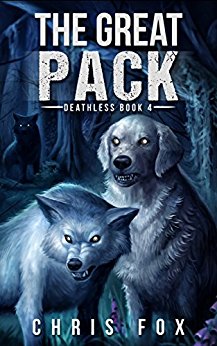
GreatPack_ChrisFoxThe Great Pack‌—‌Chris Fox

In self-publishing circles, Chris Fox is known for his openness in talking about what he’s doing, as well as his data-driven approach to writing. He produced a book on how to write 5000 words per hour (through planning, then using dictation software), detailed his ‘write to market’ strategy (basically, looking at what kinds of books are popular, and writing to please the audience), and is currently doing a ‘trilogy in thirty days’ thing.

I’ve read a lot of his books, and while his Space Opera stuff is enjoyable (that’s the ‘written to market’ stuff), I much prefer his first Deathless series. Somehow, they combine vampires, werewolves, zombies, sci-fi and Egyptian mythology without being disjointed. They’re fast, fun and inventive.

It seems that Fox likes these books, too, because he’s now brought out the fourth in the series, The Great Pack. It takes off where the original three ended, but includes a ‘previously’ section that is helpful on getting up to speed.

And then we’re off. The book is faster than the others, and without the ‘previously’ section I’d have been lost. It twists Fox’s ideas even further, and I really enjoyed it.

Thankfully, he has toned down the action scenes a fraction (if I have one complaint about the previous books, it’s that the fight scenes started to sound like stage directions, and with practically immortal beings, who can survive limbs being ripped off and so on, they soon became pretty ridiculous).

The book almost moves too fast for its own good, though. I noticed this in Fox’s Void Wraith space opera books‌—‌description and emotion are pushed way down, and plot takes over. Personally, I’d prefer something that eases up on occasions (and it’s not like The Great Pack is a short book).

But that’s a minor point. The story’s fun, and while it’s not quite as good at the previous Deathless books, it’s a good read. If you like the others, you’ll enjoy The Great Pack. And if you haven’t read the series so far, check out the first one, Vampires Don’t Sparkle, and see what you think.

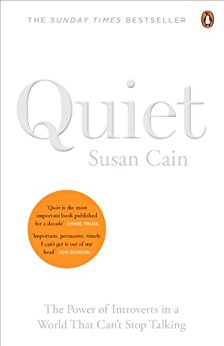
Quiet_SusanCainQuiet: The Power Of Introverts In A World That Can’t Stop Talking‌—‌Susan Cain

I first heard of this book through J Thorn’s Intronaut podcast, where he talks about being an introvert and how that has played out in his life. Quiet appeared as a Kindle Daily Deal recently, so I snapped it up. The more I read and hear about introversion, the more things in my own life make sense. I don’t know if I’m a ‘proper’ introvert (and there are tests to determine this), but I’m definitely towards that end of the introvert-extrovert spectrum.

As the title suggests, it’s about introversion, which is far more than just ‘being shy’ or ‘being quiet’. Cain’s spent years researching for this book, and has interviewed many people around the world, both introverts and extroverts (and everyone is in one of these camps to some degree). But she can also write, and the book reads like an exploration rather than a dry, academic tone.

There are some surprising facts in this book. Introversion is linked not only to societal pressures, but also to genetics. It is easy to see how western culture seems to favour the extrovert, but introverts, in certain circumstances, make more effective leaders. In the financial chaos over recent years, the traders who have come out on top tend to be more introverted in nature.

But the book also explores how to cope with introversion, and how to fake being an extrovert. There is a whole section on raising introverted children in ways that will help them cope with life. And there are also sections on different cultures, especially how eastern societies tend to favour introversion‌—‌think about how somewhere like Japan holds respect in high regard, whereas America is all about making oneself bigger and better in order to get ahead. There are interviews with eastern students studying at western colleges, and the struggles they face.

So, a very interesting book, and well written. As something thought-provoking, it was a great contrast to the rest of my lighter holiday reading. If you’re at all interested in how people think and function, it’s well worth a look.

SongOfTheSpaceSiren_BarryJHutchinsonSong Of The Space Siren‌—‌Barry J Hutchinson

This is the fourth Space Team book, and from what I understand, there are two more to come before the end of the year. Hutchinson seems to bring one out every couple of months, and I recently discovered that there is very little editing involved in his writing process, which makes the quality of these books even more impressive.

Comedy is hard to do well. Pratchett managed it fantastically with his Discworld books. Douglas Adams was great, but the comedy and the bizarre ideas took over, pushing the story to second place. Hutchinson avoids this problem, and he describes his books as space adventure stories with humour, rather than comedy books. The humour comes from the character interactions. It helps, of course, that his main character tends to react to stressful situations by making fun of them.

After reading the first book, I downloaded the rest, but I did wonder if Hutchinson could keep up the high standards of the original Space Team. So far, I’ve been impressed, and I think that rounding the series off at six books will keep things from getting too stretched. As it is, there were a few things in Song Of The Space Siren that didn’t quite work for me (to avoid spoilers, I won’t say what they are), and the growing relationship between a couple of the characters didn’t quite ring true. But these are minor points. The book is still great fun, and I’d recommend it (and the whole series) to anyone who is looking for a space opera adventure with a good dose of humour. I’m already looking forward to early June, when book five comes out.

‘That book looks terrible … I think I’ll read it.’

The more books I read, the more books I want to read. I’m always on the lookout for something new. I’ll check out authors I like, I’ll look at recommendations from others, and I’ll browse stores in genres I enjoy. But occasionally I’ll pick something different. Every now and then I’ll purposely choose to read a book that doesn’t appeal to me.

Before I carry on, I should explain something. I occasionally post book reviews, but I make it a rule to only review books I can be positive about. If I don’t enjoy a book, I’ll simply head on to the next one. I won’t spend my time writing about it. It’s the whole ‘if you can’t say anything nice, don’t say anything at all’ thing. But in this post, I’m going to mention a few books that I didn’t enjoy. Apologies in advance if this upsets anyone. But please remember that this is simply the opinion of one person. I like certain books, and dislike others. I listen to strange music that I know others can’t stand. I like Marmite. My tastes are not necessarily going to correspond with yours. If I don’t like a book, that simply means I don’t like it. It doesn’t mean it’s a bad book. Your opinions may differ.

We all like different stuff. If everyone was the same, life would be so much less interesting.

Getting back to books, the ones I’m going to talk about here are Twilight and Fifty Shades. In both cases, the books have sold fantastically well, and have legions of fans. The interest in these books has led to films, and the authors are (as far as I understand) doing very well for themselves. If I say something negative about them, it’s not going to harm the success of either series, and I doubt the authors are that bothered by what someone like me thinks of them anyway.

I’ve read all the Twilight books and the first two Fifty Shades titles. I’m not a fan of paranormal romance (or whatever genre Twilight is in at the moment), and I’m not big on erotic romance (if that is where Fifty Shades sits‌—‌I’ve heard differing opinions). I know I’m not the target audience for either series. I can’t say I enjoyed reading them, but I did finish them.

Why? Why spend time on something I didn’t enjoy? And why, after reading the first book in each series, did I carry on?

There are a couple of reasons.

ignorance-1993615_1280Ignorance

The first I will illustrate with something that happened a few times when I was teaching. I’d get into conversations about music, and my tastes were usually very different to those of the students. Sometimes, when I mentioned an artist or band I liked, I’d get negative comment‌—‌“That’s rubbish!” (although usually with a few more swear-words thrown in). I’d counter by asking what songs by that particular band the young person had heard, and in practically all cases they hadn’t heard anything. It was simply a name they weren’t familiar with, and so they dismissed it straight away.

Chances are they wouldn’t have enjoyed the music anyway, but they weren’t even prepared to give it a chance.

And that’s so easy to do. As someone who enjoys vampire stories like Dracula and Salem’s Lot, Twilight isn’t a ‘proper’ vampire book, and it would have been easy for me to complain about Meyer’s series. But I would have been making unfounded statements, or simply repeating what others had said. If I wanted to moan about Twilight, I had to know what I was talking about. I couldn’t say it was badly written unless I was prepared to back this statement up with examples I’d come across.

So I choose to read certain books because I want to know what I think of them. I don’t want to regurgitate the thoughts of others.

international-conference-1597529_1280Audience

The second reason is connected with target audience. As I said before, I know that neither Twilight or Fifty Shades are aimed at someone like me‌—‌middle aged bloke who leans towards inquisitive fiction with a dark edge. Of course there was a good chance I wouldn’t enjoy them.

So why should I even bother reading them?

Again, I’ll bring this back to music. There are loads of different styles of music, although most people tend to listen to only a few types. But the musicians who are producing interesting work are often the ones who push boundaries, and who draw on a wide range of influences. I’ll illustrate what I mean with a story I heard about Randy Rhoads, guitarist with Ozzy Osbourne back in the eighties. When they were touring, Randy would book a local guitar teacher for a lesson wherever they happened to be. He’d invite the teacher up to his hotel room, and spend an hour learning. It didn’t matter what style they taught, because it was all music, and he knew whatever they had to offer would help his own playing. Rock, jazz, classical, folk‌—‌as far as he was concerned, anything could be a positive influence.

I feel a similar way about books. There are so many stories out there, and so many different ways of writing. If I stick to a few genres, or even a few authors, I’m limiting myself. I need to read outside my comfort zone. I need to know what else is happening. Even stories I don’t like can be educational. It’s why I have a collection of cowboy stories on my Kindle, and why I’ve downloaded a few romance titles. It’s why I’ll read popular books that don’t appeal to me.

Even if I am not particularly enamoured with the story or the writing, I can still learn from it. I can see why others might enjoy these books, and that can help me think of how others might perceive my own writing.

binoculars-1209011_1280Discovery

Now that I think of it, there is another reason for reading outside my preferred genres. There are so many books waiting to be read, and amongst all the ‘rubbish’ there will be uncovered gems. If I only stick to what I know, I could be missing out. So I need to risk something different every now and then. Yes, there is a good chance I won’t enjoy it, and it might be a chore to complete it (because I don’t like leaving a book unfinished). But, occasionally, I’ll come across something I love.

I’ll give a couple of examples of this. I first heard of Louis de Bernieres when Captain Corelli’s Mandolin was released and started getting more attention. It didn’t particularly appeal, but I read it anyway. I though it was okay‌—‌well written, even though the story didn’t grab me. I read a few reviews, and a lot of them suggested that his earlier books, his Latin American trilogy, were better. I gave them a go, and I have to agree with these reviewers. I think this trilogy are fantastic. I haven’t picked up Corelli again, but I have re-read all three of his earlier books.

Other examples involve classics, those old books that ‘everyone should read’ (why?). I remember reading both Wuthering Heights and War And Peace because they came in this category, and in both cases I expected to struggle through them. But at least I could say I’d read them.

Yet I loved the books. I’ve re-read both a few times since, and have gone on to read more Tolstoy (although I still think War And Peace is his best). And I’ve read more classics and ‘books everyone should read’‌—‌some I’ve enjoyed, some have been a struggle, but I feel better for reading them, because now I know what I think about them.

problemSo did I waste my time reading Twilight and Fifty Shades? If I read slowly, and took a few months to get through them, I would say yes. If I continually read books I didn’t think I’d enjoy, again I’d say yes. But if I read widely, and step outside my comfort zone every now and them, reading ‘unenjoyable’ books is not a waste of time. Just so long as I know why I am doing it.

I read for enjoyment. I read to get wrapped up in a story. I read to be thrilled and entertained, or maybe to laugh.

But I also read to expand my mind. I want to have my own opinion, rather than simply aping others. I want to understand how different books can appeal to different audiences. I want the opportunity to find those hidden gems.

And even if I find a book that is poorly written, and that I find little to hold my interest, I can still learn what mistakes I need to avoid in my own writing.

If I read with all that in mind, no reading time is truly wasted.

A few book recommendations

There are so many good books out there. I’m reading more now than I ever was, and my to-be-read pile keeps on growing. Loads of these books are by new authors, too‌—‌people who are publishing independently, without the backing of big-name publishers, and many of them deserve far more recognition. Every time I finish a great book, I tell myself I should review it. It’s a way of spreading the word, and of doing what I can to help these fantastic authors.

Problem is, by that time I’m already onto the next book. And when I turn on my computer, I’m distracted (if that’s the right word) by stories I’m working on, or finding things to write about on this site. Somehow, I never get around to these reviews.

But I intend to. And, as a start, I’m going to let you know about books that have impressed me. Every couple of months, I’ll pick a few great reads and write about them.
So here goes.


spaceteam_barryjhutchinsonSpace Team (Barry J Hutchinson)

Comedy books are hard to pull off. It’s tempting to simply run from one joke to the next, leaving the plot to fend for itself. Yes, Douglas Adams got away with this in his earlier stuff, but his writing could carry it. Other authors who use comedy, like Terry Pratchett, work just as hard (harder?) on the things that make a story great‌—‌plot and characters. The comedy comes out of the situations and how the characters react.

Barry J Hutchinson does this with Space Team. It tells the story of Cal, a wise-cracking petty criminal who is imprisoned in a cell with a cannibal. And things get worse when he’s abducted by aliens and forced to join a gang of reprobates on a mission to save the galaxy. And, of course, things don’t run smoothly.

It could have been a mediocre story, but there are enough turns to keep things interesting, as well as a feeling that things are not quite what they seem. The start promises intrigue, and it is clear that there is more to this simple mission than meets the eye. See, Hutchinson has a plot that could work for a serious book. The humour just adds an extra layer.

The fact that he has a main character who reverts to insults and comedy as a defence mechanism helps. So too does the way Hutchinson doesn’t over-explain things. Just like Pratchett, much of the comedy lies in what isn’t on the page. He also uses running gags, but again, by putting them in the mouth of a character who is trying to wind others up, they don’t become annoying.

I really enjoyed this book, and bought the next two in the series as soon as I’d finished it. I hope they carry on the same high standards.


Mr Ruins (Michael John Grist)mrruins_michaeljohngrist

I’ll start by saying that this book isn’t for everyone. Looking at reviews on Amazon, a couple mention that it is confusing, and I can see this. From the very first page, we’re thrust into an incredibly strange world, where the main character goes diving in the minds of others, and little is explained outright (in fact, much is left unexplained throughout the book). The main character (Ritry Goligh) is being chased, or something, but then there is a secondary story, with a group of marines (possibly) battling across this world that feels like something out of Lewis Carroll, only with deadlier intentions. Who these marines actually are, and how they connect to Ritry’s story, is left hanging for much of the book.

But there are hints, and I think I picked up on these fairly quickly. And the strange terms that are thrown in with no explanation, such as ‘lag’‌—‌it is possible to understand them in context. Besides, I’d far rather read a book like this than one that slows down with paragraphs of exposition every few pages. The fact that there is no explanation shows how confident Grist is in his writing, and because of this, as a reader I trust him. I might not quite get what’s happening, but I’ll follow, because I trust he’ll deliver in the end.

Another facet of this book that many will find off-putting is the tense‌—‌it’s written in first person present (so we have things like ‘I walk into the room’ rather than ‘I walked into the room’). That did jar with me initially, but I soon grew accustomed to it, and I can see how it works in the book’s favour. It makes things seem both more intimate and more distant (and I’ve no idea how Michael John Grist pulls this off), which suits the character perfectly. Add the lack of explanations, and it does feel like you’re in Ritry’s head (or maybe someone else’s).

Mr Ruins himself is a shadowy character, and at the end I was a little disappointed‌—‌I felt he wasn’t developed as well as he could have been. And I’m still not sure I totally understand what happened to him (even after reading the second book‌—‌hopefully the final part of the trilogy will help me there). But that’s only a small negative. With this book I enjoyed the ride (even if, like a decent roller coaster, it sometimes felt like I couldn’t follow what was happening), and as with Space Team, I bought the rest of the trilogy immediately I’d finished it.

So, not for everyone, but if you’re looking for a mind-bender, and are prepared to try something difference, check it out.


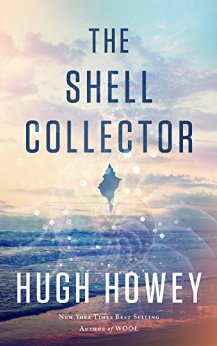
shellcollector_hughhoweyThe Shell Collector (Hugh Howey)

I’ve come to Hugh Howey a bit late. I read Beacon 23 last year, but I still haven’t got round to reading Wool. I really should, though.

Judging from reviews, this book is different to the rest of Howey’s work. That’s mainly down to it being a romance. And before you switch off, let me say that this isn’t a genre I’m familiar with, or one that particularly appeals. I’ve read a few, and I’ve been unimpressed.

But The Shell Collector is different.

To start with, the prologue is one of the best pieces of writing I have read in a long time. It would stand up as a short story on its own, and I was almost tempted to stop when I reached the end, as I couldn’t imagine how Howey could top it. There is so much emotion and back-story conveyed in a short time, and it’s a fine indication of how good a writer he is.

But I carried on, and the book became intriguing. I didn’t know I was reading a romance, because the build-up to the relationship is slow, and evolves around a mystery, as journalist Maya Walsh gets an invitation to interview Ness Wilde, one of those responsible for the destruction of the oceans (at least, as she sees it). The story’s set in the near future, and shows the effects of environmental change without resorting to ‘end of the world’ catastrophes, and without beating us over the head with ‘look after the planet’ stuff. Instead, the world is what it is, and Maya (and the other characters) just have to cope with it. It’s like a real-world dystopia, if that makes sense.

The characters are very believable, as are their interactions. And the mystery element really keeps things moving, as Maya finds out more about the real Ness Wilde (and his grandfather). I don’t know if I totally like either character, but they are interesting and real enough that I wanted to find out more, especially about Ness’ secret.

And this was one let-down in the book. When this secret is finally revealed at the end, it felt rushed. Maybe Howey thought that giving it more time would have impacted on the romance, or maybe it was never supposed to be the driving force of the book. I don’t know. But I would have preferred a little more meat to the mystery side of the story.

But it’s still a very good book, written by someone who definitely deserves the success he’s enjoyed since Wool got so much interest. Where Beacon 23 hides its seriousness behind a playful exterior, The Shell Collector is earnest throughout. It shows how Howey can change his writing to suit the story he’s telling. It’s a fine example of character-driven story. I’ll definitely be reading more of his books.


So, three books that have impressed me over the last month or so. I know they won’t appeal to everyone (a comedy, a book that seems to purposely make reading difficult, and a romance), but the writing itself is great in all of them, and I’d recommend all three.

And now I’ve got more books to read. Some promise to be cracking stories, others are things I’m not sure about but I’ll give them a go anyway. Some will leave me unimpressed. But others will blow me away.

I’ll let you know which ones do that for me in a couple of months.

The Trouble With Tropes

A couple of weeks ago, I was listening to an old Writing Excuses podcast (I tend to save them up and listen to them in bulk). This one was exploring unconscious bias in books, especially gender bias. The hosts of the podcast argued that having characters (especially female characters) fulfilling stereotypical roles could be damaging, reinforcing negative norms, even (or especially) when this stereotyping was not a conscious decision of the writer. At one point Brandon Sanderson (one of the podcast hosts) explained how he’d chosen to go against the norm by having a strong female lead in his first Mistborn book, but that he’d unconsciously written all the rest of her team as male.

voidwraith_chrisfoxWrite To Market. This book details how he wrote his Void Wraith trilogy with the aim of hitting as many popular space opera tropes as he could, writing a book that would appeal to as many fans of that particular genre as possible. He initially wanted a powerful female lead, but his research indicated that most successful space opera books had a jaded, slightly older male as the main character. So he altered his character to conform to the popular trope.

Writing to market is nothing new. There has always been a strong push for writers to ‘give the readers what they want’. Popular wisdom suggests that the best way to discover what they want is to examine popular books in specific genres. And if the readers seem to want a male lead, then there is pressure on the writer to provide this.

Yet, as the Writing Excuses team argued, this could easily strengthen a gender bias that is not particularly healthy. So is it wrong to follow all the tropes?

Of course, not all genres lean towards male leads. Romance, for example, is predominantly written by and for females, and tends to focus on the female characters. But there are tropes in romance that are possibly unhealthy too. One of the strong tropes is the happily-ever-after‌—‌despite all the misunderstandings and anguish throughout the story, the couple get together at the end, and all is well.

Does this really matter? After all, this is fiction. It’s escapism. If it makes readers feel warm and fuzzy inside when they reach a nice happily-ever-after, where’s the harm?

But fiction can be powerful. Stories stick with us in a way simple facts don’t. Stories settle deep in our minds. We use stories to understand the world, and to justify our actions.

cloud-211724_1280There are many who argue that there is a link between violence in the arts and violence in real life. There are those who argue that what you see leads you to think and act in a certain way. There are those who feel that erotica and pornography (and yes, I do realise there is a distinction between these two) are unhealthy because of how they change the viewer/reader’s viewpoint and attitudes.
I’m not going spend time on these arguments here. Personally, I think most of them are far too simplistic. I can recall when there was a furore over an Ozzy Osbourne song back in the late eighties. Supposedly, the song was responsible for a teenager taking their own life, and there was a vocal minority who denounced the song as a danger to young minds (ignoring the fact that the song, ‘Suicide Solution’, was actually a song warning of the dangers of drink). But when I saw Ozzy perform this song live, as far as I could tell everyone in the audience was enjoying themselves.

But I do believe fiction can be powerful. Not in the blunt way that those who call for certain types of books to be banned, but in more subtle ways. Reading too many happily-ever-after endings could give rise to false expectations‌—‌not in the logical part of our brain, but deeper down. An excess of ‘love conquers all’ stories might lead someone to subconsciously believe that all they have to do is meet the right person and all their troubles will be over. Likewise, someone constantly reading stories where female characters are kick-ass, attractive, feisty and confident might start believing that they have to act like that if they want to be ‘a real woman’. A constant diet of films and books where the male and female leads end up in bed together can lead to an unrealistic view of male/female dynamics. And the James Bond character who always gets the girl? Maybe that’s subconsciously reinforcing the idea that only a certain type of man can have these kinds of conquests (and that there is no repercussion from these episodes).

But this is what we have come to expect. Even if we don’t recognise these as tropes (or are even aware of the word), we have come to see them as parts of certain stories. The mysterious wizard will be an old man. The world-weary detective (so often male) will have past demons that drive him to drink. The ditzy-but-attractive female will end up winning the day. The couple who start off at each others’ throats will end up in each others’ arms.

So many tropes. So many expectations. And because we are used to them, we feel cheated if they are missing, or if they are messed around with (unless this is done really well). Those who write are as susceptible to their pull as anyone else, and the tropes rise unbidden from the subconscious. The tropes reinforce themselves, becoming stronger all the time.

Maybe we only expect them because they exist in so many of the stories that we love. Repetition can easily lead to expectation. Ask Pavlov and his dogs about that.

problemSo are tropes bad? Should writers avoid them?

Tropes are tools. They are ways of understanding story structure. They are ways to explain why certain stories ‘work’. But they are only tools, nothing more. And a tool cannot be good or bad. It simply it.

Any value assigned to the tool comes from how it is used, and why.

And this, I believe, is why tropes can get a bad rap. It is why so many people have a bad reaction to phrases like ‘write to market’.

Yes, it is possible to follow what has been done before and craft a story that hits as many popular tropes as possible. Yes, it is possible to write a story purely with an eye to how it is going to perform financially. But doing so does not always (often?) produce a satisfying book. It might follow the tropes, but that doesn’t make it good, or worth reading.

Fox’s Void Wraith trilogy works not because he follows the tropes, but because he wrote good stories good stories. He didn’t write space opera purely because his research told him it was a fertile genre, but because he loves these kinds of stories. Yes, he altered his story to make it more market-ready. But he knew what he was doing, and he still focused on the basics, which was to write as good a story as he could. He used the tropes as a framework, and around this he wove the story he wanted to tell, and the story that excited him.

And his strong female character? She’s still there. Maybe not the central character, but still one who’s always close to the action, and pretty important to the story. Oh, and she’s a cat-based alien, and I’m pretty sure that isn’t a feature that came up in his write-to-market research. That’s pure Fox. And there are plenty of times in the book when the secondary female character is far more able than the ‘expected’ male lead.

So what’s the answer to the problem with tropes and bias? Ignore the trope and tackle issues head-on? Write books where everything is ‘perfect’, and spend more time to get that right than anything else? Or give the reader what they believe they want, because if they don’t read it from you, they’ll read it from someone else anyway?

Quick fixes and excuses.

The real answer? Don’t let tropes lead the story, or the characters. Use the tropes, don’t let them use you. When you write, question the decisions your characters make, or the choices that are thrust upon them. And when you read, question everything‌—‌maybe not enough to stop reading if you’re enjoying the book, but think about what you’ve read when you’ve finished. Don’t take everything you read lying down. Don’t take everything the author says as gospel, because they might not have been totally aware of how all their characters are acting. Question everything.

This is fiction, and it’s powerful stuff. It has the power to make us question what we believe, about the world and about ourselves. It has the power to force us to confront our own biases.

Fiction has the power to make us think, and to make us change.

Are e-books good or bad?

I can’t remember the last time I bought a physical book. I was given one about three years ago, but I only read it out of a sense of duty (it was connected with my work at that time). But it’s been even longer since I bought a book that wasn’t electronic.

When I got my first e-reader (an old Sony thing), I imagined I’d use it solely for free classics, all those books I told myself I really should read at some point. I downloaded text files from the Project Gutenberg website and converted them to PDF (because I wasn’t too keen on how epubs looked on that old machine). I thought I’d still buy and read physical books.

Fast-forward to today‌—‌my Kindle is in daily use, and I can’t imagine going back to reading paper.

But e-books aren’t perfect. Like anything, there are pros and cons — and sometimes it’s hard to tell one from the other.

tablet-1632909_1280

Pro‌—‌nobody can see what I’m reading.

I’m not embarrassed about what I read, but I’m also a private person. I don’t always read books I particularly like, either‌—‌sometimes I read books because I want to know what all the fuss is about. When I’m doing this, I don’t relish the thought of someone judging me based on that. I don’t want to be classified as a reader of such-and-such rubbish. I don’t want people to mentally pigeon-hole my reading habits based on one book.

E-books are popular with readers of genre fiction more so than of literary fiction, and I think the anonymity of e-reading goes some way to explaining this. ‘Education’ tells us we should be reading ‘intellectual’ books, and that only great literature is worthy of our time. On one level we buy into this, yet we still yearn for simple good stories. We want the thrill of a chase, or a book that’s a bit close to the bone. Sometimes we want popcorn entertainment. Sometimes‌—‌maybe much of the time‌—‌we want to relax with a good book rather than wrestle with a great one.

Con‌—‌nobody can see what I’m reading.

But there are advantages to displaying reading material. If I have a particular book in my hands it can work as an ice-breaker to start a conversation. I may want to impress others with what I am reading. It is part of the appeal of coffee-table books, those tomes that get displayed at home to show what kind of people we are, even if they are never opened.

I still have physical books, and I still store them on shelves. But I don’t touch them now. They are pretty much there for decoration, and they don’t represent what I’ve been reading over the past few years. I like the idea of having a ‘library’, a space where I can be surrounded by books, but it would be purely cosmetic, because all my reading is done on a little device with a plain black cover.

Sometimes, we want to advertise our tastes to others. Sometimes we want to draw admiring looks, or even provoke arguments. Sometimes, the anonymity of e-readers keeps us too far apart from others.


Pro‌—‌I can have a vast library of books available to read at any time.

I love the idea that through one small device I have access to more reading material than I can ever consume. I can select new titles without having to move from my chair. I no longer need to travel into town, find a bookshop, then hope it has what I want in stock. Now I can order practically anything I can think of, and be reading it a minute later.

I’ve just checked, and I have over two thousand e-books. I can’t imagine how much space they’d take up as physical objects. I’d need a separate room at least. We’d need a bigger house, one we can’t afford. But with e-books, I am no longer constrained by physical objects, or physical places. I can have this vast library with me at all times. And with apps, I don’t even need a dedicated e-reader. I just need my phone.

When I go on holiday, I don’t have to think about what books to take with me beforehand. If I have the urge to read an old Harry Harrison short, I can do just that in a moment. If I decide to get all intellectual and finally try some Proust, there is nothing stopping me. If I want to re-read Gormenghast, I don’t have to hunt for the book on my shelves.

I have instant access to more books than I could ever read. I am spoilt for choice.

Con‌—‌I can have a vast library of books available to read at any time.

With thousands of books, and access to thousands more, I find it hard to keep track of what I’ve read and what I haven’t. There are books on my ‘to read’ list that I’m starting to think will never be opened.

How many books can I read in my lifetime? How much of my free time can I dedicate to reading?

At the moment I average two or three books a week, which equates to somewhere over a hundred a year. Over a decade I might get through one thousand books, maybe pushing towards two thousand. I might finish all the books I already have over the next twenty years.

But, of course, by then I’ll have downloaded even more, and I’ll still have a backlog to get through. Those books on my ‘to read’ list will still be sitting there, reminding me that I’m too often skimping on the harder reads, settling for popcorn when I should be putting my mind through a workout.

And I’ll feel bad about that, so I’ll download something that looks fun, just to cheer myself up.

But I’ll still be drowning in a sea of never-ending titles.


Pro‌—‌with the ease of creating e-books, publishing is open to everyone.

I have found some fantastic books over the last few years, and very few of them have been through traditional publishers or physical bookstores. Many of my new favourite authors have gone the independent-publishing route, and are making a living through their art, which gives them the time to produce even more books.

There are stories of authors being rejected by publishing companies because their books are ‘not commercial’, or that their particular genre is unpopular at the moment, then going on to sell thousands off their own efforts. Yes, their books might not be ‘commercial’, but in a connected world with billions of readers, there are always going to be enough readers who enjoy a particular style to keep these authors going.

And, because anyone can write and publish a book now, people can take chances. Want to kill off your main character in the first act? No problem. Want to write a book in first person future tense? Give it a shot. Want to release your story as a series of shorts? Hey, with indie-publishing, you can do anything.

Of course, not all these ideas will work. Many will be unpopular with the majority of readers. But that shouldn’t be a reason to stop trying. If there are only a handful of readers who connect with your books in each country, that can still give the indie-published author a sustainable career. And for these readers with these specific tastes, the fact that someone is writing these bizarre books that they love is incredible. Finally, they don’t have to rely on mass-market books chosen by some arbitrary gatekeepers for their suitability to create money for a large company. Finally, individuals can write what they want and set it free for those select few who will appreciate it.

The freedom of e-books means everyone is free to create. And that means more and more books. If many of them don’t float your boat, there will still be thousands that do.

Cons‌—‌with the ease of creating e-books, publishing is open to everyone.

Since getting into e-books, I’ve read some absolute rubbish. I’ve found myself questioning if the author is writing in their second language. I’ve found myself picking apart the writing because it’s more fun than trawling through the turgid prose and unrealistic dialogue in search of an engaging story. I’ve read books with so many gaping plot holes, and such a lack of logic, that I question if the author was thinking at all, or if they even read books.

How much of my time can I afford to waste reading this dross?

There is so much information on e-book marketing out there that it is no longer a case of judging a poor book by a poor cover. Some of this rubbish has fantastic covers, and the authors clearly know a thing or two about effective marketing. They are well-formatted, and it looks like care has been taken on their creation. And yet, the writing itself is still terrible. Often, the reader only finds this out when they’ve already started reading.

I don’t like leaving a book unfinished, and I don’t like the idea of throwing something away (or deleting it). And so I feel that I have to waste my time and storage on trash.

When everyone is free to publish, where is the quality control?


Three reasons why e-books are fantastic, and the same three reasons showing their problems. Which ones are right? That’s up to you. Personally, I realise there are issues with e-books, but I love the positives they bring. When people talk of e-books destroying reading, I remember that over the last few years, as I have stopped buying physical books, I have been consuming more and more. I read more now than I ever did.

Are e-books good or bad? That’s not a sensible question.

The printing press can be used for uplifting tracts or hate-filled propaganda. Film and TV can give thought-provoking drama or mindless gossip. Radio can fill our minds or simply be background noise. Stories told round the camp fire can be thrilling adventures or ego-filled monologues.

E-books are simply another way of presenting information and telling stories. They are not good or bad in themselves.

It is, as it always has been, the words themselves that matter.

If I Wanted Facts, I’d Read A Textbook

I recently bought a collection called Star Heroes: 9 Novels of Space Exploration, Aliens, and Adventure‌—‌9 novels for a ridiculously low price. As with anything that seems like too good a deal, I was initially dubious of the quality, but so far I have been pleasantly surprised.

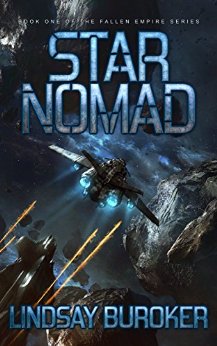
starnomad_lindsayburokerThe first novel in the collection is Star Nomad, a sci-fi adventure by Lindsay Buroker, and it is a very enjoyable read‌—‌lots of action, a fast-moving story, and an interesting cast of characters. I’ve already bought the next book in the series.

When I’d finished it, I popped onto Amazon and read some of the reviews. The vast majority were positive, but, as with any book, there were a few one-stars. Although I personally didn’t agree with these, one of the complaints against the book got me thinking. A couple of reviewers took Buroker to task over the weak science in the book, with one especially complaining about her apparent lack of understanding of how craft would move in space.

That comment made me think of another book I read recently, Neal Stephenson’s Seveneves‌—‌800 pages, with about half of them explaining the science behind what is happening. In this book, manoeuvring in space is a precise, drawn-out procedure that can take hours, days, or even longer. Everything moves at a slow pace, because that is more scientifically accurate.

I enjoyed that book, and it was clear that Stephenson had done a great deal of research. There is no way I can vouch for the technical details, but even if Stephenson invented parts of it, it reads like fact.

seveneves_nealstephensonBut it is a very different read to Buroker’s book. Where Stephenson starts with a premise (what would happen if the moon exploded?) and uses science to plot his story, Buroker is more interested in the action and adventure, and putting her characters in different situations to see how they cope. Where Seveneves is serious (most of the time), Star Nomad is escapism.

But I’m also reminded of Arthur C Clarke’s statement that ‘any sufficiently advanced technology is indistinguishable from magic’. Today, we can do things with technology that would astound someone from a century ago. We can hold an entire library on a small, hand-held device, or we can travel the globe in a matter of hours. We can control computers with our eyes, and cars can drive themselves. So, in books set in the far future, or in alternative universes or dimensions, who’s to say what can be done with science? Just because something is impossible today doesn’t mean it will always be so.

Both books are science-fiction, but there are two parts to that description. Stephenson is driven by the former, and Buroker is more concerned with the latter. Yet it should be remembered that these books are both fiction. They are invented stories, not factual accounts, and to fully appreciate them we have to buy into the implausibilities. Yes, the way Buroker’s heroine throws her craft around cannot be explained by science as we understand it, but so what? It’s a fun read. It’s entertainment. And it doesn’t pretend to be anything else.

When we read (or watch) fiction, we have to give ourselves that freedom to accept the ridiculous. It’s how we can enjoy James Bond films without concerning ourselves over the seemingly indestructible nature of Bond himself (how many lucky escapes can one man have?) It’s how cosy-mystery fans can ignore the implausibility of a Jessica Fletcher character who stumbles across, and solves, more murders over a series than many police officers would deal with in their whole careers. It’s how we can accept, for a couple of hours, that a hero can survive and win, despite being beaten so much that he should be in intensive care (see just about any action film for examples of this‌—‌most fights should be short and brutal, with both combatants soon out of breath or incapacitated from their injuries, not long drawn-out affairs with breaks for witty comments).

So were the negative reviews of Buroker’s book wrong? No. Reviews are personal opinions, not facts. And there is validity in the claim that her book is light on actual science. This clearly bothered some readers, and they would probably prefer something like Seveneves.

And that is fine. There are so, so many books out there. Even a specific genre like science-fiction contains a vast spectrum of books, including Stephenson’s hard sci-fi and Buroker’s sci-fi adventures. Not every book will appeal to every reader.

My opinion‌—‌and that is all it is‌—‌is that Star Nomad is a fun read, and gave me a few hours of solid entertainment. Which is exactly what I was looking for.

If I wanted to understand the science of space, I’d read a textbook.

If A Book Makes Me Feel Sick, I Know It’s Good Writing

When you think about it, reading fiction is a strange activity. It involves staring at symbols on a page or screen, ignoring all distractions, and yet it can take us to other worlds. We take this static information in through our eyes, and allow it to run through out minds, and yet it can open up whole realms of sensations. It involves nothing but words, but it can have such a deep effect on us. And sometimes that effect is physical.

I’ve heard it said that there are two genres that specifically go for this physical effect — horror and erotica (maybe that’s why James Herbert always managed to include a sex scene in his horror books). I can’t comment on the latter, but I have read quite a bit of horror, especially as a teenager. Stephen King, James Herbert, Peter Straub, Clive Barker — I’d get through loads of this stuff, and sometimes, when I put the book down, I wouldn’t want to walk around the house without the lights on. I’d get that tingle, that nagging ‘something’s waiting in the dark’ feeling.

So I got goose-bumps, and a shiver running down my spine. But
one book took me further. One book stands out — Iain Banks’ debut novel, The Wasp Factory.waspfactory_iainbanks

At the time it affected me so memorably, I was re-reading it. I’d enjoyed it first time round (strange how the word ‘enjoy’ can be used for something dark and disturbing), but couldn’t recall much of it. I was working shifts at the time, and needed something to keep me occupied on my breaks — and so, obviously, I took a book in to work, alongside my sandwiches.

So there I was, eating while I read another chapter, sitting on cheap plastic chairs in an empty factory canteen. And I reached a particular part of the book, where it describes the main character’s brother working in a hospital, looking after young children.

The scene (which I won’t even attempt to describe) was shocking, and as I read I felt my stomach churning. My cheeks puffed out with the sensation that I was about to vomit.

I had to stop reading for a while. I put the book down and let my stomach settle.

I wondered if there was something up with my sandwich, but it was fine. It wasn’t food that had made me feel nauseous, but words.

I returned to the book. I re-read that scene. It still made me feel uneasy.

Yet Banks didn’t describe any of the horrors I pictured in my head. There was a build-up, when the character realizes something is wrong. And then there is a jump, to a nurse entering the room and seeing the aftermath.

How could words make me feel ill, especially when so little had been described? How did Banks do it? He built up the scene, but he didn’t tell us exactly what was wrong. Only in the aftermath do we get a glimpse of it, and the whole thing is described in a few sentences (maybe even one — it’s a while since I’ve read it again).

Everything else is left to the imagination.

I believe that’s the key. If Banks had described the scene in detail, the words would have got in the way. I’m sure he would have written it well, but I doubt it would have had the same impact. Describing something is never as intimate as imagining it.

This idea works well in films. Compare the claustrophobic dread of Alien, where any dark spot in the shadows could be the creature, to the reduced impact in later films when the aliens are seen in their entirety. Think of the way the shark in Jaws is never seen for the first hour of the film, yet we know this unseen terror is there, waiting for its moment to strike. Think of the ending of Seven, where we never see what is in the box (despite what some people still believe), but our imagination fills in the blanks.

It’s arguably far harder to do in books, but writers like Iain Banks shows that is is possible. By describing around a scene, our imaginations are let loose, and the horrors we can summon up are far more personal. By choosing just the right words, an author like Banks can guide our thoughts to darker places. By using suggestion and hints, a great author can give a scene such startling realism that we become physically part of the world they have created.

factory-387868_640Sitting in that factory canteen in the middle of the night, I realized for the first time how words could trigger not only our minds but also our bodies.

And that book still impresses me. It has to. Other books have made me question things, or set my pulse racing. Other books have scared the hell out of me, or made me feel good about myself. But no other book has brought me so close to throwing up.

I should write a review for it, and limit myself to a couple of sentences. ‘This book almost made me lose my lunch. Five stars.’

A Book So Good, I Didn’t Want To Read It

See if this sounds familiar.

You start reading a book. It promises to be good, and you settle into a serious hour or so of reading. And the book is good. No, better than that‌—‌it’s great! You’re rattling through it, and you don’t want to stop. Something tells you it’s getting late, or it’s time to do something else, but you can’t pull yourself away. Just one more chapter. You can’t leave it yet, not when you don’t know what’s going to happen on the next page.

I’ve read loads of books like that. I can recall the first time I read Lord Of The Rings, as a teenager, coming home from school and spending a few evenings doing nothing but lying on my bed, reading. When I bought a new Terry Pratchett, I would make sure I had nothing important to do for the day, and finish the book before I went to bed.

But one book stands out as different. There was one book that was so good I didn’t want to pick it up.

I know‌—‌that doesn’t make much sense. Surely if a book is good you want to read it?

Well, not this one.

The book was The Hitch-Hiker’s Guide To The Galaxy. It’s a small book, small enough to fit in my trouser pockets. That meant I could have it with me all the time, and I could read it pretty much whenever I had a spare moment.

I read the first half quickly. Not only is the book short, but the chapters don’t last long, and the writing zips along. It jumps from one thing to another, so there’s no risk of getting bogged down in tedious description or anything like that. It’s one of those books where ‘one more chapter’ quickly leads to the end of the book.

And that was the problem. I didn’t want to reach the end. Not because I didn’t want to find out how it ended. I think I knew this anyway (this was when the TV series was on, and although the book stuck closer to the radio show, I still knew what was going to happen). And not because I was getting bored. Far from it. Part of me wanted to read the book.

But a more forceful part stopped me.

I didn’t want to risk opening it up, because if I did that I’d start reading, and then I’d want to carry on for another chapter, and another, and maybe one more. If I looked at an open page, I knew I’d reach the end before long, and then the book would be over.

And that was why I didn’t want to read it. I was enjoying the book so much I didn’t want it to end.

Of course I did finish the book, and I’ve read it many times since. It’s a book I often re-read. I don’t need to read the individual words now — a glance at the first sentence, and each chapter practically unrolls in my memory. And now, I don’t take my time, but allow myself to read at whatever speed feels comfortable. There are more books, after all. And if a book is that good, I can always re-read it later.

But that first time still sticks in my head. The only book that was so good I didn’t want to read it.