Much as I enjoy reading novels, there are times when I want something else. Maybe I want to read a complete story in one sitting, or I’m just not in the right frame of mind to follow a novel over different sessions. Sometimes, when I finish a novel, I need something as a kind of mental palate-cleanser before diving into the next one.

It’s times like these I’ll turn to short stories and novellas.
There are other lengths of story, of course. Flash fiction can sometimes be told in a single sentence. Vignettes are usually short, too, but are more a single scene than a complete story. Novelettes sit between short stories and novellas. But for most readers there are novels, novellas and short stories.
I like to think of the different story lengths in terms of TV shows and films. A novel is akin to watching a limited-run series, those shows that play out over a few episodes (and, by extension, a series of novels can be compared to a show that runs over more than one season). A short story is like a short film or a half-hour TV show, easy to consume while taking a quick break, sometimes pure entertainment, sometimes thought-provoking and deep.
Novellas are closer to films, taking a couple of hours to devour. They give a satisfying story, complex enough to keep us engaged but not so complicated that it feels rushed. Where a novel often has sub-plots or a number of side-quests for the protagonist, a novella often concentrates on a single story arc.
It’s no surprise that many films are based on novellas. Take Stephen King adaptations, for example—The Shawshank Redemption, Stand By Me, Maximum Overdrive, The Lawnmower Man and The Running Man all started life as novellas. Then there are classics like A Christmas Carol, Of Mice And Men, Animal Farm, The Stepford Wives, The Time Machine, The Strange Case Of Dr Jekyll And Mr Hyde, I Am Legend, The War Of The Worlds, Minority Report, and so many more. Stories to be devoured in one sitting, an escape from our daily reality for a couple of hours. No need to break off to sleep or eat or work, no need to remember what’s already happened when you pick the book up again.
Novellas fell out of favour for a while, mainly for financial reasons—there’s very little cost difference between producing a novel and a novella, but people would feel cheated paying £10 or $15 for a little over 100 pages. The classics continued to be produced because there was already an audience for those stories, but newer authors had to do with anthologies. Again, Stephen King is a good example, with novellas collections such as Different Seasons, Four Past Midnight and Full Dark, No Stars.
But ebooks have changed this. Producing ebook files is very cheap, so novellas and short stories can be priced more realistically. The e-reader (or smartphone) doesn’t change size with what is being read, so a novella feels no different to an epic novel. And with free-flowing text, there are no fixed pages—the story continues for as long as it needs.
It’s also worth considering attention span. A potential reader might not have the concentration required for a novel, but with novellas they can still enjoy reading complete stories.
And novellas can work as great introductions to new writers—they show the writer’s individual style, and if they can pull off a successful story arc in a novella, there’s a good chance they can manage the same in a longer novel too.
Novellas also provide a great opportunity for expanding a series. With novels concentrating on the main story arc, novellas can tell side-stories or explore events from characters’ past.
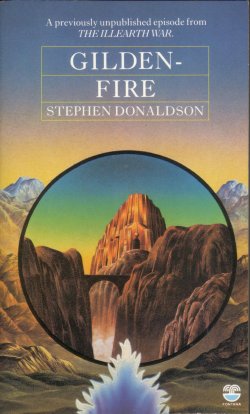 I first became aware of this idea when I stumbled upon Gilden Fire by Stephen Donaldson. Having recently read his original Thomas Covenant trilogy, I was intrigued by this slim volume. In the introduction, Donaldson explained that Gilden Fire was originally going to be a chapter in The Illearth War. But while he was pleased with the writing, the story in the chapter didn’t involve the main character himself. Donaldson thought it would break the flow of the book, and so it was cut. It was only later that he revised it and released it as its own story.
In indie-publishing circles it’s quite common for a series to have a prologue novella, often available for a low price or as an exclusive offer for joining a mailing list (something commonly referred to as a ‘reader magnet’). But writers (especially those publishing independently) have told stories over a series of novellas.
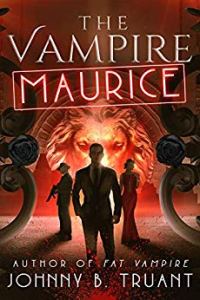
Hugh Howey did this with Beacon 32, eventually combining the five shorter works into a single novel. The Sterling & Stone team (Sean Platt, David W Wright and Johnny Truant) experimented with similar ideas in their serialised fiction, releasing novella-length episodes that built to form complete seasons. Their most popular is probably Tomorrow’s Gone, but I have to say I preferred their nine-novella series Unicorn Western and Truant’s Fat Vampire series.
So, novellas are incredibly versatile. They can provide a short, complete story experience. They can expand a series for avid readers. They can also create their own series. They might not have the same standing as novels, or the literary cache of short stories, but the humble novella has a lot to offer.
 There’s little we can do about the current situation, beyond following whatever those in charge are suggesting (or ordering). But that doesn’t stop us worrying. It’s natural, in any strange situation, to hunt for a solution, even when there is nothing within our own reach. And this can increase our anxiety—which leads to all sorts of health issues, both mental and physical.
 Throughout history, stories have been used to educate. The tale of a successful hunt helps others develop and refine their own hunting skills. The sad story of a villager who ate the wrong kind of berry acts as a warning. The stories we read to our children help them make sense of the world.
 It’s often said that to truly understand someone, you need to walk in their shoes—and stories are a powerful way of doing this. Vicariously, we can live through the pressures of a high-powered job, or the daily grind of raising a family on a meagre wage. We can experience being lost in an alien environment, or living amongst those different to ourselves, or coping in a world where our beliefs are not shared by the majority. We can get a glimmer of understanding into why someone may turn to crime, or shut themselves off emotionally from others, or desperately seek acceptance.


 There are always stories about the death of reading, and how nobody reads anymore. Why read, when it’s easier to turn on the TV or switch on Netflix or pop onto YouTube? There are figures suggesting that cinema is struggling, as home viewing utilises ever-growing size of screens, in increasing resolution, with high-quality sound-systems. Why bother leaving the house, queueing, paying for over-priced snacks and drinks, and having to cope with other people, when high-quality entertainment can be enjoyed in comfort at home?
 Then there are audiobooks. Yes, they’ve been around for years, first on cassettes and then on CDs—but with mp3, fast downloading and now streaming, audiobooks don’t require us to buy bulky physical copies. We’re not tied to large hi-fi equipment either. With our smart-phones, we can enjoy audiobooks wherever we are, whatever we are doing—driving, exercising, cleaning, gardening, resting. No longer are audiobooks only for those who struggle with physical reading, or those with long drives ahead of them. Now, they are open to anyone.

 It’s natural to compare that first draft to great books we’ve read, but it’ll always fall short. We need to remember that all those wonderful books started off as messy first drafts, and sometimes the writer struggled for years to craft their story. Often, these great books were written by people with years of experience under their belt, too, with plenty of abandoned projects sitting in desk drawers or on hard drives.
 You could argue that each technology serves a distinct role in science fiction, whereas magic can be used as a ‘get out of jail free’ card—but in my experience, some of the best fantasy books treat magic in a very similar way to science. Brandon Sanderson is a great exponent of using magical systems, where there are rules over what it can and can’t do. For instance, the magic in his Mistborn series is based around metals, and each type of metal gives different abilities. Then there is the training and study that must go into using these magics—just as characters in science-fiction often need to train in the use of technologies. So Luke trains to use the Force, and Harry Potter studies at Hogwarts so that he can use more magic. Neither technology or magic can be freely used by the uninitiated.
 TW Iain