That’s a very ambiguous question. To narrow it down a bit, I’ll only consider fiction here, and will define a book as an object containing a text version of a story. Generally, this is either a physical book (paperback or hardback) or an electronic version (audiobooks have another layer of performance, so I’m discounting them for this discussion.)
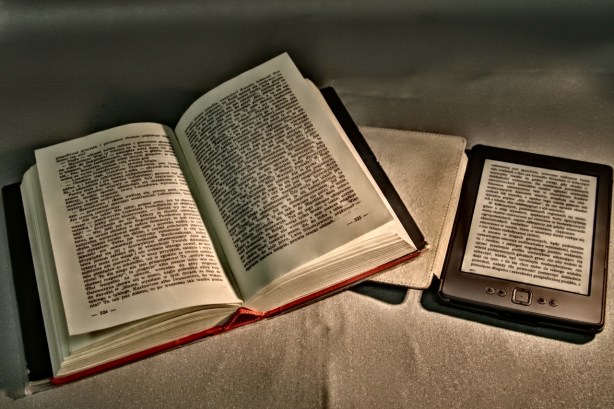 One measure of worth is money, so how much do we pay for books? In the UK, a paperback is generally between five and ten pounds, and a hardback around twenty. E-book pricing varies considerably—there are the free or 99p books, right up to about twenty pounds.
Why the difference in prices? So let’s consider what we are actually paying for.
When we buy a paperback or hardback, we exchange money for a physical object. Yes, we can read it, but we can also display it on our shelves. We can admire it as a thing in itself.
But with an e-book, we received a string of zeros and ones that are stored on a hard-drive somewhere. Our computers (phones, e-readers or whatever we use) translate this information into the words we read and the pictures we see. But ultimately, it’s just data.
It’s the same story in both versions—the only difference is in the means of delivery. Any difference in price should therefore reflect the costs involved in creating and distributing these different versions.
 Think about what it takes to turn a story into a book. There is all the work the author puts in—planning, research, writing, re-writing and editing. There are external editors and proofreaders. This goes for all books, electronic and physical.
But after this, things diverge. For a physical book, the pages are formatted, then proof-read (in the original sense of the term—checking the proof copy, and not just looking for spelling and grammatical errors). These pages are then sent to the printer, who creates the physical book itself from materials the printing company purchases. The book is bound, with a cover that includes front, back and spine. The book is stored and, when requested, shipped to stores. These stores have their own overheads to cover—rent on the building, wages for staff, store furniture and power etc. This is true for both bricks-and-mortar and on-line sellers.
And all this, apart from the creation of the original proofs, needs to be repeated for each book sold.
Now consider an e-book. Once the text is completed, it is formatted, and a cover designed. These files are then uploaded to a seller, be that an independent website or a company like Amazon or Kobo. The seller requires a server etc., but the costs are far less than for the storage of a physical object. And there is no need to create a new e-book for each sale made—the original is simply copied digitally.
From the above, it seems pretty clear to me that the cost of bringing an e-book to a reader is far lower than getting a physical book in their hands, and for this reason alone it makes sense that paper books should be priced higher.
Yet this is not always the case. I often see e-books priced the same as paperbacks (normally by traditional publishers). I have seen e-books priced the same as a hardback, even though the paperback is under half that amount. And I can see no possible justification for this.
But that is only part of the question I first posed. This is price as a reflection of the manufacturing cost. This is the price of the book as an object.
 Books, as a means of conveying a story, have a value in the words themselves, and the artistry and craft that are displayed in the writing. What we value in a book is the experience of reading.
And this is where things become far harder to quantify. How much would you pay for entertainment?
We could consider time. If we are willing to pay, say, ten pounds to watch a two-hour film, should a novel that takes five hours be worth over twenty pounds? If that were the case, a book like War And Peace might be over a hundred pounds. I can imagine someone paying that much for a rare edition, but I’ve seen paperback copies for around £0.99.
But it would be wrong to assume there is a correlation between quantity and quality. Is Stephen King’s It worth five times the value of Animal Farm? Much as I enjoy both books, I wouldn’t agree with this statement. In fact, many smaller books outclass longer stories. To me, The Hitch-Hiker’s Guide To The Galaxy and Fight Club are far more enjoyable than, say, George RR Martin’s Game Of Thrones / Song of Ice And Fire books. And I know that sentence will upset some people, but that’s just me and my reading tastes.
 Which gives us another issue to consider—everyone is different. One person’s life-changing entertainment will be wasted hours to another. The same books could be considered a thrilling roller-coaster ride or a hideous excuse for gratuitous violence and bad language. A thrilling tale might be gratuitous violence and bad language to someone else. One person might value well-crafted prose, but another might find more of value in a finely-tuned story. One person might get swept up in rich descriptions, and another might be drawn into snappy, sarcastic dialogue.
In other words, two people will consider the same book to have different worth. I might baulk at buying the next book Martin release, even if it was on special offer, but others will gladly spend twenty pounds on the hardback version, then buy another copy when that one wears out. To them, the book is worth far more than it is to me.
Because value is about more than money. What we pay for something, and it’s value, are not always connected. Some of the best books I have read—the books that I value—did not cost me a great deal, but there are other ways I can pay the author, and other ways I can demonstrate how much I believe that book is worth. Some of my new-found favourite authors can rely on me to keep buying their books. I can tell others what I think, and I can write reviews (or mention books and authors when I’m writing here). Some fans draw art based on their most valued books, or write fan-fiction. Some buy electronic, physical and audio versions. Others frequent author websites, or follow the author on social media.
So the question ‘how much is a book worth’ now encompasses more than money. It involves time and effort. A good book is worth our undivided attention for a number of hours. A good book is worth thinking about, and maybe revisiting.
It has been said that any object is only worth what someone will pay for it, but this needs to be extended. A story is worth the money you pay for it, the time you spend reading it, and the effort you expend in thinking about it.
What is a book worth? Ultimately, it depends on both the reader and the book.

 I’ve just noticed that Amazon has changed the price of my short story,

 Summer is over. Nights are stretching out, and days are growing colder. Leaves are falling from the trees.
 In American Werewolf, we start on the Yorkshire Moors (slightly creepy because it’s night-time, but still relatively ‘normal’), and then go to London. It is relatively easy to imagine a monster stalking a dark, misty moorland, but surely not in a modern city.
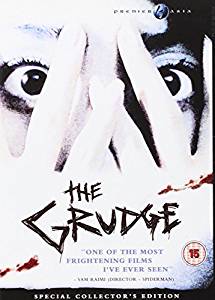 This is a classic case of ‘less is more’, and I’d like to give another example. In the original version of The Grudge, there is a scene with the main character having a shower, and a hand appears, rubbing her hair. There is no indication where this hand comes from — it’s suddenly there, touching her. She’s in the shower (an enclosed space) and she’s naked (and vulnerable), and suddenly there’s something else in there with her.
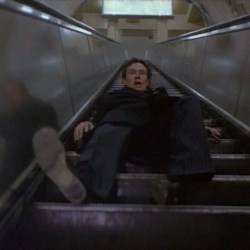 I’ll give another example, from one of the most memorable sequences in American Werewolf. We see a commuter stepping off a tube train. The train disappears into the tunnel, leaving him alone on a platform. He hears a noise, but he thinks nothing of it, and he carries on his way. The noise repeats, and he calls out, telling whoever it is that he doesn’t find this funny in the slightest. But there is definitely something around. He starts to get nervous. He walks faster, and then he starts to run.
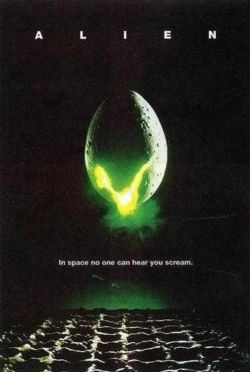 Alien saves the false ending for the final moments of the film. Ripley sets the Nostromo to self-destruct, then races to reach the escape pod (after finding the ship’s cat, of course). There are sirens blaring, and lights flashing, and the alien is somewhere on the ship. It’s a great sequence, and when she finally seals herself into the escape pod and ejects, and the Nostromo explodes, we feel her relief.
 Some people never read a book more than once, arguing that there is no enjoyment if they already know the ending. Others have their favourite books that they return to time and time again. Some people read Lord Of The Rings every year. I’ve met someone who appeared to be reading Fifty Shades constantly (must be some S&M thing).
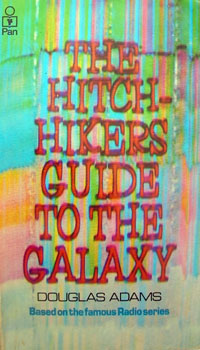 I’ve read Hitch-hiker’s Guide To The Galaxy so often that now I only have to look at the page and the words flow from my memory. And every so often, I will binge re-read the Discworld books. I know what’s coming, but I still enjoy the storytelling and the humour. They make me smile, no matter how many times I read them.
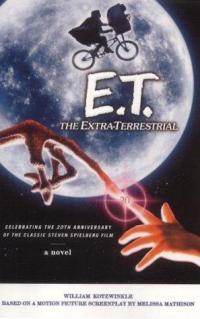 It can be interesting revisiting books we enjoyed when we were growing up. Sometimes the books seem too childish, and we wonder if we were ever really taken in by them. Sometimes we are disappointed by the book (as I was when I re-read the original Star Wars novelisation a bit ago). And sometimes we see new things. When I revisited ET recently, there were things I was sure I’d missed before, simply because I’d been too young to understand what William Kotzwinkle was hinting at.
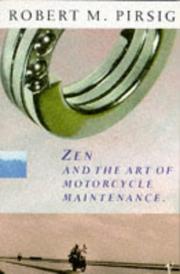 Zen And The Art Of Motorcycle Maintenance is the most obvious example. This book is a journey into ideas, set against a father-and-son motorcycle ride across America. At times the thoughts and questions it poses are almost too dense, and every time I read it I pick up on something new. Between my first and second readings, I spent a bit of time reading Plato, and this influenced how I understood Prisig’s inquiries into the meaning of quality. Later, the relationship between the father and the son had a greater impact on me, simply because I was able to relate to that situation. And having recently found out that Prisig’s son was murdered some years after the book came out, the next time I read it I am sure that will colour what I take from it.
 The narrator for this chapter did his best, and I don’t mean to mock him. I know I could do no better with, say, a Texas accent. I don’t even know if the narrator had ever heard a Yorkshire accent before attempting to read Stoker’s text. But the accent he narrated in didn’t work. You know Dick Van Dyke’s ‘cockney’ accent in Mary Poppins? Imagine that combined with the occasional Scottish twang, and you’ll have a rough idea what this Yorkshire character sounded like.
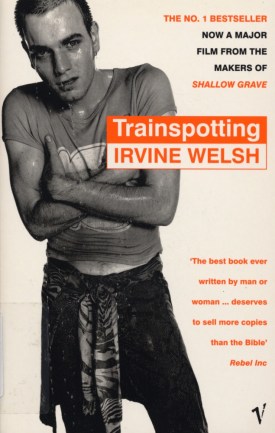
 Another book comes to mind here, and although it’s not written ‘in accent’, it is still relevant. That book is Iain M Banks’ Feersum Enjin. Take a little time over that title, and you’ll get an idea where I’m going with this.

 Maybe. But the idea doesn’t make the story. It could be turned into something amazing, or end up run-of-the-mill, or even terrible. It could be a success, but it could just as easily be a failure.
 But even that only goes so far. Imagine two writers have the same initial idea, and map out identical story outlines. They have the same characters and settings. But the finished stories would be different. One might be heavy on poetic descriptions, where the other is filled with fast-paced dialogue. One might have a gritty edge, and the other might go for a softer, more family-friendly approach. One might stress the outer struggle of the characters while the other focused on their internal dilemmas.


