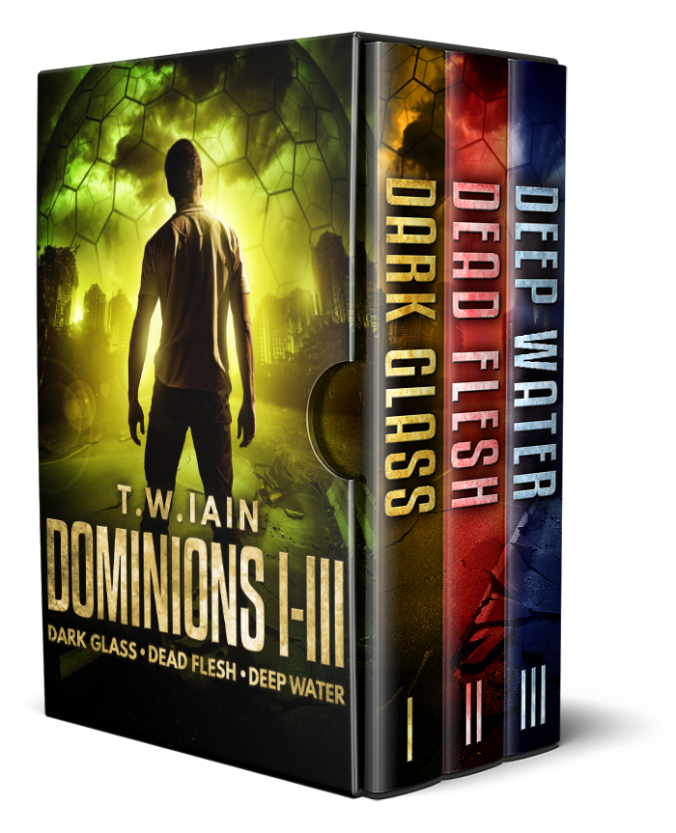
Looking for a new sci-fi/fantasy book? Look no further

With almost a hundred titles, this promotion has everything for sci-fi/fantasy readers. And the books are free. Yes, you need to sign up for the author’s newsletter to get each book, but there’s nothing stopping you from unsubscribing once you’ve downloaded the book. And you might just find your next favourite writer.

So check out the books here.

The changes have happened, so how are things going?

Change happens, and then it becomes the new normal. Sometimes this can take weeks or months (or years). Sometimes it feels almost instantaneous.

It feels like Iโ€™ve been in this new job for months already, even though itโ€™s only been three weeks. And although Iโ€™ve only released three chapters of my Grim Khonsu serial, it feels like Iโ€™ve been working on it for far, far longer.

Probably because I have. I had the idea bouncing around in my head for age, considering practicalities and deciding if I wanted to take the project on. Then there was the planning. And even though Iโ€™m only releasing a chapter a week, I donโ€™t want to get caught out, so Iโ€™m working a few weeks in advance. I already have another three chapters scheduled, and have many more in various stages of drafting and editing.

So, howโ€™s it going?


The first thing to say is that Iโ€™m enjoying it. Iโ€™m having fun writing the story, and Iโ€™m getting a lot of satisfaction from finally putting more fiction out into the world. While Iโ€™ve not received much (any?) direct feedback yet, the chapters Iโ€™ve posted have garnered more views than these behind-the-scenes posts, which is gratifying. A few more readers have subscribed. So things are generally very positive.
But there have been problems.

Even though I like to plan stories, they always change as I start writing. Iโ€™m fine with this. Planning gives a kind of idealised view of the story, but things donโ€™t always work out the way we envisage, and Iโ€™ll spot plot-holes and inconsistencies as I write. I also find that characters donโ€™t become fully developed until I start tapping away at the keyboard. And these changes mean altering things in each editing pass, especially in earlier chapters. I realise I havenโ€™t laid sufficient groundwork for later developments, or that Iโ€™ve started down avenues that lead nowhere.

Obviously, releasing a story as a serial means that those earlier chapters are already out there. Yes, I could go back and alter them (and I probably will when spelling errors come to light, because a few always slip through), but that would get confusing for anyone whoโ€™s already read the unedited versions. So I have to go with what Iโ€™ve published, and do the best I can to make everything else follow smoothly.

Iโ€™m countering this by working in advance. Having future chapters ready not only prepares me for those interruptions that will surely crop up and take away my writing time, but it also gives me some flexibility in making those changes.

At the moment, Iโ€™m approaching the climax of the story in my first draftโ€Œโ€”โ€Œand I know there is a lot to change. Over the next few weeks Iโ€™ll read through everything and see what needs altering in upcoming chapters. Iโ€™ll also hopefully spot continuity errors.

Iโ€™m playing about with Notebook.lm to help with this. Yes, itโ€™s AI, but Iโ€™m not using it to write any words in the story. Iโ€™m using it as a toolโ€Œโ€”โ€Œbecause thatโ€™s what AI ultimately is (or should be). By feeding in each chapter, I can have Notebook.lm look out for those errors. I can interrogate the AI about promises Iโ€™ve made to the reader, or open loops in earlier chapters that havenโ€™t yet been closed. Iโ€™ve also been asking it about genre tropesโ€Œโ€”โ€ŒIโ€™m calling Grim Khonsu a sci-fi detective noir, so how does it stand up against those separate genres?

Iโ€™m also using Notebook.lm to keep track of characters and places. I often add incidental characters and places as I write, and as I intend to write more Grim Khonsu stories it makes sense to keep track of all these mentions. I could do this manually, but why not use a decent tool for the job? And as this list of characters and places grows, I have more things to pull from later. If I need another incidental character, maybe I can call on one Iโ€™ve already used? And if a new story takes Grim into a different part of Khonsu, why not use an area Iโ€™ve already mentioned in passing?


Another tool Iโ€™m using in writing Grim Khonsu is Joplin. This is basically a note-taking app that syncs between phone and computer.

Why use this, when Iโ€™ve been a dedicated Scrivener user for years?

Iโ€™m not abandoning Scrivener. Far from it. Iโ€™m still using it for editing Grim Khonsu. But, with my new job and altered routines, I needed some way of writing when itโ€™s not convenient to boot up the laptop. Scrivener doesnโ€™t yet have an Android app, so thatโ€™s out. I tried a few other apps, but none worked quite how I needed them to. But Joplin did.

I donโ€™t know if Iโ€™d write a full โ€˜properโ€™ novel in Joplin, but it works great for a serial. I can arrange notes in folders, so I have a Grim Khonsu folder with separate notes for each chapter (which I then copy and paste into Scrivener for editing). I also have a few notes of, well, notes. Because each chapter has to be self-contained to an extent, working in a โ€˜smallerโ€™ app helps me focus on the arc in each chapter.

I have a couple of Bluetooth keyboards, too. One is a folding thing thatโ€™s awkward for fast typing, but it fits in my pocket, so itโ€™s very transportable. The other is still small, but has full-sized keys, and I can type almost as fast on that as I can on my laptop. Iโ€™ve used this second keyboard to write Grim Khonsu while having a coffee at the climbing wall, or in my car when I get to work too early. And, if I donโ€™t have either keyboard to hand, I can always use the phoneโ€™s on-screen keyboard. Thatโ€™s not ideal for writing drafts of the chapters, but it works fine for quick notes (especially as thoughts arise as Iโ€™m plodding on at work).


This new way of working already feels comfortable, and I can see myself using it for the next season of Grim Khonsu. Yes, Iโ€™m enjoying the project so much that I want to continue. I already have ideas for Grimโ€™s next case. I donโ€™t want to get too carried away yet, thoughโ€Œโ€”โ€Œthis first story needs to be my focus, and I also have those other Unity-related projects in progress (the large-scale space opera itself and the spin-off Chronicles Of Seraph adventures).

But what do you think of Grim Khonsu? If you havenโ€™t read it yet, you can find the first chapter at twiain.substack.com/p/chapter-1. Give it a read and tell me what you think. After all, a story is a conversation. Without readers, a story is nothing.


This post is the latest in a series Iโ€™m running onย Substack, chronicling my work on this space-opera project. If youโ€™d like to read these posts as they appear, please considerย subscribing for free.

Explore the dark side of Khonsu: a sci-fi detective story

A city-sized generation ship tearing through the void of space, seeking planets for humanity to colonise. But onboard, life goes on, as it has for a couple of millennia. And life on the vast craft known as Khonsu is far from perfect. While the authorities do their best, the dark underbelly of Khonsu’s society churns away.

Such a place needs a dark hero. Investigative consultant Grim (don’t call him a detectiveโ€Œโ€”โ€Œhe doesn’t like it) isn’t a hero, but he’s the closest Khonsu’s got.

Banner image for Grim Khonsu, showing a noir detective in hat and coat on one side, and a space-ship heading towards a planet on the other

Grim Khonsu is a new serialised story, a chapter appearing each week. If you like your sci-fi soaked in noir, or if you like your detectives pulled between humans and technology, then check out Grim Khonsu. You can read the first chapter at twiain.substack.com/p/chapter-1.

And if you want subsequent chapters delivered straight into your inbox for free, sign up for my Substack at twiain.substack.com/.

Routine is good. Until it isn’t.

Iโ€™ve been in a rut recently. Yes, Iโ€™ve been struggling with this space-opera project, but thatโ€™s only part of it. Iโ€™ve lacked motivation. Iโ€™ve been far too easily distracted. While Iโ€™ve made progress with both the main Unity book and the first Chronicles of Seraph story, that progress has felt far too slow.

I used to be more productive. Back when I grew serious about writing, I was able to release about three books a year. But since releasing the final ShadowTech book last year, I havenโ€™t put out any new fiction. Iโ€™ve had the Tales of Dominions Kickstarter, but that was a collection of previously written stories.

I donโ€™t feel good about this. Iโ€™m letting my readers down. Iโ€™m letting myself down.

So, why the lack of motivation? In large part, this is down to the day-job. Itโ€™s been growing increasingly demoralising over the last few years (things started going downhill in 2020, and thereโ€™s been no sign of an improvement). While I try to compartmentalise thingsโ€Œโ€”โ€Œthatโ€™s work, so it shouldnโ€™t affect my writing or my life outside workโ€Œโ€”โ€Œeverythingโ€™s connected.

But things are about to change. I now have a new job, starting next week. Itโ€™s longer hoursโ€Œโ€”โ€Œbut back when I produced three books a year I was working similar hours. Maybe the lethargy has been compounded by too much free time, too many opportunities for distraction. So Iโ€™m going into this new job with a more focused mind-set. When I open my laptop for writing, thatโ€™s what Iโ€™ll do. Iโ€™m also investigating ways I can use my phone more effectively, so I can make better use of breaks at work and odd moments when Iโ€™m not at the laptop. Yes, Iโ€™ll still get distracted, but if I go in with a more positive attitude, and if Iโ€™m conscious of possible distractions, Iโ€™ll be in a better position to head them off.

Of course, thereโ€™s going to be a period of adjustment. Iโ€™ll be working different shifts, so Iโ€™ll have to let my body grow accustomed to a new routine. And this new job gives me free weekends, so more opportunities for important family time.


With one change, itโ€™s a good time to introduce another. As I mentioned before, I havenโ€™t been as productive as Iโ€™d like. Iโ€™m spending more time editing and less time writing (first-drafting)โ€Œโ€”โ€Œand while I enjoy editing itโ€™s that earlier stage that I love.

So I need to produce more stories. And I need to get back to first-draft writing.

I have a plan.

Iโ€™m going to write a serial.


Okay, hold on a moment. Iโ€™m struggling to get through those space-opera books, and Iโ€™m about to start a new job that will leave me with less free timeโ€Œโ€”โ€Œand Iโ€™m going to add another project?

It isnโ€™t as stupid as it sounds. This serial is connected to the whole Unity universe. The story will focus on one of the main characters from the central Unity story. Writing this serial will help me understand both that character and their setting.

And Iโ€™ll be releasing a chapter each week, somewhere between one and two thousand words (so about fifteen minutes reading time?). I can write that many words in an hour. Another couple of hours for editing, and things donโ€™t look too unrealistic.

Oh, and itโ€™s called Grim Khonsu. Itโ€™s a blend of sci-fi and detective noir. Iโ€™ve wanted to produce something in this vein for a while now, writing a first draft of a novel a few years ago. Some of the ideas from that have ended up in the initial work on Unity, and others Iโ€™m using in this serial.


Of course, this will involve a different way of working. Iโ€™m a plotter. I like to know where my stories are going before I start writing. But with a serial, Iโ€™ll be going one chapter at a time. Okay, Iโ€™ll have a few in the bag, and I have ideas about the direction of the story, along with the larger overview. But I donโ€™t know the details yet. Iโ€™ll only discover them as I write.

Will this work? I donโ€™t know. Iโ€™d like to think Iโ€™m sufficiently confident in my writing to pull it off, but I might write myself into all kinds of corners. And Iโ€™m committing myself to a new chapter each week. What if Iโ€™m ill? What if the story grows too cumbersome and I need to have a major rethink?

Problems to deal with if and when they arise. This is an experiment. It will allow me to get back to the thrill of first-drafting. It will allow me to put more fiction out there, giving readers something theyโ€™ll (hopefully) enjoy. And, because of its connection with my grand space-opera concept, it will enrich that story too.

It could all go horribly wrong, of course. And if it does, Iโ€™ll treat it as a learning experience.

But Iโ€™m quietly confident. Things are changing. Iโ€™ll be developing new routines, ones that should make me more productive, less prone to lethargy and distraction.

And Iโ€™m doing this in public. Thatโ€™s scary. But it gives me accountability. I donโ€™t like going back on my word, so now that Iโ€™ve committed to this, I have to keep it up. Youโ€™ll hold me to that, right? And as this story takes shape, as I add a new chapter each week, Iโ€™d appreciate any kind of feedback.

A change. An opportunity to start a new experiment. I hope youโ€™ll come along for the ride.

More to followโ€ฆ


This post is the latest in a series Iโ€™m running onย Substack, chronicling my work on this space-opera project. If youโ€™d like to read these posts as they appear, please considerย subscribing for free.