There’s a thin line between inspiration and despondency

One of the many things that encouraged me when I first got into writing seriously was reading books and thinking ‘I could do better than that’. It wasn’t that the books I read were bad‌—‌many of them were fantastic, far better than anything I could’ve written overall. It was more that I’d spot a plot hole, or come up with a different (and, to my mind, better) solution to a problem the characters faced. Or I’d read a clunky paragraph, or a section of dialogue that didn’t sound right, or was too on-the-nose, and I’d see a different way of writing it. Little things, but because I not only spotted them but also saw how I’d ‘correct’ them, they inspired me to write for myself.

It still happens. I read widely, and some of the books I read aren’t great. I (usually) persevere to the end, seeing them as training exercises, as examples of what to avoid. But I also read books that leave me amazed, where the writing is incredible, where the world-building is incredibly immersive, where the characters come across as ‘real’.

Of course, books like this can be useful in my writing too. If I can figure out how another writer does things, I can learn from that, maybe incorporate those techniques into my own stories. But there are times when reading a great book drags me down.

It’s happened this week. I’ve been reading Arkady Martine’s A Desolation Called Peace, the follow-up to A Memory Called Empire. It won’t be to everyone’s tastes, but I was thoroughly impressed with the book. It still had the writing style of the first book (I suppose I’d call it ‘literary’, bordering on poetic‌—‌which is totally fitting for the plot), but what impressed me even more in …Desolation… was the interplay between the characters. Each character has motives, clear to themselves (sometimes) but hidden from others. There are all kinds of power-plays going on. Yes, the plot revolves around a war with aliens, but there’s far more tension in the inter-personal rivalries. And what struck me most was the subtlety of this, how it felt genuine rather than melodramatic.

This is something I’m aiming for with one of the story-arcs in Unity, and to see such a great example in Martine’s book left me feeling‌…‌despondent? I think that’s the word. There’s a mastery in Martine’s writing I can’t imagine myself achieving, or even coming close. To write something even half as good as this seems impossible.

If I hadn’t already written around twenty books‌—‌if Unity was my first serious writing project‌—‌I think I’d be tempted to give up. As it is, the doubts have risen‌—‌why would anyone read a book I’ve written when there are writers like Arkady Martine producing stories? And what about the other things I’m hoping to achieve in my story? How can my take on galaxy-wide civilisations infused with technology ever compare to Iain M Banks’ Culture books? And what about all those other great sci-fi writers‌—‌Hamilton, Baxter, Asimov, Herbert and so on? Am I a fool to even consider trying to write a large-scale space opera?

I have to believe that I’m not a fool. (Okay, I can be foolish, but you know what I mean.) So I have to do something about these doubts.

When I’m tempted to compare myself (severely inferiorly) to writers like Martine, there are a few things I need to remember


First, I’m currently in the first round of edits of a very messy first draft of Unity Book One, and I’ve read the final, published version of A Desolation Called Peace. At one time, Martine’s book was nothing but an idea. It became a first draft, and then that draft was edited. I don’t know any details, but I’d imagine it went through many revisions, with input from editors and others.

I recently read Stephen Baxter’s Creation Node (another book that impressed me to the point of nudging those doubts higher in my mind), and in the back he lists everyone who helped bring the book to publication. There are over fifty names on that list. Fifty. Yes, some of those people (possibly the majority) were involved with publication rather than preparing the final manuscript (marketing, design, admin and so on), but books like Creation Node and …Desolation… are team efforts. So far, I’m the only person who’s been involved in my new book.

It’s like comparing a rough sketch to a painted canvas. It’s like comparing home-recorded noodlings to released music, recorded in top studios on high-end equipment, performed by professionals and engineered and mastered by experts.

Will my finished version of Unity match …Desolation…? Probably not. But it’ll be closer than it is at the moment.


The next thing I need to remember is that I’m not Arkady Martine. I don’t write like her. And I need to see that as a good thing.

I’ll explain.

There’s a saying‌—‌give a hundred writers the same outline for a story, and you’ll end up with a hundred different stories. Every writer is different. Our personal experiences shape our writing, to varying degrees. Every writer has preferences, has strengths and weaknesses.

So, unless I’m trying to mimic her style, there’s no way I can write a book like Martine. And why would I? She writes stories in the way she writes them, and I write stories in the way I write them. And as I mentioned before, not everyone will enjoy …Desolation…. There are readers out there who prefer the way I tell a story. Maybe not many, but some.

Does this mean I can’t learn from Martine? Of course I can. But I can’t expect to be the same as her. Some writers can successfully mimic the style of others‌—‌an advantage for ghostwriters‌—‌but I don’t want to be someone else. I want to write the books I can write. And, as AI nudges closer and closer to being able to churn out readable‌—‌even good‌—‌stories, it’s important that, as a writer, I lean into what makes my writing unique.

What is my unique factor? I’m not sure, but it has to do with me, as a person‌—‌the way I write, the way I create stories, the language I use. It has to do with what I bring to my writing‌—‌my experiences, my thoughts, the way I see the world.

I want readers to enjoy my stories, but if they enjoy them because they were written by me, that’s even better.


And this leads to the next thing I need to remember‌—‌I’m not writing for Martine’s readers. We both write sci-fi, so there may well be (should be?) some cross-over. But sci-fi is an incredibly broad genre. Even in space opera there is breadth. Some readers are drawn to fast-paced stories, others to intertwined character arcs. Some go wild for world-building, others get a buzz from snappy dialogue. Some prefer hard science, others lean towards a more philosophical take on science, and others don’t care if the science makes real-life sense so long as it works for the story.

If every writer is different, then so too is every reader. And there are far more readers than writers out there.

So I shouldn’t fall into despondency when I read great sci-fi. I should remember these three lessons‌—‌it makes little sense to compare my early drafts with another’s finished manuscript, every writer is different, and readers have differing preferences. If every book was a masterpiece in exactly the same way, why would anyone read more than one? It’s the differences that make every book unique.

Then I should consider what I can learn from great writers, what I can pull from other stories and adapt for my writing. I’m reading more and more as a writer (which I find makes reading more enjoyable‌—‌I can experience stories on different levels now), and this is something I need to develop, learning to tease out the linguistic tricks other writers use to make their work shine.

And if a book draws me in like Martine’s book has, it should serve as a reminder of the power of fiction. It should be an encouragement‌—‌reading can be an incredible experience. I might not reach anywhere near as many readers as Martine, but if I can reach some, then I can call my writing a success.

Although there’s always room for improvement.


This post is the latest in a series I’m running on Substack, chronicling my work on this new project. If you’d like to read these posts as they appear, please consider subscribing for free.
The work never stops, even when it does

About a month ago I wrote about figuring out names for my new series, something I always struggle with. But these aren’t the only names I need to work on. Stories use names all the time‌—‌for characters, for places, for companies and businesses, and (especially in tales that don’t take place in our contemporary world) for different objects. These names need to work in the story-setting, too. They can’t be so outlandish that they’re hard to read (unless that’s the point of them, in which case the reader will most likely skim over them). But make them too ordinary, too familiar, and there’s the risk of having thIn my day job it’s easy to tell if I’m working‌—‌I’m doing stuff. Most jobs are like this. If you’re sitting around staring into space, you’re not working. If you’re wandering around aimlessly, you’re not working. If you’re not at your desk or work-station, if you’re not in the building, guess what?

I used to think writing was like this. If I wasn’t at my laptop, fingers tapping away, then I wasn’t writing. If I was reading through a draft, I’d have my phone with me, and I’d be making notes‌—‌still working. But if I caught myself staring into space, I was procrastinating.

I’ve changed my mind on this. Things aren’t that clear-cut now.

Writing is a creative activity, and as such it involves perspiration and inspiration. There’s an active component‌—‌typing words, be that in planning, drafting or editing. There are all the admin and marketing tasks, which again involve me tapping away at my laptop. But there’s also a less physical component. To type those words, I have to come up with the words. The external presentation of the story has to follow the internal preparation.

When I look up from my laptop, gazing vacantly through the window, it’s because I’m thinking. Staring into space is what my body does while my mind is planning the next sentence, or trying to solve a plot issue, or working out how a particular character would react to a specific situation.

But it goes deeper than this.

Ideas‌—‌especially big ideas, the kind that solve taxing problems‌—‌always seem to come at the strangest moments. In the shower, as you’re about to drop off to sleep, when you’re out for a walk or washing up. The solutions come not when you’re actively thinking of the problem, but when your mind isn’t doing anything in particular. It’s almost as if all that conscious struggle was getting in the way. It’s almost as if the way to solve a problem is to stop thinking about it.

To a degree, this is true. We can’t sit back and expect great ideas to emerge on their own. We have to ponder problems. We have to actively seek solutions. We should investigate and research. But if the answer doesn’t come easily, then it is very likely we need to step back, to take a break and switch off.

The way I understand it, our subconscious mind is always working, deep in the background. Most of the time we’re unaware of it‌—‌it’s drowned out by our conscious thoughts. It’s only when we switch off that we become aware of our subconscious. Or it’s only when we stop thinking that our subconscious has the opportunity to be heard.

I’m sure you can see where I’m going with this.

Writing and storytelling are creative activities. Yes, there are mechanical skills involved. Yes, story can be analysed, and we can use that analysis to structure better stories. Yes, there are concrete craft skills we can learn and develop. But ultimately it’s creativity that drives writing. Creativity has to be nurtured as much as it can be taught. It comes from deep inside. We take in content‌—‌examples of story through books and films, videos on the craft of writing, books on story structure‌—‌and the creative side of us uses this to do its magic. Which it does very effectively in our subconscious, working away while we’re otherwise occupied. Or while we’re doing ‘nothing’.

This means that the ‘work’ of writing is far more than sitting at the laptop, or reading previously written drafts. It’s more than sitting and thinking. The ‘work’ of writing is going on all the time, and it’s important to ‘switch off’ so we can listen to that deeper, creative side.

It’s also important to let the subconscious do its stuff. If we’re constantly consciously working, that’s taking resources away from our subconscious. It’s why so many writers extol the benefits of taking regular walks. This goes beyond the benefits to our minds of having a healthy body. Heading outside for a walk detaches our conscious mind from the writing, and gives us an opportunity to listen to our subconscious mind.

I’m currently editing the first draft of the first Unity book, I’m treating it as three separate stories at the moment, dealing with each in turn. But my subconscious mind is bouncing all kinds of ideas around. So as I read through one section, making notes on things needing changing, I ‘suddenly’ had an idea about a different section‌—‌my subconscious mind throwing its idea at me. I saw how a simple change in motivation could make this different section more relevant to the rest of the book.

It was a problem I’d noticed some time ago, and had been putting off actively working on it because I didn’t feel up to it yet (or maybe I was trying to avoid the hard work). But I knew about the problem, so my subconscious mind worked on it. And something‌—‌probably a turn of phrase in the section I was editing‌—‌triggered a potential solution. That input was exactly what my subconscious mind needed.

Another example of the subconscious mind in action‌—‌I’ve been revisiting loads of old short stories recently, from when I posted a story every two weeks on my website, and I was struck by how many of these stories had been drafted either on holidays or after coming home from holidays.

Why should this be?

Part of it is surely down to stimuli. When away from home we’re exposed to new locations, maybe different cultures and languages, different food and smells, an unfamiliar climate. These new stimuli can spark creativity. This could explain the origins of a story on virtual holidays, or a post-apocalyptic take on a seaside resort.

Then there’s the travel involved in holidays. New stimuli can become old very fast. Being stuck in a plane for a few hours, there’s only so much to do. So it’s not too surprising that the mind wanders. It starts to ask questions‌—‌what’s the deal with that lone passenger two rows in front? What if that family across the aisle are spies? What would an alien race think if they saw rows of people sitting in a tin can hurtling through the air? People-watching becomes a game of ‘what if…?’

But there’s another aspect to consider. Holidays are when we switch off. While I’ll still do something writing-related on holiday, I usually try to arrange things so that I’m not in the middle of drafting or a big editing phase when I’m on holiday. It means I don’t have to think about those big projects. It means I’m not under pressure to finish the draft or the edit.

And in switching off, I give my subconscious mind the opportunity to let me know what it’s been working on. I can consider all those ideas that have been bubbling away in the depths of my mind. I’m relaxed sufficiently to allow solutions to ‘appear’.

As I continue writing, as I continue working on new projects, new books, new series, I need to bear this in mind. I need to remember that the work of writing continues even when I’m not tapping away at a keyboard. I need to remember that the creative side of story-telling pulls from both my conscious and subconscious mind. So I should give it time. I should force myself to step back, maybe take more walks, alone with my thoughts.

Sometimes, the most important work we do happens when we’re doing nothing.


This post is the latest in a series I’m running on Substack, chronicling my work on this new project. If you’d like to read these posts as they appear, please consider subscribing for free.
Read An Ebook Week: Top Deals on Smashwords

Smashwords is running a ‘Read An Ebook Week’ sale, with loads of books at 25%, 50%, 75% and even 100% off! And you can get all of my books in this sale, at 75% off.

Why get your ebooks from Smashwords? Apart from the bargains available this week, Smashwords aren’t tied to any particular reader. Get an ebook from Smashwords, and you can read it any way you want.

Check out the sale here (or go to my books here.)

Searching for names

About a month ago I wrote about figuring out names for my new series, something I always struggle with. But these aren’t the only names I need to work on. Stories use names all the time‌—‌for characters, for places, for companies and businesses, and (especially in tales that don’t take place in our contemporary world) for different objects. These names need to work in the story-setting, too. They can’t be so outlandish that they’re hard to read (unless that’s the point of them, in which case the reader will most likely skim over them). But make them too ordinary, too familiar, and there’s the risk of having the setting feel flat.

I try to come up with names when I’m planning. But as I write the first draft I introduce different characters and places, and have characters interacting with devices that need names. I don’t want to stop the writing flow, so I use placeholders, then work on names in the edit. It’s why my first drafts have characters labelled as [**BulkyThug**] and places called [**HomePlanet**]. The symbols around the words? They make it easier to spot what needs changing later.

But how do I come up with names? I use a few different techniques.


I write in Scrivener, and it has a very handy Name Generator. This, as the name suggests, spits out lists of potential character names. The results can be tightened by sex, start and end letters, and first and last name origins. So I can select names for a female character with a French first name and Aboriginal last name, starting with the letter ‘E’.

This Name Generator also has a ‘First Name Meaning’ tool, which I’ve used quite a bit. I’ll type in a characteristic (’strong’, ‘fair’), and it will throw out names that have some connection to the word. For instance, the Indian name ‘Baldev’ means ‘Strong god’. I’ll take this as inspiration‌—‌if I have a strong character, or one others look up to, I might call them something like Badev or Balde.

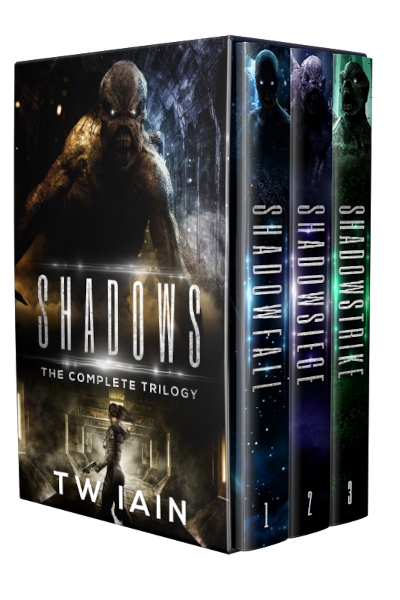
Having a particular group of people with ‘similar’ names can help give the illusion of shared identity, too. In my Shadows and ShadowTech series many of the names came from the Name Generator, and I’d specify Celtic first names and Greek second names. From the list provided I then chose names I didn’t think were too common. So I ended up with names like Piran Remis, Brice Carras and Keelin Ziko.


I sometimes use mythology for inspiration. I’ll search for characters and places related to a particular mythology, then use them as a basis for places or objects. The various craft names in Shadows and ShadowTech all come from Greek mythology. So my bulky cargo craft are Hermes, after the Greek god messenger. I also have the Proteus, named after another Greek god. Weapon names were similarly inspired. The flamethrower weapon in the books is a Charon. Charon transported dead souls into Hades on his ferry, but the word can also mean ‘fierce brightness’.


I’ve started using Google Translate more often now, translating words that have some meaning to the character or place into various languages, and taking inspiration from the resulting words. I find that using less Western European languages gives less familiar words, which adds a certain ‘alien’ feel‌—‌handy when writing sci-fi. And by sticking to one particular language for related names or places helps give a sense of connection‌—‌the names sound less random.

I’ve recently been naming planets and moons in one of the solar systems in my new series. After a bit of playing about I settled on Russian as the language I’d use for these. This star system is the home system to one of the characters, and the Russian for ‘home’ is ‘dom’. But this system is politically divided, with a great deal of friction. The Russian for ‘splintered’ is ‘raskolotyy’. I combined these two words in different ways, and eventually settled on the system being called ‘Raskodom’.

The terraforming of one of the planets in Raskodom has been a great success, and this character enjoys walking in nature, enjoying the open skies, at peace with himself. Russian for ‘open’ is ‘otkryt’, and ‘paradise’ translates as ‘ray’. So this planet is ‘Oktray’.

Are these translations accurate? I’ve got no idea. And it doesn’t matter‌—‌the ‘meanings’ behind these names are purely for me as I write these stories. The translations, accurate or not, are only for inspiration.


In this new series I’m exploring different naming conventions for characters too. I have a natural bias towards ‘first name/middle name/surname’, with the surname being used in more formal settings‌—‌a result of the culture in which I was brought up. But different cultures have different naming conventions. And in the distant future, when humans have spread throughout the galaxy, why would names all revert to ‘first name/middle name/surname’?

One of my characters is normally referred to as Hastaff, but his full name is Ekala Hastaff Bodesa. How did I get this name? Bodesa comes from ‘Boseda’, an African name (meaning ‘child born on Sunday’, although that’s not relevant to the character). Hastaff is an alteration of Harstad, a Norwegian surname (according to Scrivener’s Name Generator). And Ekala comes from ‘kuqala’, a Zulu word meaning ‘first’. Hastaff is the first child of his parents.

I decided that Hastaff is his ‘family name’‌—‌it is his lineage, and in the culture he comes from bloodlines and families are important. Bodesa is his intimate name, used only by those close to him‌—‌it would be an affront if someone were to refer to him as ‘Bodesa’ in a business or professional setting. And ‘Ekala’ is more of a title (remember it means ‘first’, so it is almost a description given by the parents). Most of the time this character is referred to as ‘Hastaff’, although in formal settings, or where there are other Hastaffs, he is Ekala Hastaff.

Having sorted that out, I can then use this naming framework for other characters coming from the same planet or star system.

Let’s have another example. This character is known as Prav, but his full name is Djar-kah Prav Dorsan. All parts of the name were inspired by Hindi words‌—‌Djar from ‘darjee’ (meaning ‘tailor’), kah from ‘kaala’ (meaning black), Prav from ‘parva’ (meaning ‘festival’), and Dorsan from ‘do’ (meaning ‘two’). And the naming convention? The lineage name (family name) is Djar-kah‌—‌black tailors (the ‘black’ part could refer to colour, or possibly means that the family were cast out at one time). Dorsan (from ‘do’, meaning ‘two’) simply says that Prav was his mother’s second child. And Prav was the name his mother chose (because in this culture it is the mother who has ultimate say over the name‌—‌and a great deal more‌—‌of her offspring). In this case, her second child came during a festival (which annoyed her, because she had to miss so many of the festivities!).

This name also fits the character. He’s something of a chameleon, at home in all kinds of situations. People warm to him naturally. You know the phrase ‘the life and soul of the party’? This would be Prav.


So, a few ways I work on names. It takes time and effort, but I enjoy it. And in exploring similar roots for related names, as well as using different naming conventions for different characters, I’m able to build a more cohesive story-world.

Although I wish names came easier to me. Then I wouldn’t have to go through my drafts, changing all those [**FrustratedWriter**] placeholders.


This post is the latest in a series I’m running on Substack, chronicling my work on this new project. If you’d like to read these posts as they appear, please consider subscribing for free.